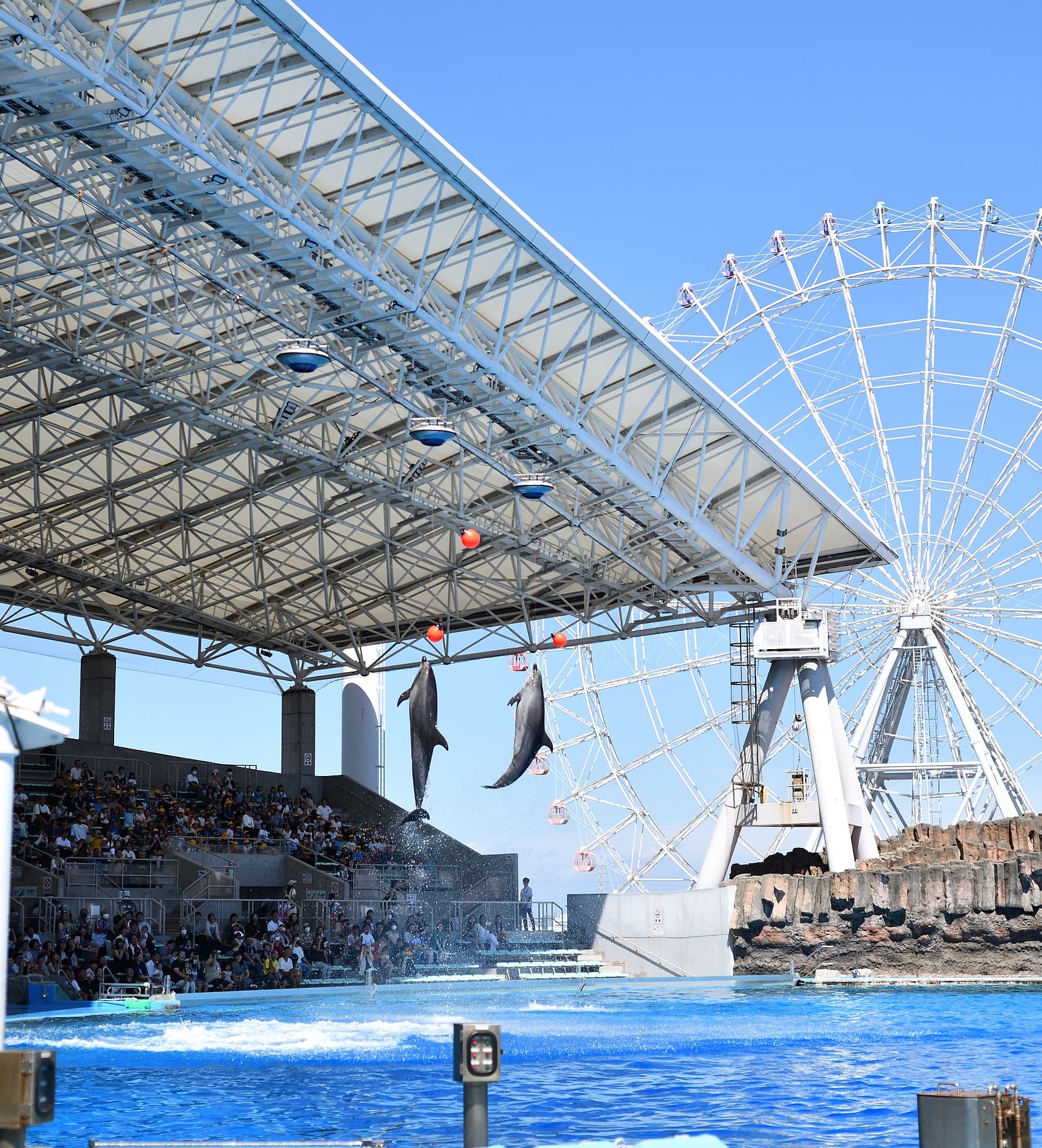
The Port of Nagoya Public Aquarium is a significant marine institution in Japan, renowned for its extensive collection of large marine mammals and its focus on the evolution of marine life. It stands out for housing killer whales, beluga whales, and multiple dolphin species, offering visitors a unique opportunity to observe these creatures up close. The aquarium is divided into North and South Buildings, each dedicated to different aspects of marine ecosystems, from the Arctic to the local Japanese seas.
Visitors frequently highlight the captivating shows featuring dolphins, belugas, and killer whales as the main draw. Many describe the dolphin show as "amazing" and "world-class," with some noting the unique interaction between trainers and dolphins. The sardine whirlwind show in the South Building is also consistently praised for its beauty and synchronized movement. Reviewers appreciate the spacious and clean environment, making it comfortable for families. However, some visitors express concern about the size of the tanks for larger mammals, particularly the killer whales, suggesting they might be too small. Despite this, the overall sentiment remains positive, with many finding the educational aspects and the sheer variety of marine life impressive.
To make the most of your visit, arrive early, especially on weekends or holidays, as the aquarium can get very crowded. Many recommend spending at least half a day, with some suggesting a full day to see all the shows and exhibits. It's crucial to pick up a show schedule at the entrance and plan your route accordingly to catch all performances, as they are a major highlight. Consider purchasing the combined ticket if you're interested in the observation tower and the Antarctic ship, though some reviewers suggest the aquarium-only ticket offers better value. Bringing your own lunch can be a money-saving tip, as food inside can be expensive, similar to other theme parks.
The aquarium is conveniently located and easily accessible by public transport. From Nagoya Meitetsu Station, take the Meijo Line (Line E) and transfer at Kanayama Station, then continue to Nagoya-ko Station, which is the terminal. The aquarium is just a short walk from Nagoya-ko Station. For those driving, there is cheap parking available at the seaside park nearby. The area around the port also offers other attractions like a Ferris wheel and a maritime museum, making it a good destination for a full day out.
A common complaint among some international visitors is the limited English signage and explanations, particularly during shows. While the visual spectacle is still enjoyable, understanding the educational content might be challenging without Japanese proficiency. To mitigate this, consider researching the animals and shows beforehand or using translation apps. Some visitors also noted long queues for tickets during peak times; purchasing tickets in advance online can help reduce waiting times.