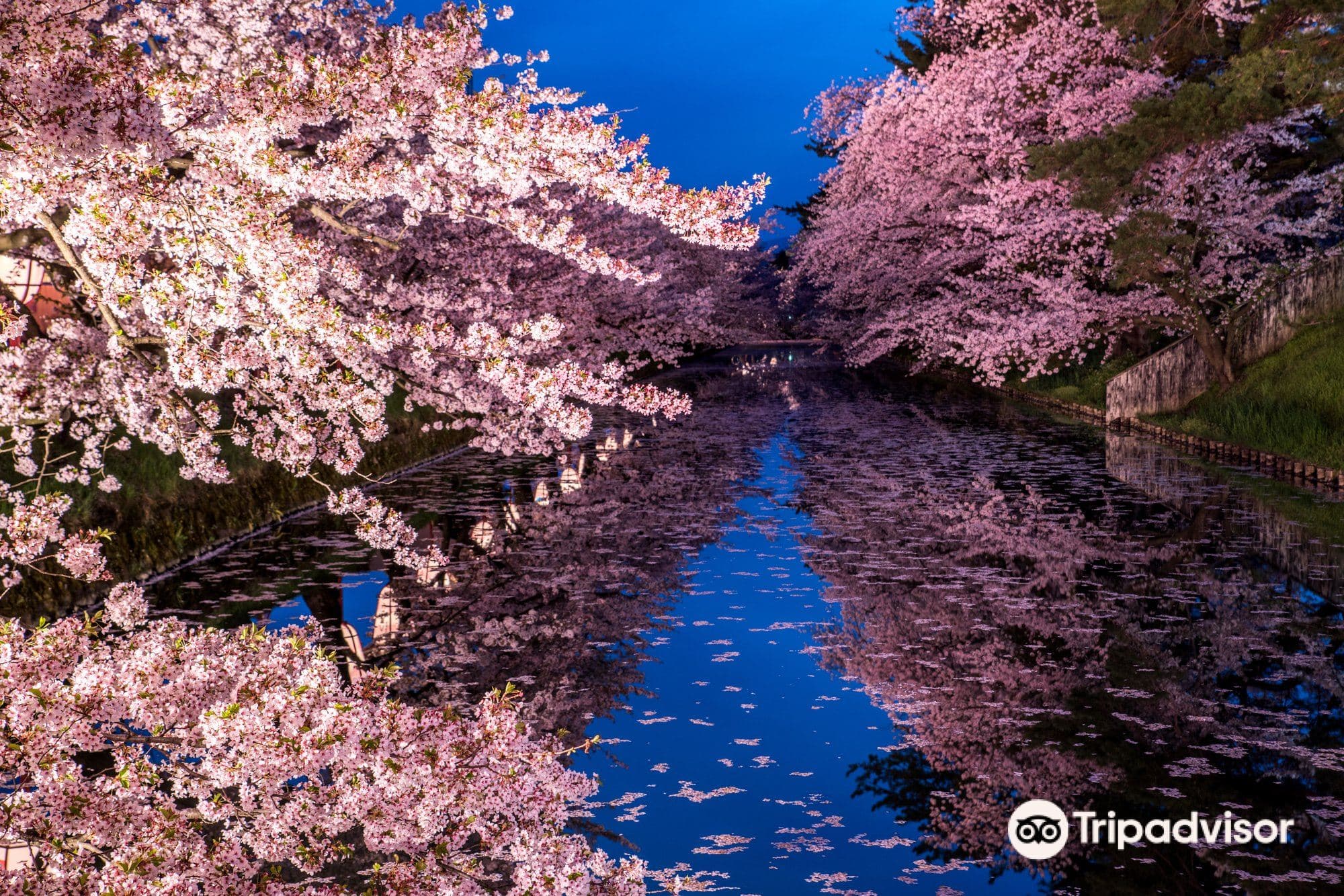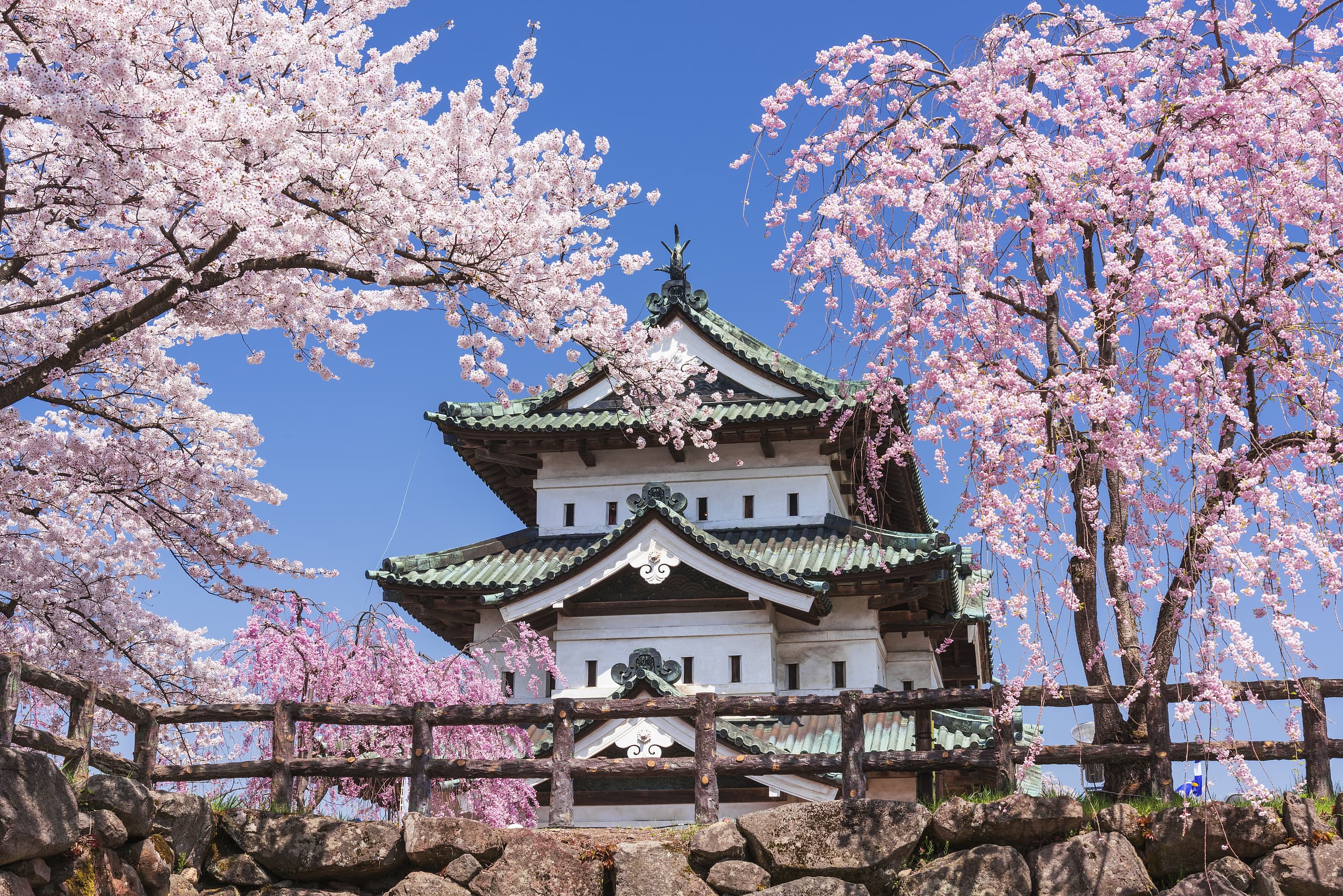
Hirosaki Castle is a historically significant site, one of the 12 original surviving feudal castles in Japan, and the only one in the Tohoku region. Originally built in 1611 and rebuilt in 1810, it served as the residence of the Tsugaru clan. Today, it is most famous for its extensive park, which transforms into one of Japan's premier cherry blossom viewing locations each spring, drawing large crowds.
Visitors consistently praise the castle grounds for their breathtaking beauty, particularly during the cherry blossom season when thousands of trees create a 'flower raft' effect on the moats. Many reviewers highlight the stunning views of Mount Iwaki from the castle tower and the overall serene atmosphere of the park. Beyond spring, the autumn foliage and winter snowscapes are also highly recommended, offering different but equally beautiful experiences. While the castle keep itself is often described as small and modest, its historical context, including its temporary relocation for stone wall repairs, adds an interesting layer to the visit. Reviewers appreciate the opportunity to climb to the top for panoramic views and to learn about the castle's unique history, including its clever design to circumvent shogunate restrictions.
To make the most of your visit, plan to spend 2-3 hours exploring the extensive grounds. If visiting during cherry blossom season (typically late April to early May), arrive early to avoid the largest crowds, as it can get very busy. Consider purchasing a combined ticket that includes the castle tower, botanical gardens, and Fujita Memorial Garden for a comprehensive experience. Many visitors recommend renting a bicycle from Hirosaki Station for around 500 yen a day, as it allows for easy navigation of the large park and surrounding areas. Be aware that the castle's interior stairs are steep. For those interested in photography, the combination of the castle with Mount Iwaki in the background is a popular shot.
Hirosaki Castle is easily accessible from JR Hirosaki Station. During peak cherry blossom season, special buses are often available directly from the station, with staff guiding tourists. Alternatively, it's about a 30-minute walk from the station. For those driving, parking is available, though some reviewers note it can be a bit far and uphill. The castle is located at 1 Shimoshiroganecho, Hirosaki, Aomori 036-8356, Japan.
A common complaint among visitors is the castle's relatively small size and the ongoing stone wall repairs, which can detract from the exterior view. To mitigate this, focus on the expansive park and its seasonal beauty rather than solely on the keep. The temporary relocation of the castle offers a unique insight into modern preservation efforts, with explanatory panels detailing the process. While the interior exhibition is not extensive, it provides historical context for the castle's architecture and the Tsugaru clan.