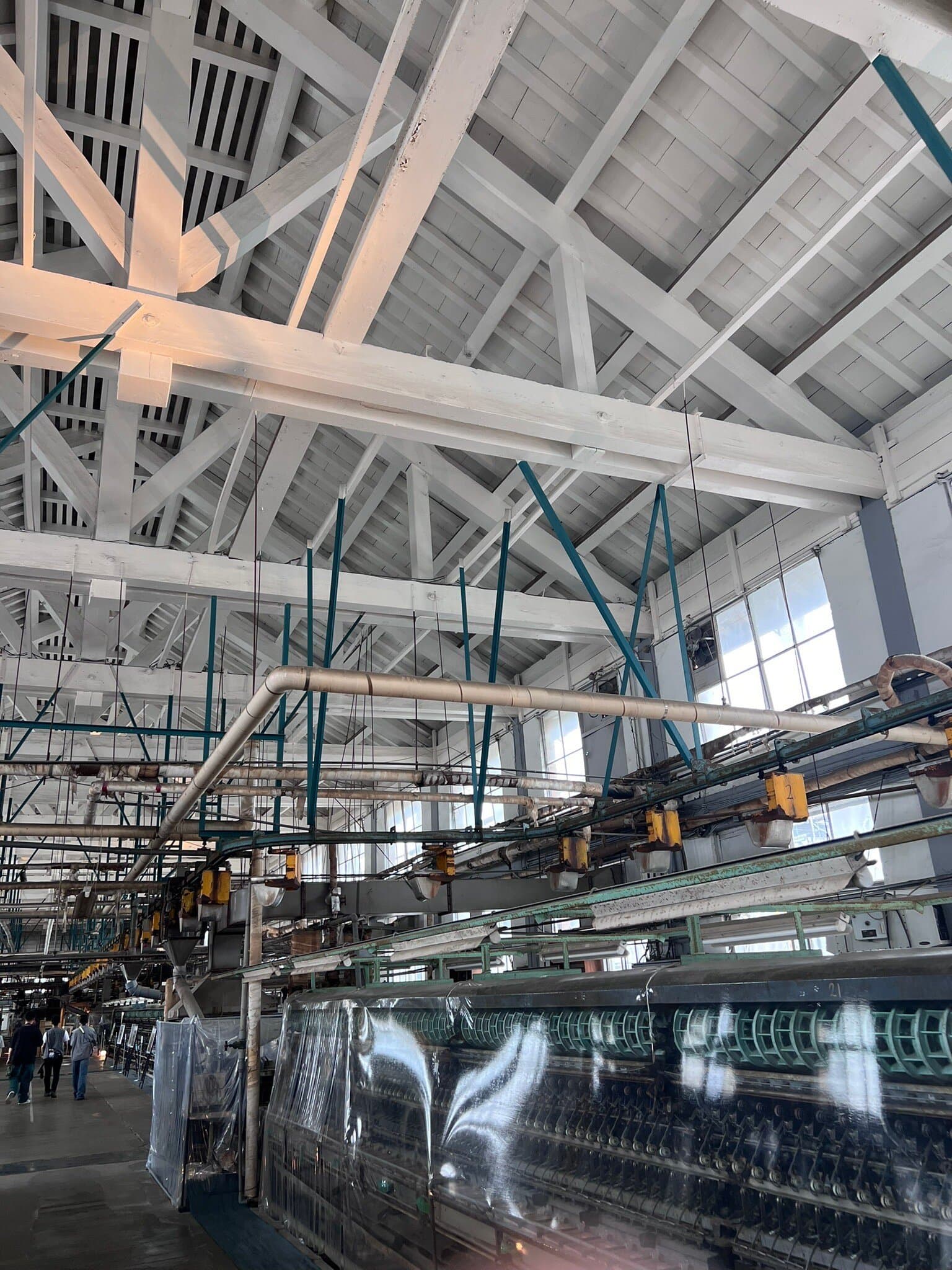
The Tomioka Silk Mill, established in 1872, stands as a pivotal symbol of Japan's Meiji-era modernization and its ambition to catch up with Western industrial powers. As Japan's first modern, mechanized silk reeling factory, it played a crucial role in developing the nation's silk industry, which became a primary export and fueled its economic growth. Recognized as a UNESCO World Heritage site in 2014, the mill showcases remarkably preserved red-brick architecture and machinery, offering a tangible connection to a transformative period in Japanese history.
Visitors consistently praise the site's historical significance and the excellent preservation of its buildings and equipment. Many find the guided tours, available for an additional fee, highly beneficial for understanding the complex's history and the silk production process. Reviewers highlight the opportunity to see original machinery, including the large Nissan silk reeling machines, and occasionally live demonstrations of traditional silk reeling. The site's educational value is frequently mentioned, with some visitors noting that even children can engage with the history through smartphone quizzes. However, some visitors express that while historically important, the site might not be inherently 'interesting' without the context provided by a guide or a deep interest in industrial history, as much of the experience involves walking through large, empty factory spaces.
To make the most of your visit, consider allocating 1-2 hours. Weekdays are generally recommended to avoid crowds, as weekends can be busy. Several reviewers suggest paying the extra 200 yen for a guided tour, as it significantly enhances the experience by providing context and detailed explanations. An English brochure is available, though some visitors found it challenging to locate initially; asking a staff member is advisable. For those with children, the smartphone quiz mentioned by some visitors can be a good way to keep them engaged. Be aware that some parts of the complex may be under renovation, which might limit access to certain areas.
The Tomioka Silk Mill is accessible by train. From Tokyo, take the bullet train (Asama) to Takasaki Station, which takes about an hour and costs approximately 4,410 JPY. From Takasaki, transfer to the Joshin Electric Railway to Joshu-Tomioka Station, a 30-minute journey costing 790 JPY. The train from Takasaki runs every 20 to 50 minutes. A combo ticket, available at Takasaki Station, includes round-trip fare and admission to the mill, offering a saving of about 420 yen compared to separate purchases. The mill is a short walk from Joshu-Tomioka Station. For those driving, parking is available nearby, though some visitors noted it can be expensive.
A common complaint among some visitors, particularly those without a guide or a strong interest in industrial history, is the perceived lack of engaging exhibits or the feeling that the site is not set up well for foreign visitors. To mitigate this, it is highly recommended to opt for the guided tour or at least utilize the English brochure. Some reviewers also expressed disappointment that certain sections require additional fees or were inaccessible due to renovations. It's advisable to check the official website for current information on accessible areas and any ongoing construction before your visit.