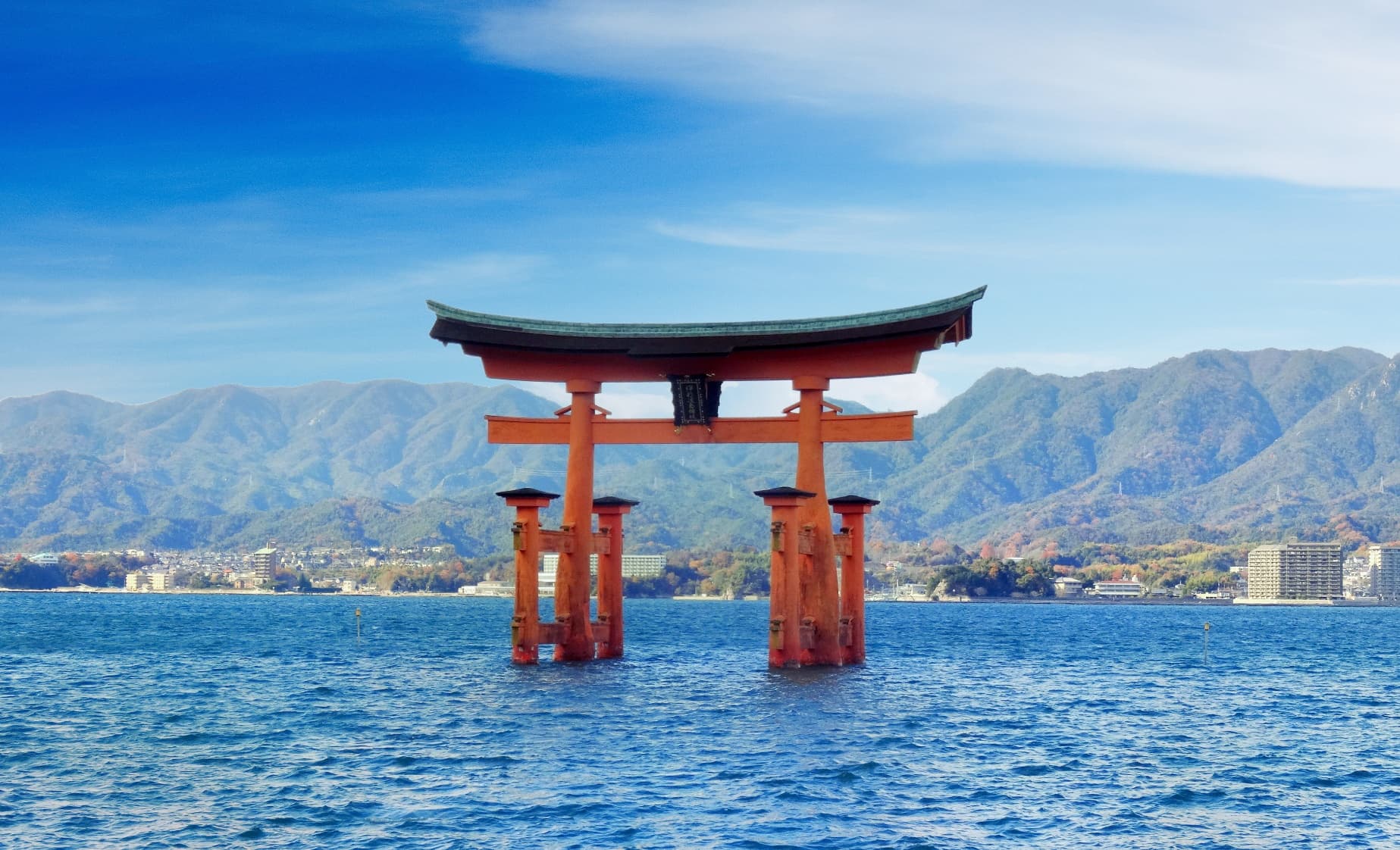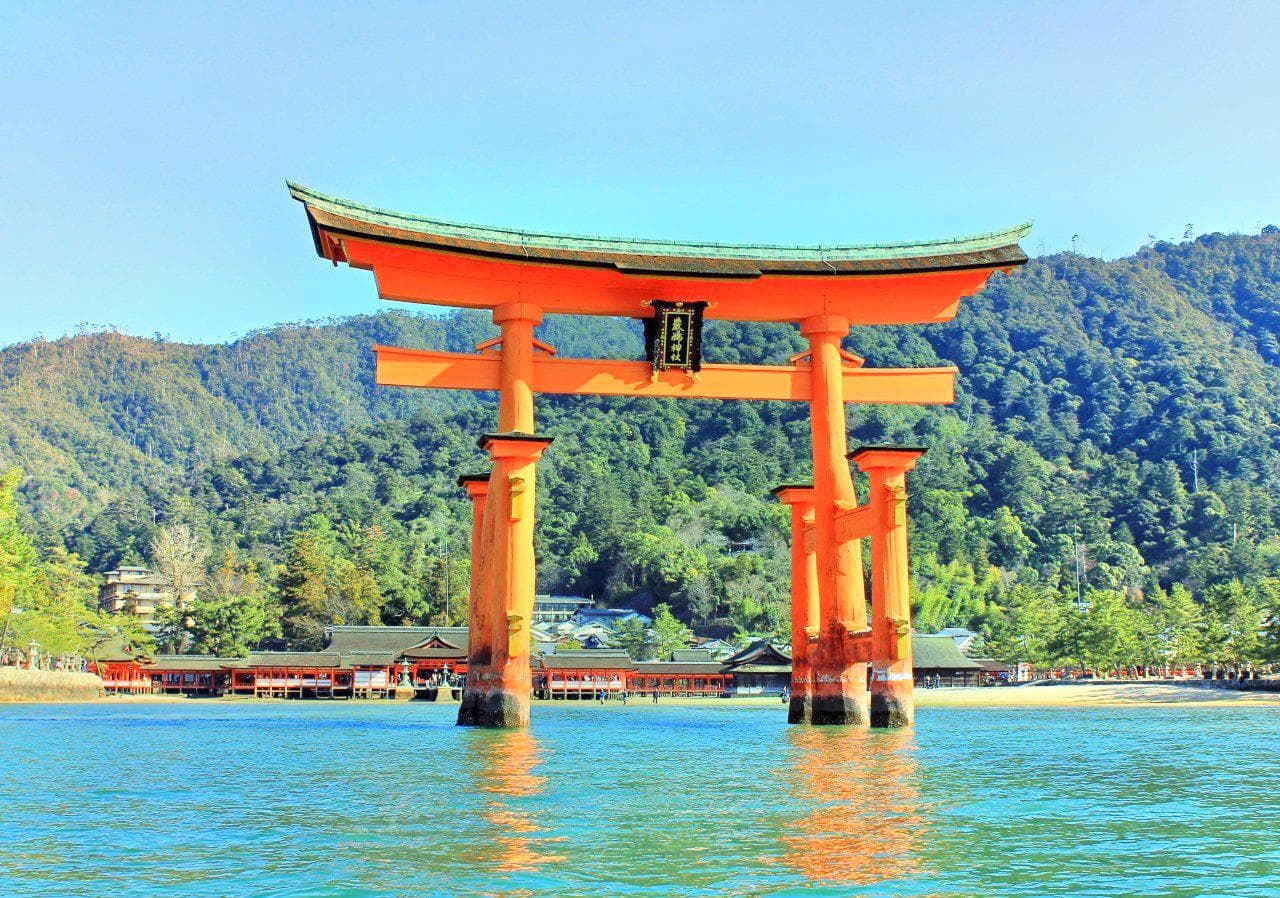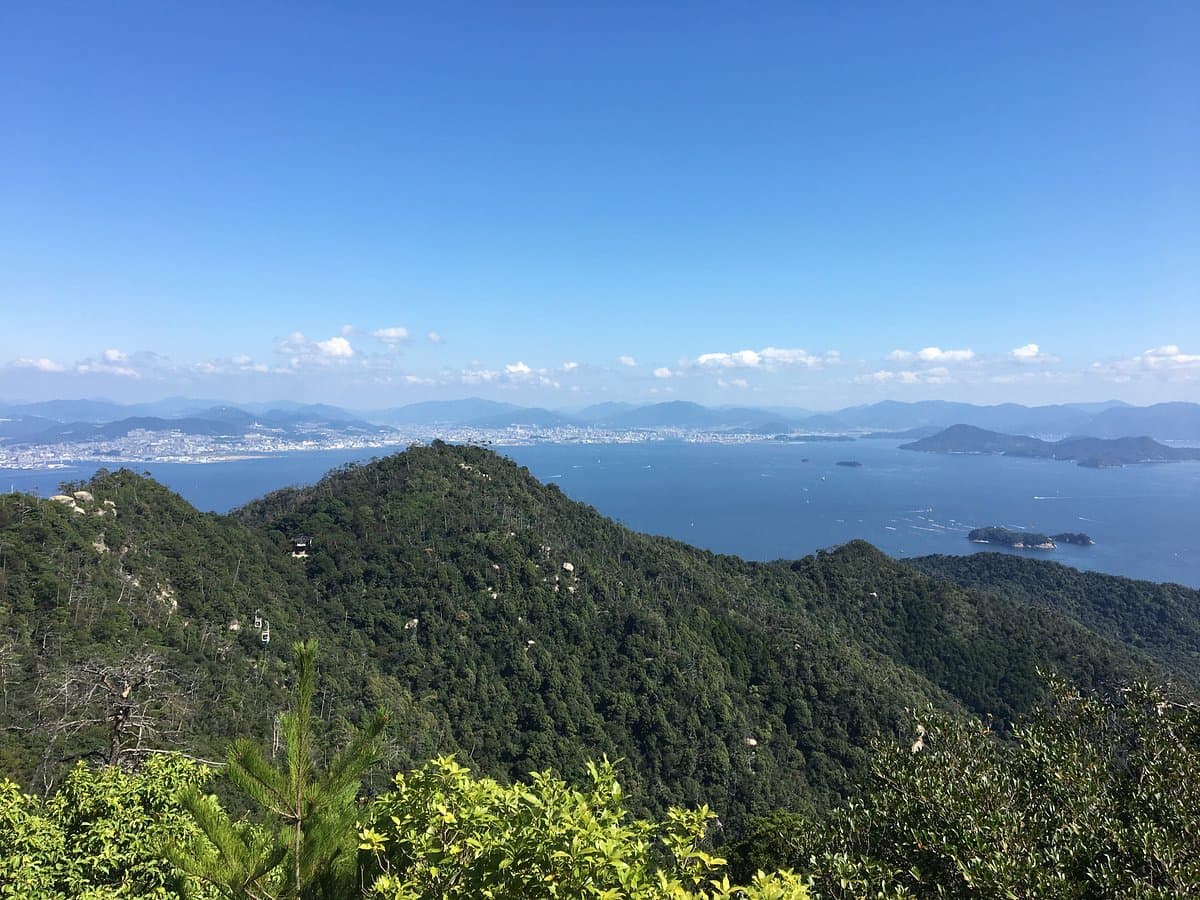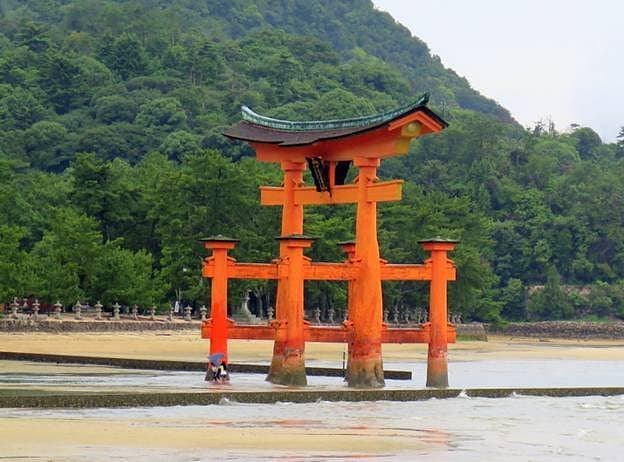
The Itsukushima Shrine Torii is a magnificent vermillion gate that serves as the iconic entrance to the Itsukushima Shrine on Miyajima Island. Rebuilt in 1875, this ninth iteration of the gate has stood since the Heian period and is renowned for its unique placement in the Seto Inland Sea, symbolizing a sacred boundary between the mundane and the spiritual. It is a UNESCO World Heritage site and a powerful representation of Japan's Shinto faith and natural beauty.
Visitors consistently praise the gate's striking appearance, particularly how it seems to float on the water during high tide. Many highlight the excellent photo opportunities it provides, especially at sunset when the gate is lit up and crowds thin out. The ability to walk directly to the gate's base at low tide is another frequently mentioned highlight, allowing for a closer appreciation of its massive scale and intricate construction. Reviewers often recommend checking tide times in advance to experience both high and low tide views, as each offers a distinct perspective. The island itself, with its friendly deer and oyster restaurants, also receives positive mentions as part of the overall experience.
To make the most of your visit, plan to spend at least 2-3 hours on Miyajima Island, allowing time to see the Torii at different tide levels if possible. Many suggest arriving early in the morning or later in the afternoon, especially around sunset, to avoid the largest crowds and capture the best lighting for photographs. Bringing a camera is essential, and comfortable walking shoes are recommended for exploring the island. While the gate itself is free to view, consider bringing money for local food stalls, particularly the famous Hiroshima oysters, and souvenirs. Some visitors recommend taking the JR West ferry, as it often passes close to the Torii, offering excellent views from the water.
Reaching Miyajima Island and the Torii is straightforward. From Hiroshima, take a JR train (covered by the JR Rail Pass) to Miyajimaguchi Station. From there, it's a short walk to the ferry terminal. The JR West ferry (also covered by the JR Rail Pass) takes about 10 minutes to reach Miyajima Island. Upon arrival, the Torii is a short, well-signposted walk along the coast from the ferry terminal. Alternatively, the Hiroshima World Heritage Sea Route offers a direct fast ferry from near the Atomic Dome site to Miyajima port, taking 40-45 minutes.
A common complaint is the large crowds, especially during peak hours and seasons like cherry blossom. To mitigate this, aim for early morning or late afternoon visits. Some visitors also express disappointment if they only see the gate at low tide, as it loses its "floating" effect. Checking tide schedules beforehand can help manage expectations and allow you to plan your visit to witness both high and low tide phenomena.