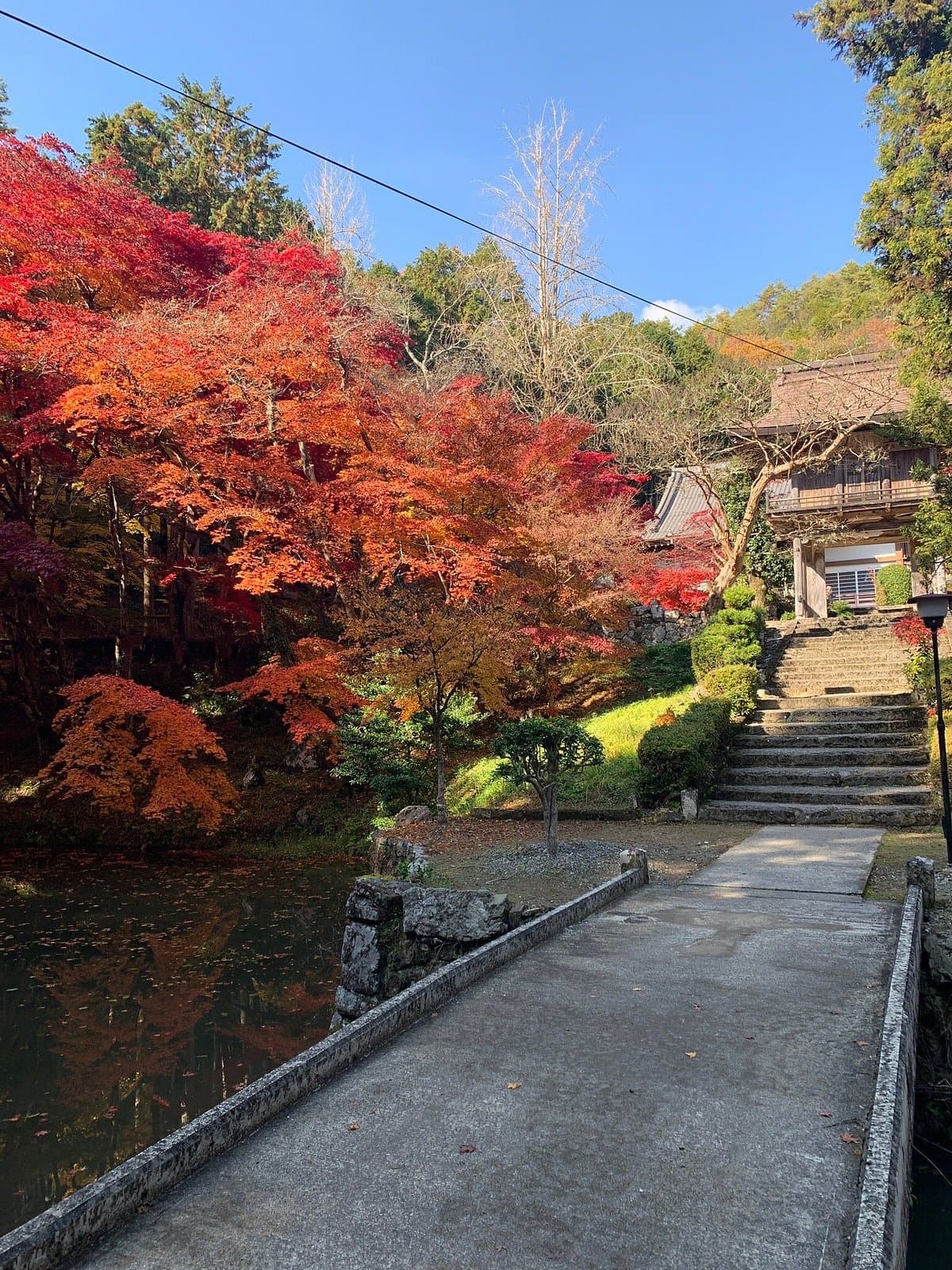
Dokoji Temple is a historic Buddhist temple located in the Tanba Sasayama region of Hyogo Prefecture. It is known for its peaceful ambiance and traditional Japanese architecture, offering a glimpse into local religious heritage away from the bustling urban centers. While not a major landmark, it provides a quiet retreat for those seeking spiritual reflection or a connection with nature.
Visitors consistently praise the temple's tranquil environment, highlighting the sense of calm and serenity it offers. Many reviewers mention the stunning beauty of the autumn leaves, suggesting that this period is the most picturesque time to visit. The uncrowded nature of the temple is frequently cited as a significant advantage, allowing for a more personal and contemplative experience compared to more popular sites. Reviewers often describe it as a hidden gem, perfect for those who appreciate quietude.
To make the most of a visit, consider going during the autumn months (typically late October to mid-November) to witness the vibrant fall colors. A visit of 1-2 hours is generally sufficient to explore the grounds and soak in the atmosphere. There are no specific items to bring beyond comfortable walking shoes. As it is a less-visited site, there are no crowds to avoid, making any time of day suitable, though early morning or late afternoon might offer the best light for photography.
Dokoji Temple is located at 301 Higashihonjo, Tanba Sasayama, Hyogo Prefecture. Given its rural location, public transport options might be limited. Visitors typically recommend driving to reach the temple, as it offers the most convenient access. Parking availability is generally not an issue due to the low visitor numbers. It is advisable to check local bus schedules if relying on public transport, as services may be infrequent.
Common complaints are few, primarily stemming from its remote location and the lack of extensive facilities or English signage, which can be a minor inconvenience for international visitors. To mitigate this, having a translation app or a basic understanding of Japanese phrases can be helpful. The temple's charm lies in its simplicity, so visitors should manage expectations regarding modern amenities.