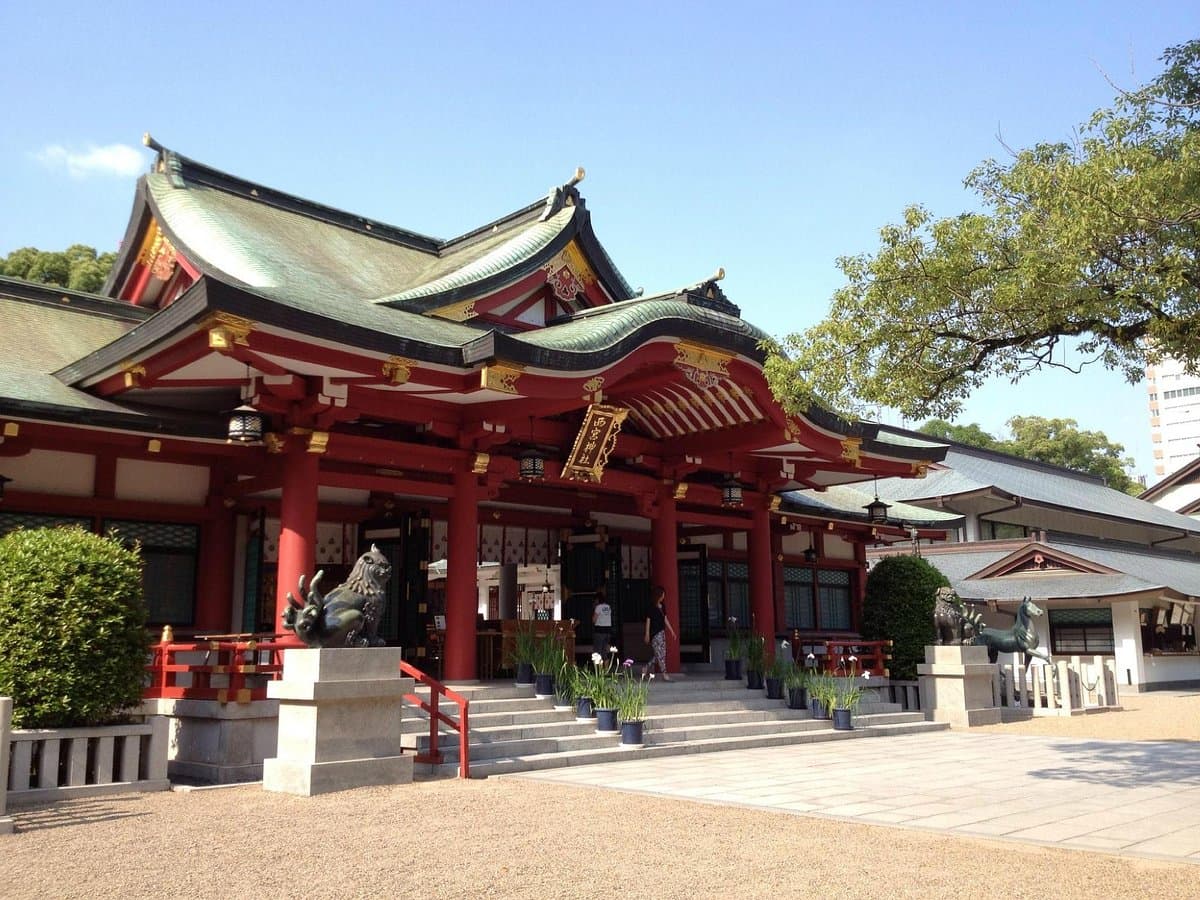
Nishinomiya Shrine holds significant cultural importance as the head shrine (Sohonsha) for Ebisu-sama, the deity of thriving business and good fortune, with its origins predating the Heian period. It serves as a spiritual center for many Japanese, particularly those seeking blessings for their enterprises. The shrine is not just a place of worship but also a historical landmark, offering a glimpse into traditional Japanese religious practices and architecture.
Visitors consistently praise the shrine's serene ambiance, especially on weekdays or non-festival days, describing it as a "power spot" where one can feel rejuvenated. Many highlight the beautifully maintained gardens, complete with ponds and koi fish, as a favorite spot for quiet contemplation. The historical tea house within the grounds, offering traditional amazake (a sweet, non-alcoholic fermented rice drink), is frequently mentioned as a delightful experience, providing a taste of local culture and a moment of relaxation. Reviewers also appreciate the multiple buildings and statues, contributing to a rich visual experience.
For a peaceful visit, it's advisable to go on a weekday afternoon outside of major festival periods. Several visitors recommend spending 1-2 hours to fully appreciate the grounds, including the gardens and the tea house. If attending a festival, be prepared for large crowds and a lively atmosphere. Bringing comfortable shoes is always a good idea, especially if you plan to explore the entire complex. While the shrine is generally easy to navigate, some visitors noted that finding the main entrance can be a bit tricky initially.
The shrine is conveniently located. Many visitors mention that the street from Hanshin Nishinomiya Station leads directly to the shrine, making it accessible via public transport. While specific bus lines aren't detailed in reviews, the proximity to a major train station suggests good connectivity. For those driving, parking information is not widely discussed in reviews, implying public transport might be the preferred method of arrival, especially during festivals when congestion is high.
The primary complaint, particularly during the annual Ebisu Festival in January, is the overwhelming crowd. Reviewers describe streets completely congested with people, making navigation challenging, especially for families with young children, the elderly, or those with mobility issues. To mitigate this, consider visiting on the last day of the festival or before 5 PM on the 10th of January, as suggested by some experienced visitors. Alternatively, visiting on a non-festival day offers a completely different, much calmer experience.