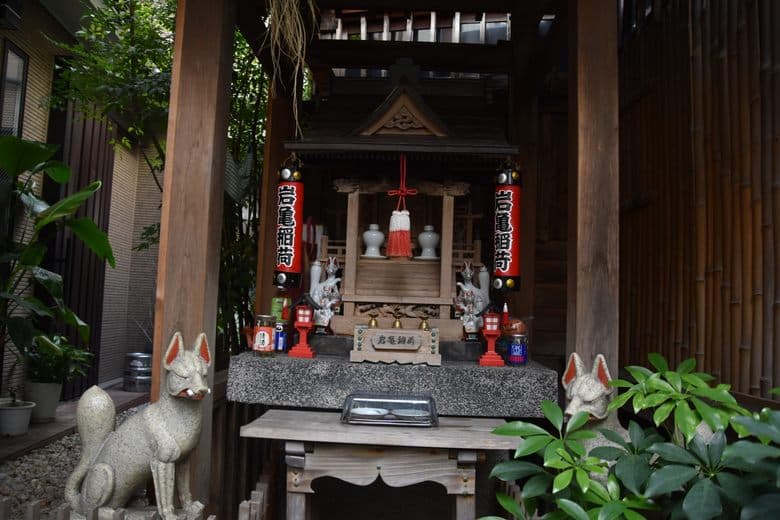
Ganki Inari is a small, unassuming shrine nestled in a quiet residential and shopping street in Yokohama. It holds a unique historical significance as one of the last remaining physical traces of the city's once-thriving red-light district, which emerged after the Port of Yokohama opened in 1859. The shrine was originally part of the opulent Ganki-rō brothel, where courtesans would pray to the Inari fox god for good fortune. While the grand brothels are long gone, razed by fire and replaced by modern neighborhoods, Ganki Inari persists as a testament to a bygone era and a focal point for local community traditions.
Visitors consistently praise the shrine for its 'hidden gem' quality and the sense of discovery it offers. Many appreciate its well-maintained appearance, noting the vibrant red lanterns and numerous fox figurines, which are cared for by local shopkeepers. The quiet, almost secluded atmosphere, despite being in a city, is frequently mentioned as a positive aspect, providing a peaceful moment of reflection. Some visitors find the historical context, particularly the legend of courtesan Kiyuu, to be fascinating, adding depth to the small site.
To make the most of your visit, allocate about 15-30 minutes to explore the shrine and its immediate surroundings. It's best visited during daylight hours for clear visibility and to appreciate the details. There's no entry fee, making it an accessible stop. Visitors recommend combining a visit here with exploring the Noge district, known for its traditional izakayas and lively evening atmosphere, or the nearby Sakuragicho area. Bring a camera, as the shrine's hidden nature and traditional aesthetics make for interesting photos. Be mindful that it's located in a residential area, so maintain a respectful quiet.
Ganki Inari is located in the Ganki Yokochō shopping street. The nearest major train station is Sakuragicho Station (桜木町駅), accessible via the JR Keihin-Tohoku Line, Yokohama Line, and the Yokohama Municipal Subway Blue Line. From Sakuragicho Station, the shrine is approximately a 10-15 minute walk. Exit towards the Noge area and navigate through the smaller streets. Alternatively, Hinodecho Station (日ノ出町駅) on the Keikyu Main Line is also within walking distance, roughly 5-7 minutes away. Look for the small wooden door with white shrine banners flapping in the wind, as it can be easy to miss.
The primary 'complaint' or challenge visitors face is simply finding the shrine due to its inconspicuous location down a narrow alley. To mitigate this, use a reliable map application and look for the specific visual cues mentioned (wooden door, white banners). Some might find the site too small if they are expecting a grand temple, so adjust expectations accordingly; its charm lies in its intimacy and historical narrative rather than its scale.