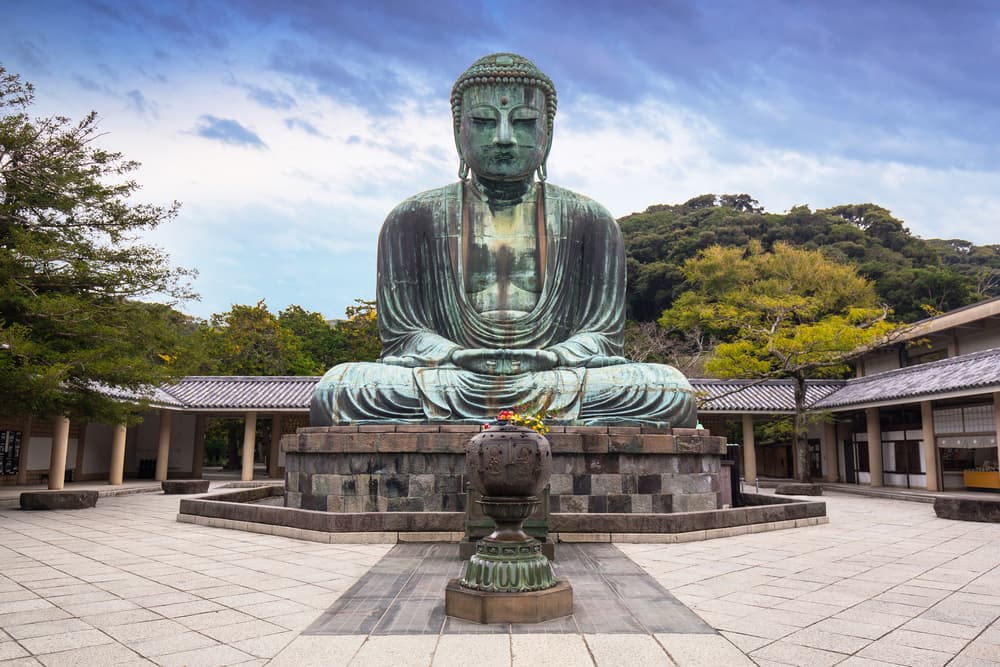
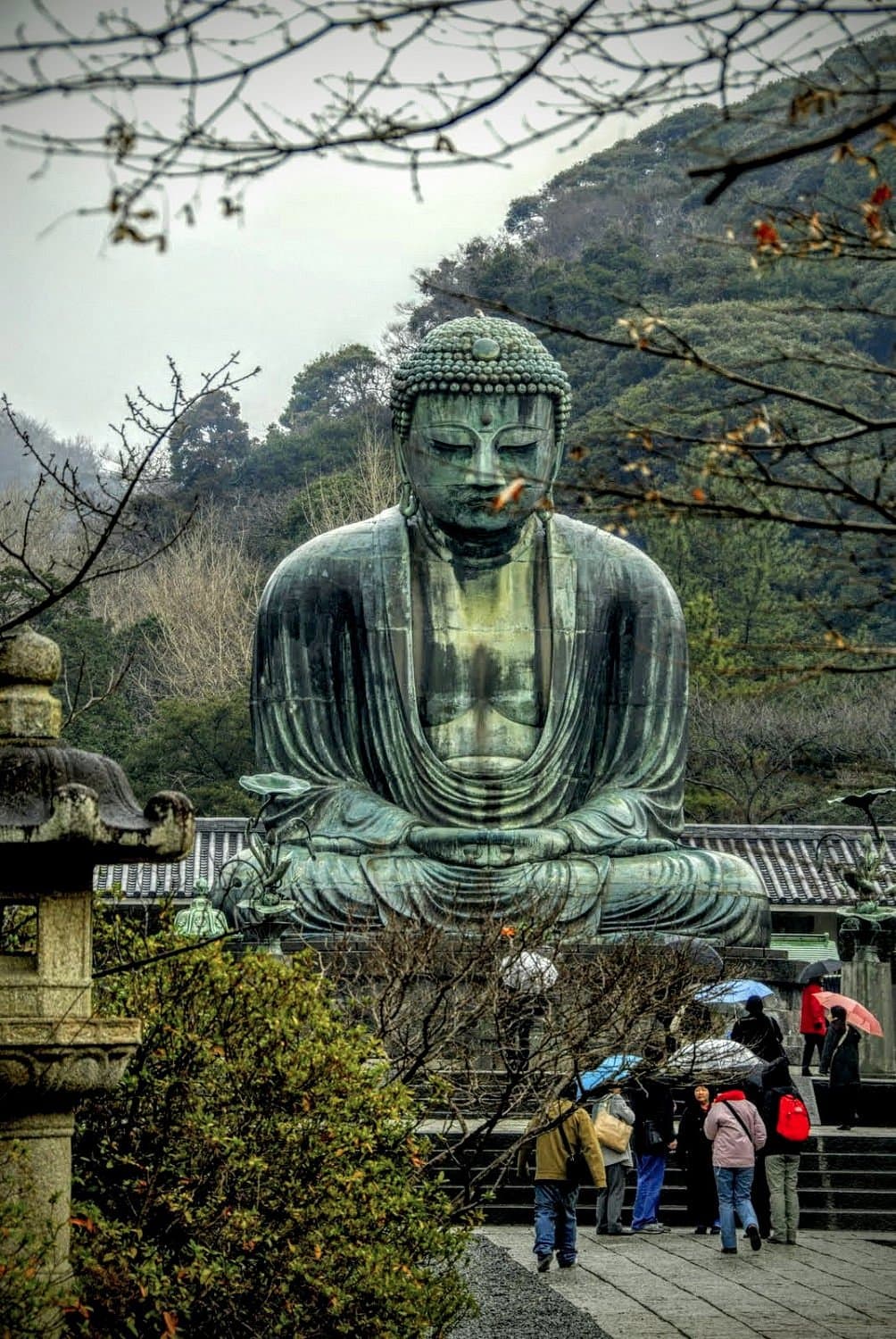
The Great Buddha of Kamakura, known locally as Kamakura Daibutsu, is a colossal bronze statue of Amida Buddha located within the Kotoku-in temple grounds. Dating back to 1252, this 13.35-meter-tall, 121-ton statue is a designated National Treasure and stands as one of Japan's most significant historical landmarks. Its enduring presence outdoors, having survived tsunamis and the destruction of its original temple hall, underscores its resilience and spiritual importance.
Visitors consistently praise the statue's imposing size and the serene, spiritual ambiance of the temple grounds. Many find the experience breathtaking and describe it as a highlight of their Kamakura visit. Reviewers frequently mention the opportunity to go inside the hollow statue for a small additional fee, noting it offers a unique perspective on its construction, though some find the interior less impressive or even claustrophobic. The well-maintained gardens and the overall peaceful environment are also frequently highlighted, with some visitors appreciating the chance to escape the hustle and bustle of city life.
To make the most of your visit, consider arriving early in the morning, especially on weekdays, to avoid the large crowds that gather later in the day. Several reviewers emphasize that an early start allows for more serene contemplation and better photo opportunities without many tourists in the frame. The visit itself is relatively short, with most people spending between 30 minutes to an hour exploring the statue and its immediate surroundings. While going inside the Buddha is an option, some visitors suggest it might be skippable if you are short on time or prone to claustrophobia, as the main appeal lies in the exterior view and the overall atmosphere. Don't forget to look for the giant straw sandals near the Buddha, which many find curious and a good photo opportunity.
The Great Buddha is easily accessible from Tokyo. Take a JR train to Kamakura Station (covered by JR Pass), then transfer to the Enoshima Electric Railway (Enoden Line) and alight at Hase Station. From Hase Station, the temple is a straightforward 5-10 minute walk, with clear street signs guiding the way. Many visitors enjoy the walk through the local streets, which offer shops and street food. Alternatively, buses are available from Kamakura Station directly to the temple, with bus stop F1 frequently mentioned. For those driving, parking options are available nearby, though public transport is highly recommended due to potential traffic and parking challenges.
A common complaint among some visitors is the perceived smallness of the temple grounds beyond the statue itself, leading to a shorter visit than anticipated. Some also mention the crowds, especially during peak seasons, which can detract from the peaceful experience. To mitigate this, as mentioned, visiting early is key. While the entry fee is modest, a few reviewers felt it was slightly high for what they considered a singular attraction. However, the vast majority agree that the historical significance and impressive scale of the Buddha make it well worth the cost and effort.