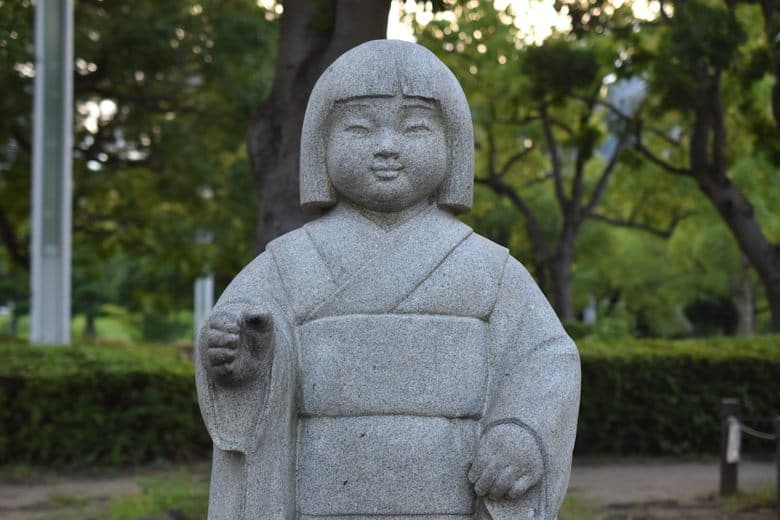
The 'Shake Hands With Lima-chan' statue is a poignant memorial located in Yokohama's Rinko Park, commemorating the significant 1899 migration of 790 Japanese immigrants from Yokohama to Lima, Peru. This statue, depicting a young girl with an outstretched hand, symbolizes the enduring friendship between Japan and Peru. It was erected in 1999, marking the centenary of this mass migration, and stands as a counterpart to an earlier statue, Sakura-chan, installed in Lima in 1989. Both statues face the Pacific Ocean, symbolizing the transpacific connection and the journey undertaken by thousands of Japanese contract workers who sought new lives in South America.
Visitors often appreciate the statue's quiet symbolism and its location within the pleasant Rinko Park. While not a major draw on its own, it offers a moment of reflection for those interested in historical migration patterns and international relations. Reviewers note that the park itself provides a nice setting for a stroll, and the statue fits well within this tranquil environment. There are no specific warnings or consistent complaints about the statue itself, as it is a simple, commemorative piece.
To fully appreciate the statue, visitors might spend only a few minutes at the site, perhaps combining it with a longer visit to Rinko Park or the nearby Minato Mirai area. There's no specific equipment needed, and it's accessible at any time the park is open. The best time to visit would be during daylight hours to clearly see the statue and its surroundings. As it's a public park installation, there are no entry fees or specific opening hours beyond the park's accessibility.
Rinko Park is conveniently located within walking distance of several major train stations. It is approximately a 5-10 minute walk from Minatomirai Station (Minatomirai Line) or Sakuragicho Station (JR Keihin-Tohoku Line, Yokohama Municipal Subway Blue Line). From either station, follow signs towards Minato Mirai and then to Rinko Park. Public transport is highly recommended as parking in the area can be limited and expensive. The park is well-signposted, making it easy to find the statue once inside.
Common complaints are not typically directed at the statue itself, but rather at the general expectation of a 'major' attraction. Visitors should understand that this is a commemorative monument, not an interactive exhibit or a grand landmark. To mitigate any disappointment, approach it as a historical marker within a larger park visit, rather than a standalone destination.