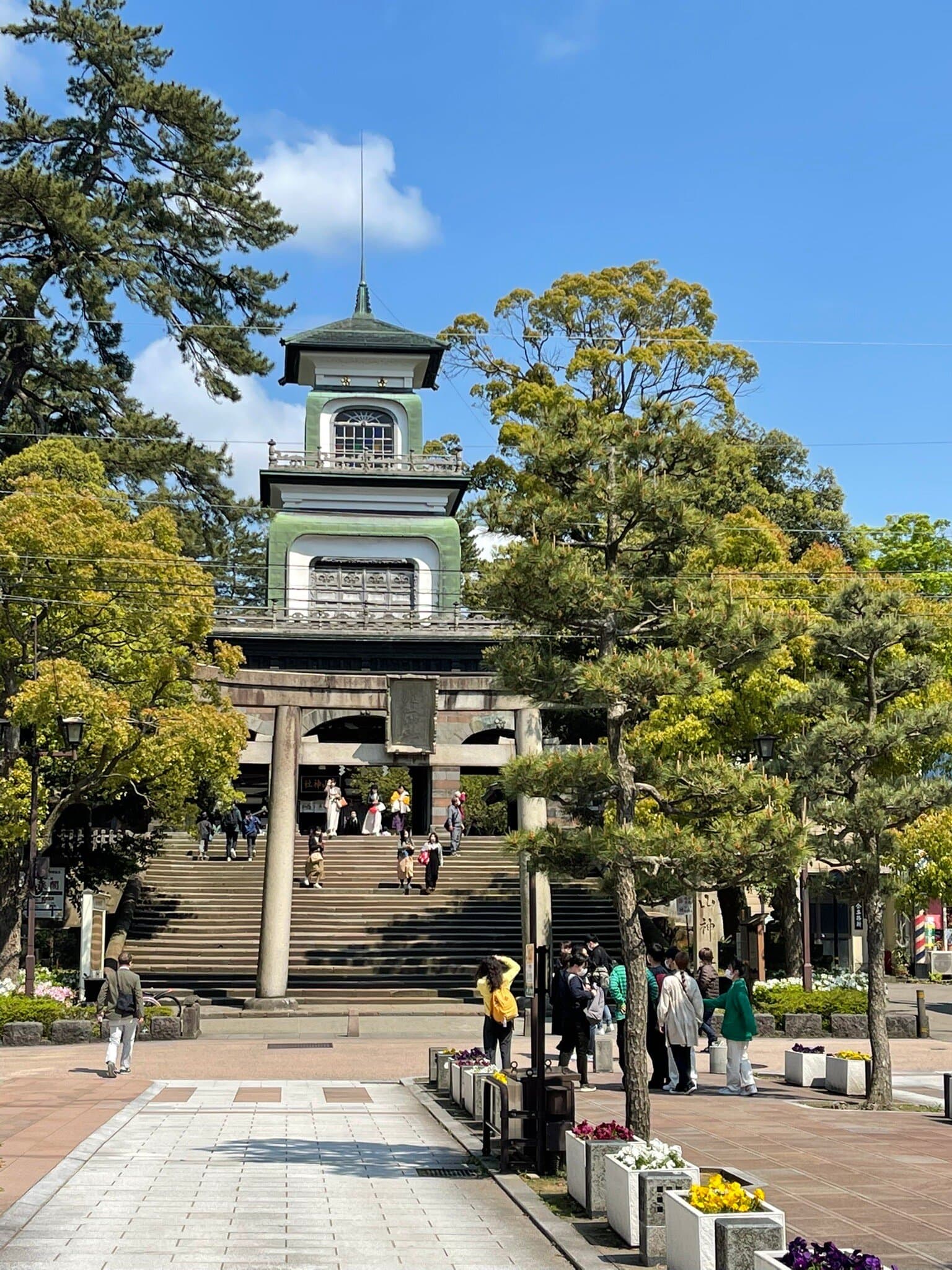
Oyama Shrine is a historically significant site in Kanazawa, dedicated to Maeda Toshiie, the first lord of the Kaga Domain. What sets this shrine apart and makes it a notable landmark is its architectural fusion, particularly evident in its main gate. Built in 1875, this three-story gate combines traditional Japanese design with Chinese and Western elements, including a distinctive stained-glass lighthouse on its upper level, a feature rarely seen in Japanese shrines.
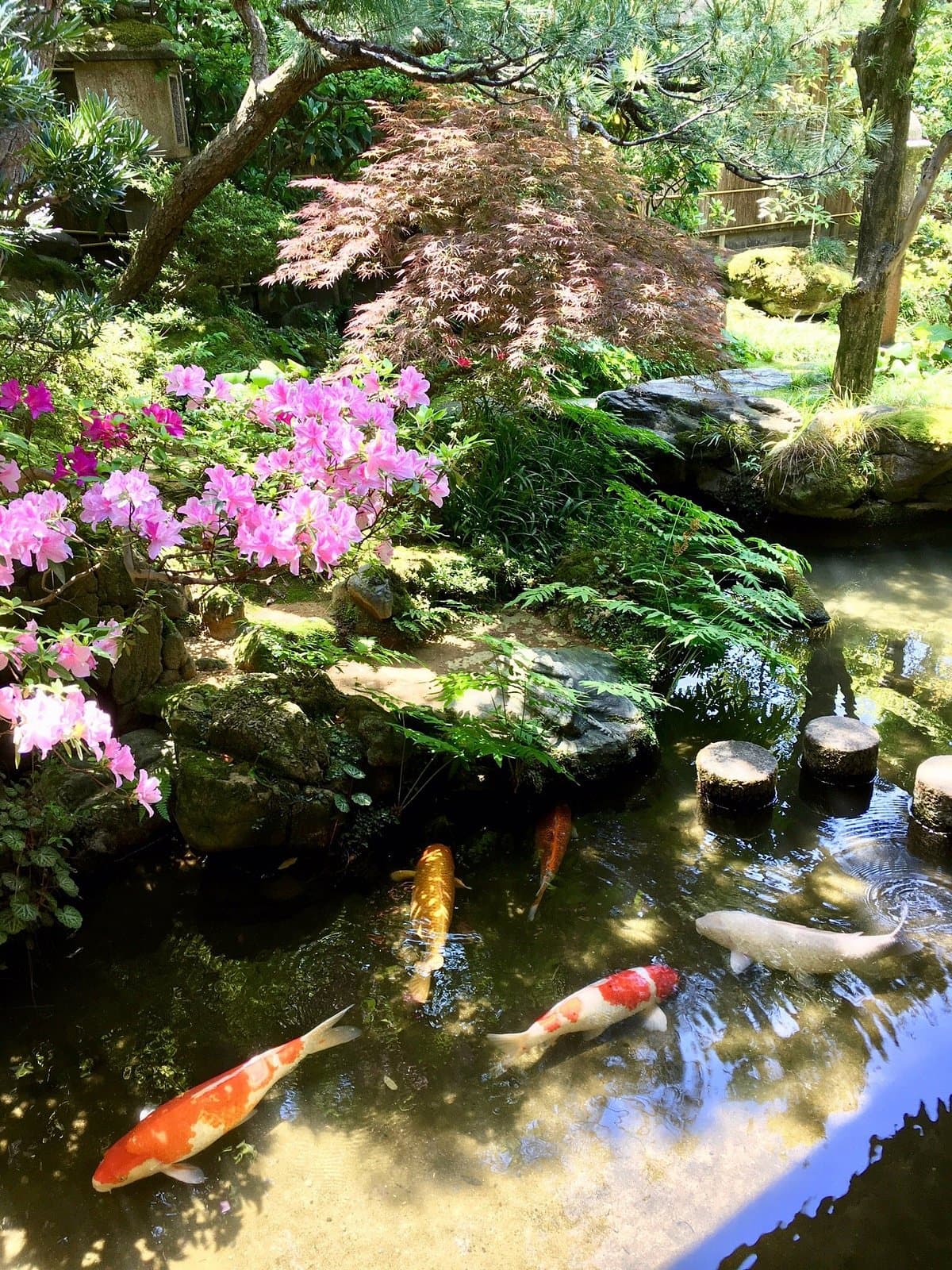
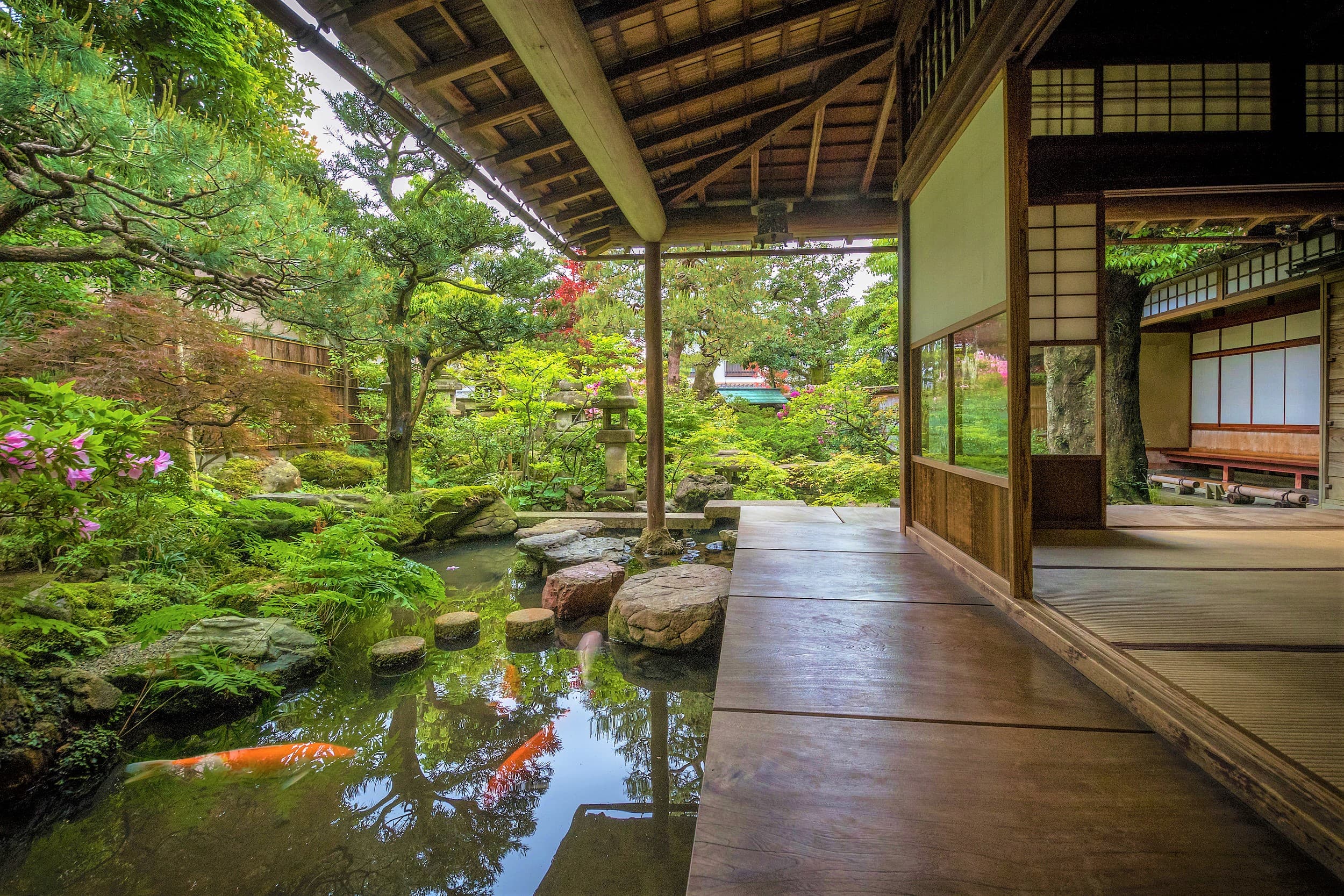
Visitors consistently highlight the shrine's unique aesthetic, often describing it as "interesting" and "unlike typical shrines." The stained-glass windows are a frequent point of praise, with several reviewers noting their beauty, especially when illuminated by the setting sun. The blend of cultures in the architecture provides a fresh perspective for those who have visited many traditional Japanese temples and shrines. Beyond the gate, the shrine grounds include a pond-style garden with an artificial island shaped like ancient musical instruments, adding to the tranquil and picturesque environment.
For a fulfilling visit, allocate approximately 30 minutes to an hour to explore the gate, the main shrine, and the garden. Many visitors suggest that the late afternoon, particularly around sunset, is the best time to experience the stained glass at its most vibrant. The shrine is generally quiet, offering a peaceful retreat from the city. There are no specific items to bring, but comfortable shoes are always advisable for walking around the grounds.
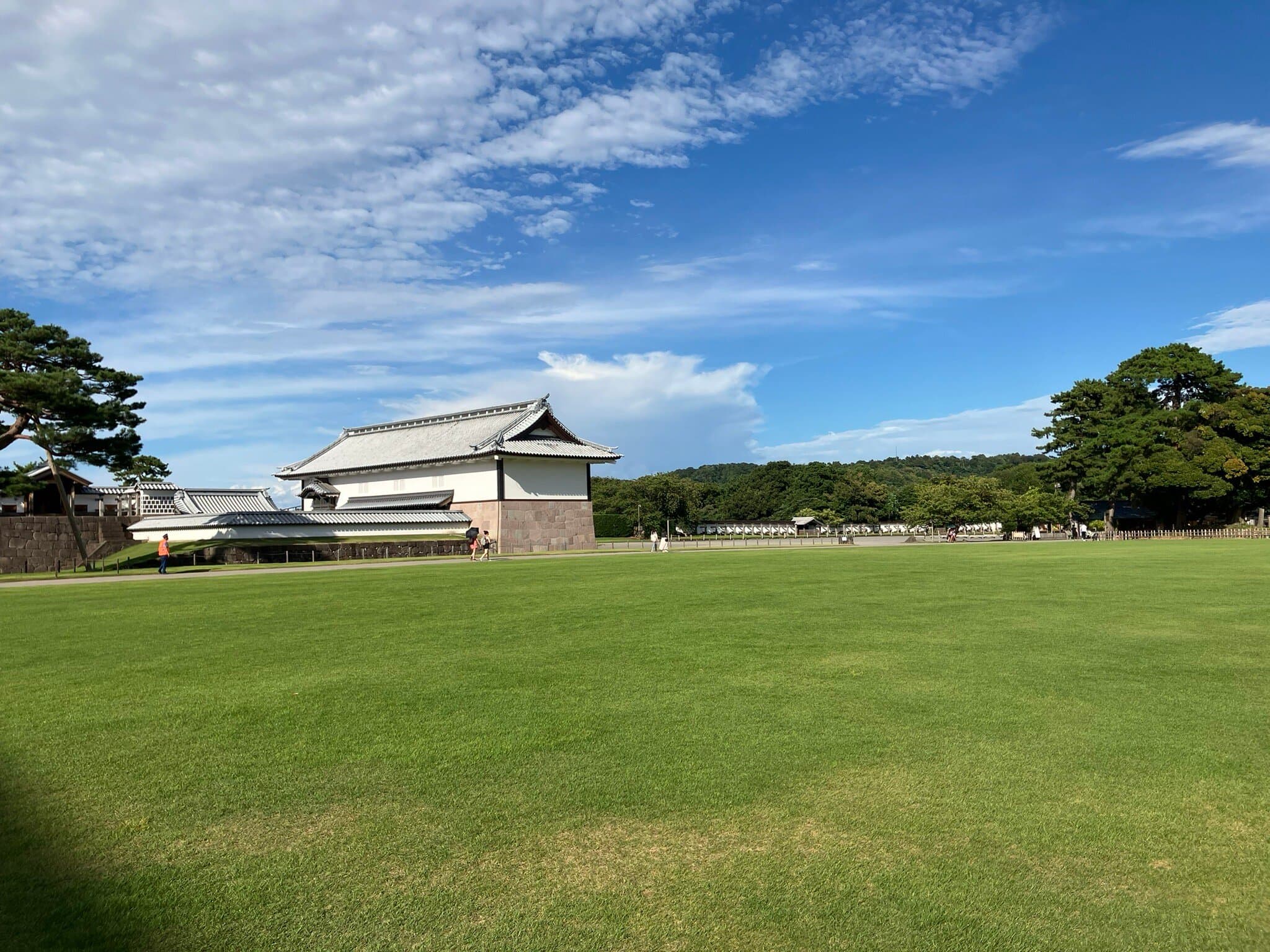
Oyama Shrine is conveniently located in central Kanazawa. It is easily accessible by public transport; several bus lines serve the area, and there is a bus stop directly named "Oyama Shrine" (尾山神社) nearby. From Kanazawa Station, visitors can take a local bus, and the journey is relatively short. For those exploring on foot, it is within walking distance of other major attractions like Kenrokuen Garden and Kanazawa Castle Park, making it easy to incorporate into a walking tour of the city center.
While there are few common complaints, some visitors might find the shrine smaller than expected if they are anticipating a sprawling complex. However, its compact size contributes to its intimate and peaceful atmosphere. To fully appreciate the site, take time to observe the architectural details of the gate and the serene design of the garden rather than rushing through.