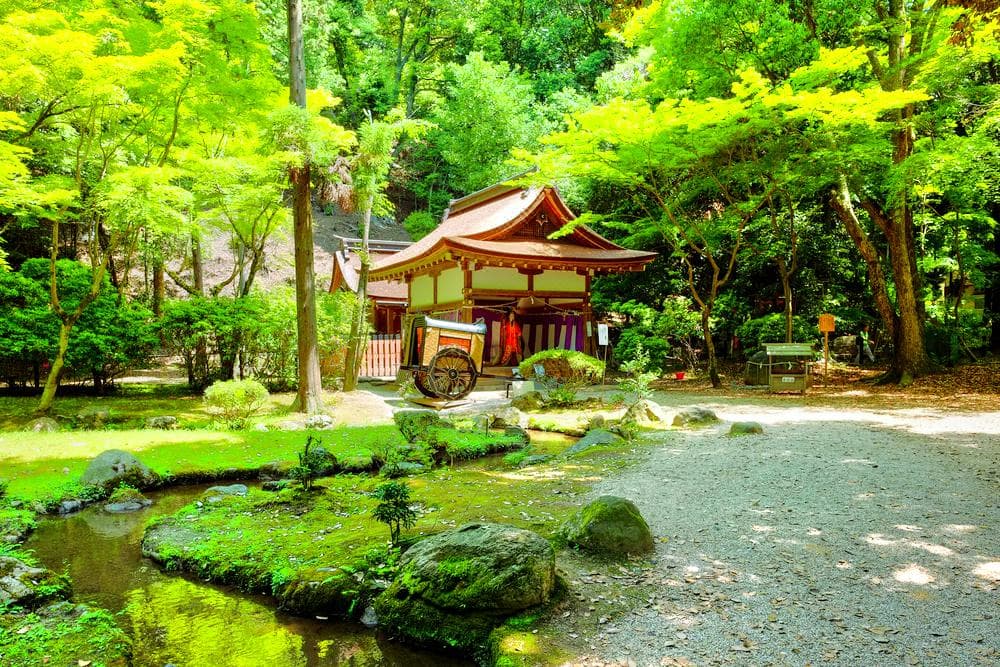
Kamigamo Jinja, officially known as Kamo Wakeikazuchi Jinja, is a UNESCO World Heritage site and one of Kyoto's most ancient and significant Shinto shrines, believed to have been founded in 678 AD. It is deeply intertwined with the city's history and culture, serving as a venue for important traditional religious activities, including the famous Aoi Matsuri, one of Kyoto's three major festivals.
Visitors consistently praise the shrine for its peaceful and less crowded atmosphere compared to other popular Kyoto attractions. Many reviewers highlight the sense of solemnity and sacredness, noting that it feels less like a tourist trap and more like an authentic spiritual site. The expansive grounds, with their ancient trees and the gently flowing Kamo River, are frequently mentioned as contributing to a relaxing and contemplative experience. Some visitors have been fortunate enough to witness traditional ceremonies or events like the "Kanowa Kuguri" or the "Kasaakake Shrine" festival, which offers a unique glimpse into Japanese culture. The beauty of seasonal elements, such as plum blossoms in early spring, is also a recurring positive theme.
To make the most of your visit, allocate 1 to 1.5 hours to explore the grounds thoroughly. Reviewers suggest visiting in the early morning for the most tranquil experience and to avoid any potential crowds, though many note it's generally not heavily touristed. If you are interested in specific events, check the shrine's schedule in advance; for instance, the Aoi Matsuri in May or the Kasaakake Shrine in October are highly recommended by those who experienced them. While some visitors note that parts of the shrine appear relatively new due to ongoing renovation or maintenance, this does not detract from its historical significance or serene ambiance. Wear comfortable shoes as you will be walking across extensive grounds.
Kamigamo Jinja is located in Kita-ku, Kyoto. While it's not in the immediate city center, it is accessible by public transport. Several reviewers mention its proximity to the Kamo River, suggesting a pleasant walk along the river after visiting the shrine. Specific bus routes from central Kyoto can take you directly to the shrine entrance or within a short walking distance. For example, bus number 4 from Kyoto Station or Shijo Kawaramachi will take you to the Kamigamo Jinja-mae bus stop. Driving is also an option, and parking is available, though public transport is generally recommended for navigating Kyoto.
A common observation, rather than a complaint, is that the shrine's architecture, due to continuous upkeep and renovations, might not always appear as ancient as its long history suggests. However, visitors generally understand that this maintenance is crucial for preserving the site. To mitigate any expectations of weathered, ancient structures, approach the shrine with an appreciation for its living history and ongoing role in Japanese religious life, rather than solely as a static historical relic.