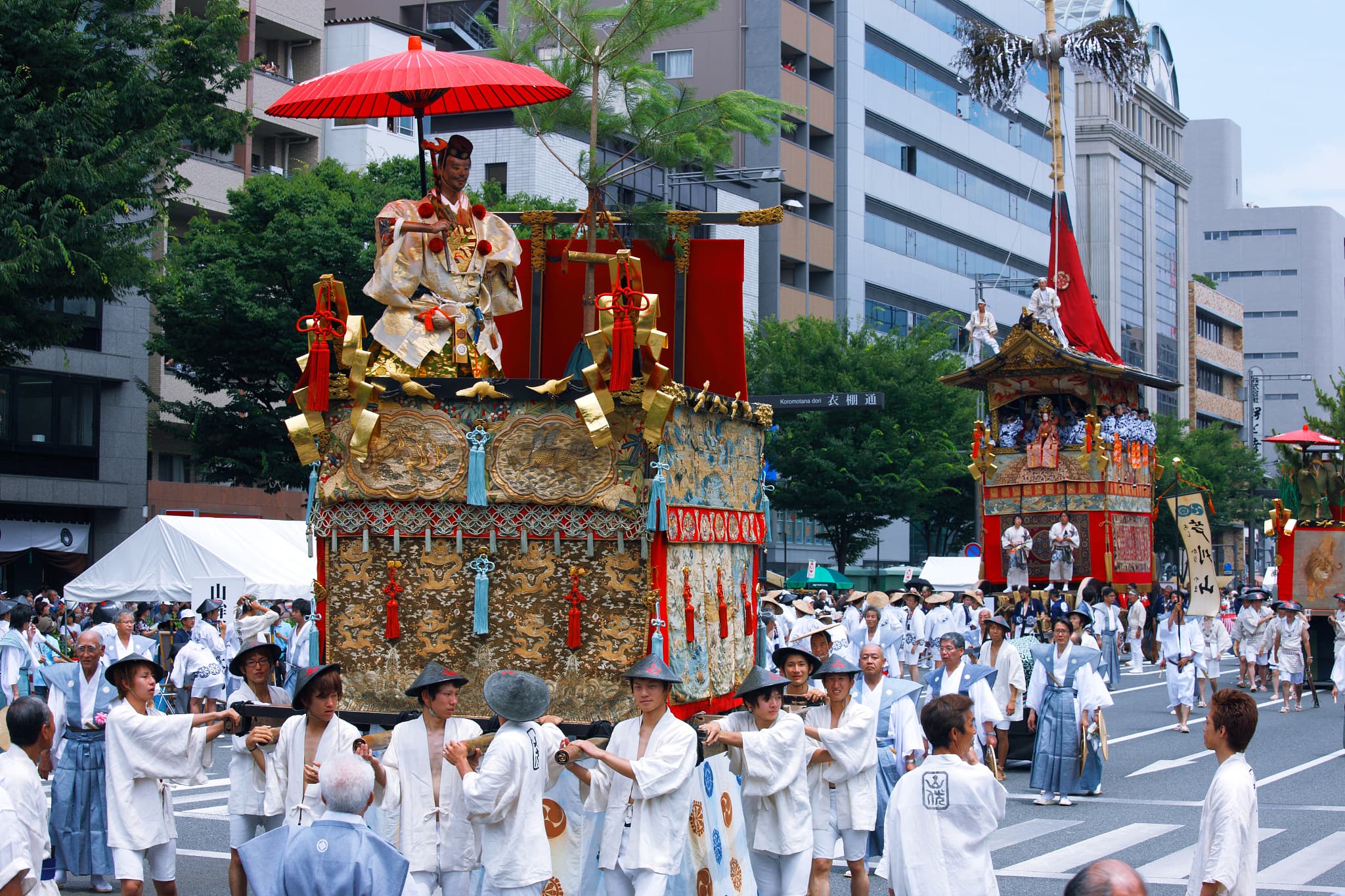
The Kyoto Gion Matsuri is one of Japan's most renowned and historic festivals, deeply rooted in the traditions of Yasaka Shrine. Spanning the entire month of July, it is a UNESCO Intangible Cultural Heritage event, celebrated for its elaborate Yamahoko floats and vibrant street processions. It's not merely a local celebration but a significant cultural spectacle that draws visitors from around the globe, offering a unique glimpse into Japan's rich heritage.
Visitors consistently praise the festival's lively atmosphere and the sheer scale of the parades. The intricate decorations on the floats, often referred to as a 'moving art museum,' are a major highlight, showcasing beautiful embroidery and textiles. The sound of the Gion Bayashi music, with its distinctive 'Konchikichin' rhythm, is frequently mentioned as an immersive element that enhances the experience. Reviewers often describe the streets as 'packed with people,' indicating a bustling and energetic environment, particularly during the main parade days. The participation of children in setting up stalls and singing adds a charming, authentic local touch that many find entertaining.
To make the most of your visit, plan to attend during the main Yamahoko Processions on July 17th (Saki Matsuri) and July 24th (Ato Matsuri), as these are the primary highlights. Arriving early, especially on parade days, is crucial to secure a good viewing spot, as the streets become very crowded. Consider bringing a portable stool or finding a spot near a building entrance for a better vantage point. Hydration is key, as July in Kyoto can be hot and humid; carry water bottles and wear light, breathable clothing. While there are paid reserved seats available on Oike-dori Street for the parades, many visitors enjoy the free experience of watching from the streets, embracing the crowd's energy. Exploring the streets in the evenings leading up to the main parades (Yoiyama, Yoiyoiyama, Yoiyoiyoiyama) offers a different, more intimate experience with the floats on display and local festivities.
The Gion Matsuri takes place across various locations in central Kyoto, primarily around the Shijo, Karasuma, and Oike streets. For the main parades, the floats depart from Shijo Karasuma (Saki Matsuri) and Karasuma Oike (Ato Matsuri). Kyoto's excellent public transportation system makes accessing these areas straightforward. The nearest subway stations include Shijo Station (Karasuma Line) and Karasuma Oike Station (Karasuma and Tozai Lines), which are central to the festival's activities. Many bus routes also serve these areas. Walking is often the best way to navigate the festival grounds once you are in the vicinity, as many streets are pedestrianized or heavily congested during the event. Be prepared for significant walking distances and plan your route in advance, as some roads will be closed to traffic.
A common complaint, though often seen as part of the experience, is the immense crowd size, particularly on the main parade days. To mitigate this, consider viewing the floats during the 'Yoiyama' evenings (July 14-16 and July 21-23) when the floats are stationary and illuminated, offering a closer look without the intense crowds of the parade itself. Another strategy is to find a spot slightly further along the parade route, away from the initial starting points, where crowds might be slightly thinner. Be mindful of pickpockets in crowded areas and keep valuables secure. Also, be aware that many shops and restaurants in the immediate festival area may be exceptionally busy or have limited hours during the event.