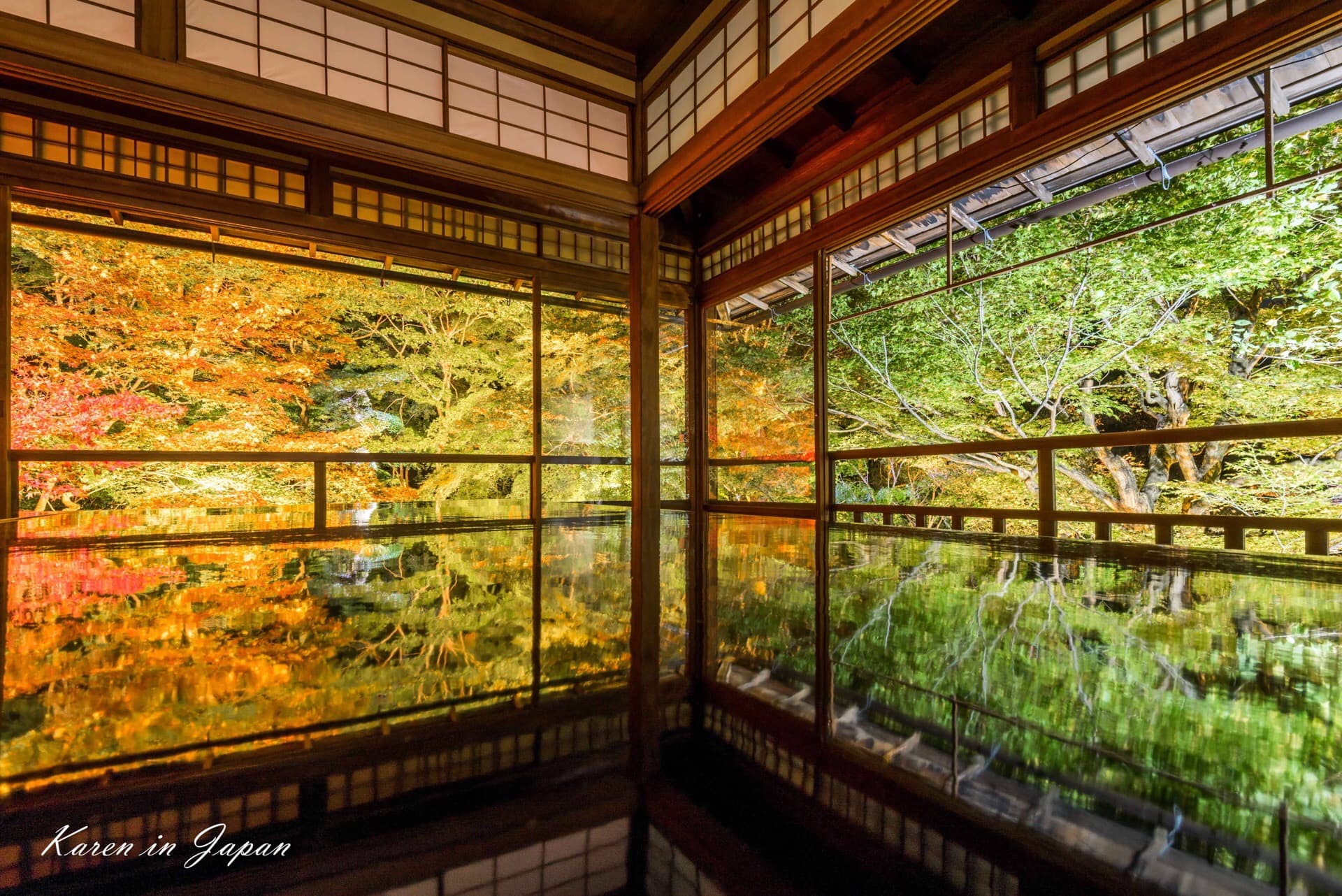
Rurikō-in Temple, often referred to as a "Zen secret place," is a Buddhist temple in Kyoto celebrated for its exquisite natural beauty and serene atmosphere. It holds significance not only as a place of worship but also as a cultural landmark, originally a villa that was later converted into a temple. Its fame stems from the stunning reflections of its surrounding gardens on the polished wooden floors and windows, creating an illusion of layered landscapes that change dramatically with the seasons.
Visitors consistently highlight the temple's seasonal transformations as its main draw. In autumn, the vibrant red maple leaves are a spectacular sight, while spring brings lush green foliage and moss. Many reviewers describe the experience as deeply tranquil and meditative, often mentioning the opportunity to engage in sutra copying (shakyō) as a unique and calming activity included with the admission. The temple's limited opening periods, typically twice a year during spring and autumn, contribute to its exclusivity and allure, making each visit feel special. Reviewers frequently advise arriving early, especially during peak seasons, to avoid long queues and to fully appreciate the peaceful ambiance before crowds gather.
To make the most of your visit, plan to spend approximately 1-2 hours exploring the temple. Bring a camera to capture the iconic reflections, but be mindful of other visitors and maintain a respectful atmosphere. Reviewers suggest that the best time to visit is early morning to experience the tranquility and get good photographs without too many people. While the entry fee is considered high by some, many agree that the unique beauty and experience justify the cost. It's advisable to check the official website for exact opening dates and times, as these can vary annually and are often announced only a week in advance.
Reaching Rurikō-in Temple involves a combination of public transport and a short walk. Many visitors recommend taking a bus from central Kyoto to the Yase-Hieizanguchi Station area. From there, it's a pleasant walk to the temple entrance, with some reviewers noting the scenic route along the way. Alternatively, the Eizan Electric Railway (Eiden) offers a direct route to Yase-Hieizanguchi Station. Driving is generally not recommended due to limited parking and the convenience of public transport in Kyoto.
A common complaint among visitors is the high entry fee and the potential for large crowds, especially during the popular autumn foliage season. To mitigate this, consider visiting during the less crowded spring green season if your schedule allows, or arrive well before opening time. Some reviewers also mention feeling rushed during peak times; however, the temple staff generally manage visitor flow to ensure a relatively orderly experience. Despite these minor issues, the overwhelming sentiment is that the temple's unique beauty makes it a worthwhile destination.