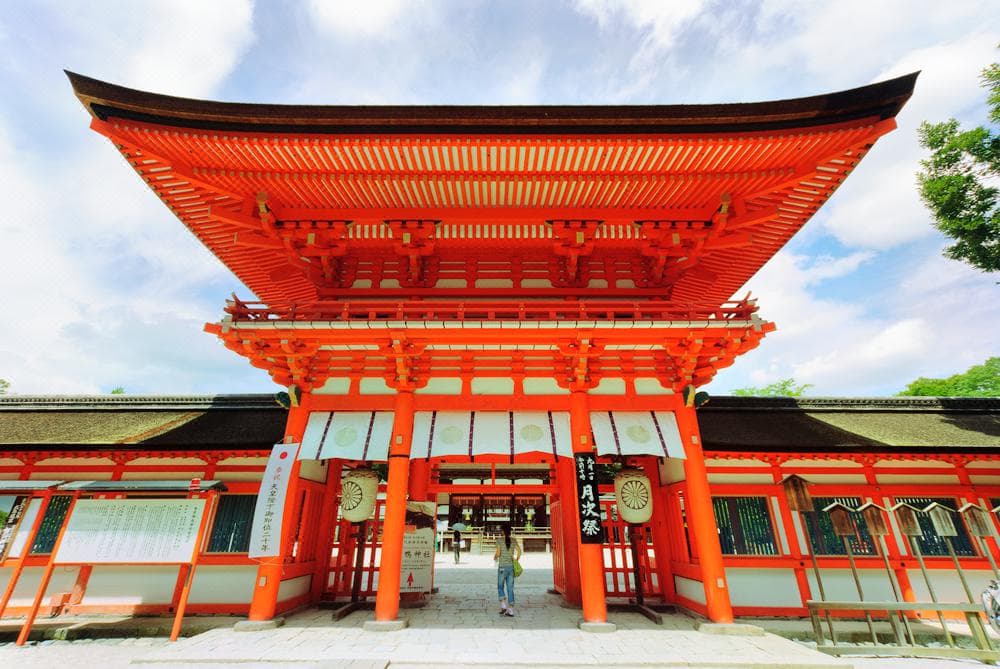
Shimogamo Shrine, officially known as Kamo Mioya Shrine, is one of Kyoto's oldest and most significant Shinto shrines, predating the city's establishment as the capital. As a UNESCO World Heritage site, it is celebrated for its ancient origins, traditional architecture, and the surrounding primeval forest, Tadasu no Mori. It serves as a guardian shrine for Kyoto and is deeply intertwined with the city's history and spiritual life, hosting important annual festivals like the Aoi Matsuri.
Visitors consistently praise the shrine for its tranquil and less crowded atmosphere compared to more famous Kyoto sites. Many reviewers highlight the sense of peace and spiritual calm experienced while walking through the Tadasu no Mori forest, describing it as a sacred area where one can breathe deeply and feel purified. The beautiful red torii gates and traditional wooden buildings are frequently mentioned, with some noting the opportunity to witness traditional Japanese weddings. The presence of smaller, specialized shrines within the grounds, such as Kawai Shrine (for beauty) and Aioi Shrine (for matchmaking), adds to the appeal, particularly for those interested in specific prayers or amulets. Several visitors also appreciate the opportunity to participate in unique festivals, like the Mitarashi Festival in summer, where one can walk through a stream with lit candles.
To make the most of your visit, allocate 1-2 hours to explore the main shrine, the Tadasu no Mori forest, and the various smaller shrines. Many suggest visiting in the early morning or late afternoon for an even more serene experience. While the main grounds are free to enter, some smaller areas or special events may have a fee. Reviewers recommend reading up on the shrine's history beforehand to enhance appreciation. Don't miss the opportunity to purchase unique amulets, such as the lace amulets or the Yatagarasu earth bells. If visiting in autumn, the maple leaves in Tadasu no Mori are said to be particularly beautiful, and during cherry blossom season, the nearby Kamogawa Park is a popular spot.
Shimogamo Shrine is conveniently located and accessible by public transport. It is approximately a 15-minute walk from Demachiyanagi Station, which can be reached via the Keihan Main Line or the Eizan Electric Railway. Several bus routes also serve the area, with bus stops a short walk from the shrine entrance. For those cycling, free bike parking is available. Reviewers note that walking through the Tadasu no Mori from the station adds to the experience, creating a gradual transition into the sacred space. If driving, there is a parking lot available, though one reviewer mentioned potential queues during peak times.
While generally positive, some visitors note that if you've seen many other Shinto shrines, Shimogamo might not stand out as uniquely different in terms of architecture, though its historical significance and natural setting are distinct. A common complaint during peak festival times is the potential for crowds, particularly during events like Hatsumode (New Year's first visit) or the Aoi Matsuri. To mitigate this, check the festival schedule and consider visiting on a regular weekday for a quieter experience. One reviewer also mentioned confusion regarding parking during a busy period, suggesting arriving early or using public transport.