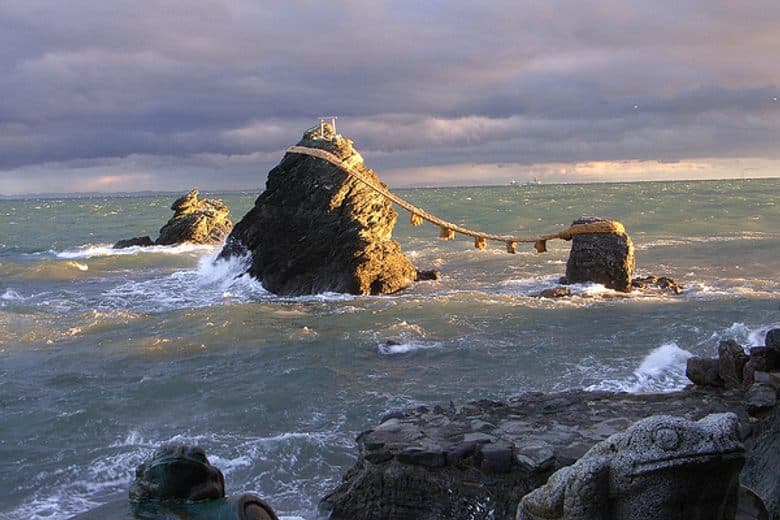
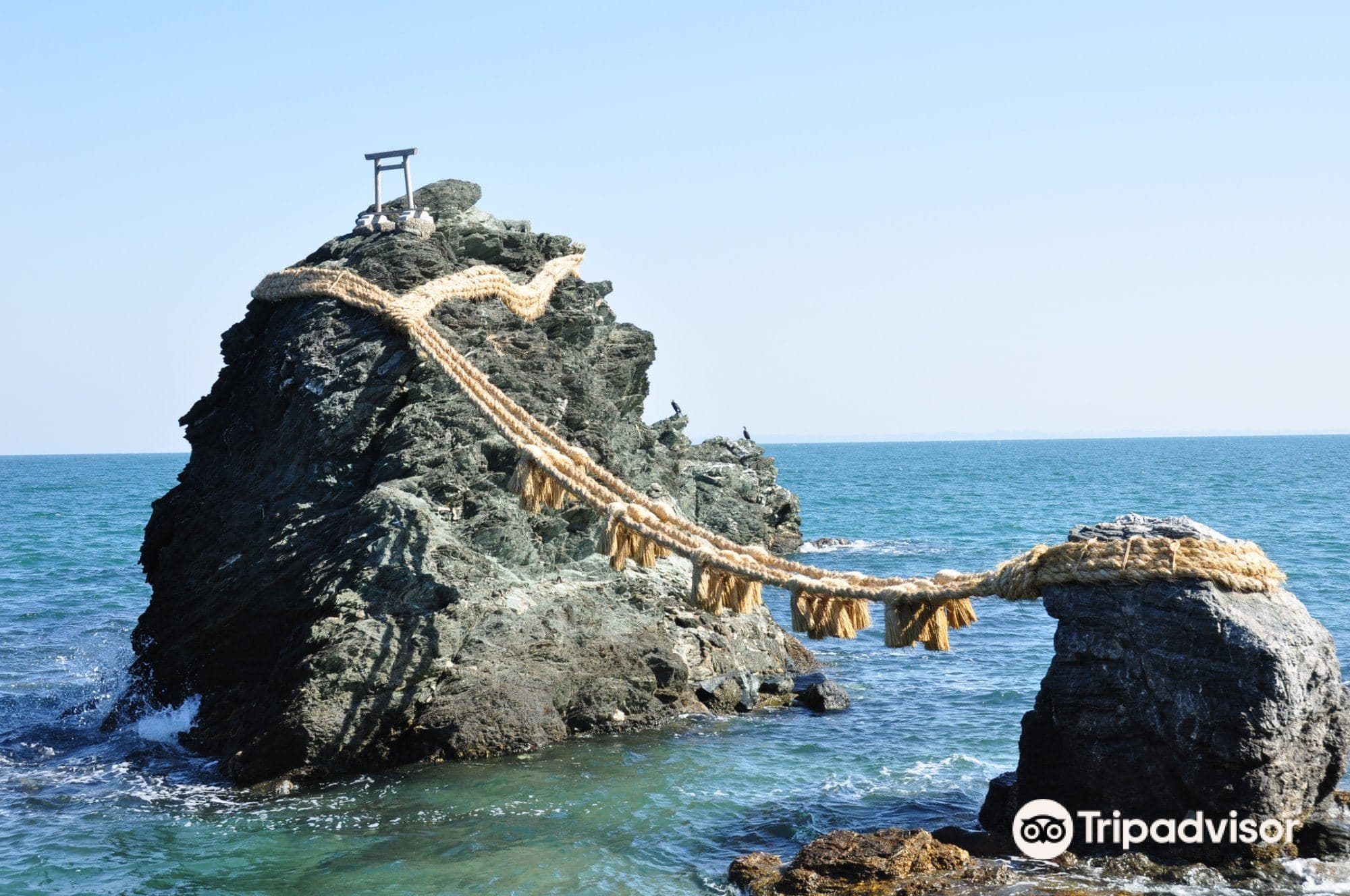
Futami Okitama Shrine is a significant Shinto shrine located on the coast of Ise, Mie Prefecture, famous for its proximity to the iconic Meotoiwa, or Married Couple Rocks. These two sea stacks, a larger 'male' rock and a smaller 'female' rock, are connected by a sacred 'shimenawa' rope and symbolize a happy marriage and domestic safety. The shrine itself is dedicated to Sarutahiko Okami, a deity associated with guidance, and to the sun goddess Amaterasu Omikami, making the Meotoiwa a natural 'torii' gate for sun worship.
Visitors consistently praise the picturesque scenery and the spiritual atmosphere of the location. Many highlight the beauty of the sunrise, particularly when it appears between the Meotoiwa, a phenomenon best observed from May to July. Reviewers note that the site is peaceful, especially if visited outside of peak event times. The unique cultural significance of the rocks and the shrine's serene coastal setting are frequently mentioned as reasons for a worthwhile visit.
To make the most of your visit, plan to arrive early, especially if you wish to witness the sunrise between the rocks; this is most spectacular around the summer solstice. While the shrine is open 24/7, the best light for photography and a more tranquil experience is typically in the early morning. Allow 1-2 hours to fully appreciate the shrine, walk along the coast, and take photos. There is no entry fee, making it an accessible attraction. Consider combining your visit with other nearby Ise attractions, such as the Ise Grand Shrine, as several visitors note its proximity.
The shrine is located at 575 Futamichoe, Ise, Mie. While public transport options exist, some visitors recommend driving for greater convenience, especially if you are exploring the wider Ise-Shima area. Parking facilities are available nearby. If using public transport, research local bus routes from Ise-shi Station or Ujiyamada Station to Futami Okitama Shrine. The walk from the nearest bus stop to the shrine is generally short and pleasant.
A common complaint is that the rocks are 'just two rocks,' which can lead to disappointment if visitors expect a grand, elaborate structure. To mitigate this, approach the site with an appreciation for its natural beauty, spiritual symbolism, and the cultural context of sun worship. Understanding its significance as a natural torii gate and a symbol of marital harmony enhances the experience beyond simply viewing two rocks in the sea.