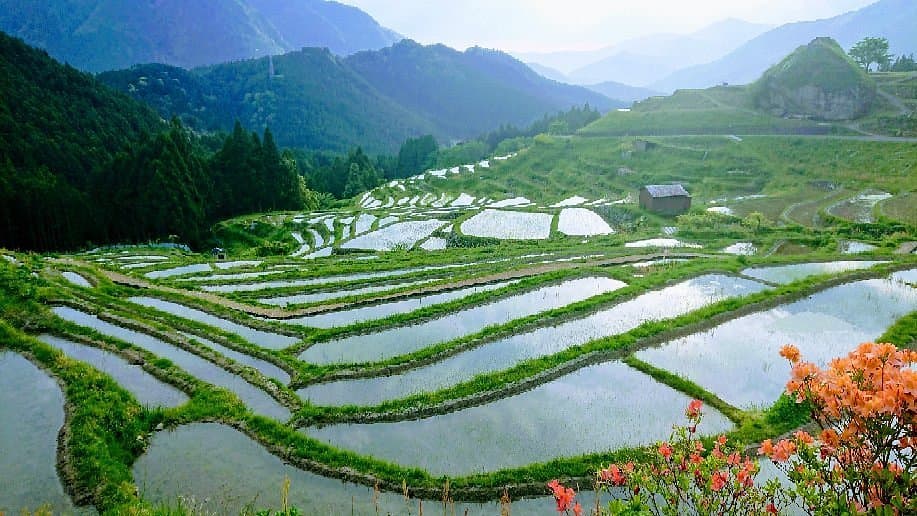
Maruyama Senmaida, often referred to as the "Thousand Rice Paddies of Maruyama," is one of Japan's most iconic terraced rice field landscapes. Nestled in the mountains of Mie Prefecture, this historical site showcases traditional agricultural practices and offers a stunning visual spectacle, particularly during planting and harvesting seasons. It represents a deep connection between the Japanese people and their land, embodying centuries of farming heritage.
Visitors frequently highlight the sheer beauty of the landscape, with many describing the views as "breathtaking" and the drive to the location as "beautiful" due to the surrounding greenery and mountains. The opportunity to experience quaint, rural Japanese life and even interact with locals is a significant draw. While the primary attraction is the rice fields themselves, some reviewers mention hiking opportunities, though navigation can sometimes be confusing due to numerous signs pointing in different directions.
To make the most of your visit, consider the time of year: the fields are most vibrant when the rice is green (typically summer) or when the paddies are filled with water reflecting the sky (spring). An estimated 1-2 hours is sufficient to explore the main viewing areas and take photographs. Bring comfortable walking shoes, especially if you plan to walk around the fields or attempt a hike. A camera is essential to capture the scenic beauty. There are no specific entry fees, making it an accessible natural attraction.
Maruyama Senmaida is best accessed by car. Reviewers note that the drive itself is scenic, but caution that some village roads leading to the site can be very narrow, potentially challenging for larger vehicles. It's advisable to use a reliable navigation system and be prepared for winding, rural roads. Parking is generally available near the main viewing points. Public transport options are limited, making a rental car the most practical way to reach this somewhat remote location.
A common complaint among some visitors is the difficulty in navigating the local roads, particularly the narrowness of some village paths. To mitigate this, consider renting a smaller car if possible, and always drive cautiously. Another point of confusion for some has been the hiking trails, with multiple signs leading to different directions. If hiking is a priority, it's recommended to research specific routes beforehand or stick to the main viewing areas if you prefer a more straightforward experience.