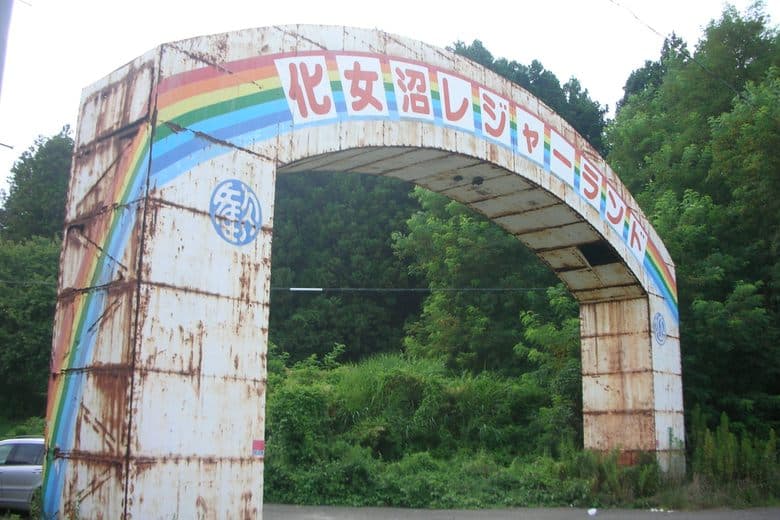
Kejonuma Leisure Land is a former amusement park located on the banks of the Kejonuma Dam in Japan's remote Tohoku region. Established in 1979, it was intended to bring joy to the community after World War II. For over two decades, it featured a Ferris wheel, tea cup ride, miniature train, carousel, go-kart track, golfing range, and an obstacle course, attracting up to 200,000 visitors annually. However, due to its remote location and the rise of larger parks like Tokyo Disneyland, it closed its doors in 2000 and has since been left to decay, becoming a site of interest for urban explorers.
Visitors to Kejonuma Leisure Land will find a landscape where nature has largely reclaimed man-made structures. The most prominent feature is the rusting Ferris wheel, which stands above the tall amber grass, serving as a poignant reminder of the park's former glory. The grounds are now a dense jungle, with remnants of other rides and facilities scattered throughout. This environment offers a unique photographic opportunity and a chance to reflect on the transient nature of human endeavors.
For those planning a visit, it is important to understand that this is not a maintained tourist attraction. There are no facilities, safety measures, or official access points. Visitors should wear sturdy shoes and long clothing to navigate the overgrown terrain and protect against insects. A visit is typically self-guided and can last anywhere from one to two hours, depending on how much time one wishes to spend exploring the various ruins. It is advisable to visit during daylight hours for safety and visibility.
Given its remote location, reaching Kejonuma Leisure Land primarily requires private transportation. There is no direct public transport mentioned in relation to the site. Visitors would likely need to drive to the vicinity of Kejonuma Dam, and then proceed on foot to locate the abandoned park. Specific parking information is not available, so visitors should be prepared to find suitable, safe roadside parking.
A common complaint, or rather a reality of visiting such a site, is the lack of any amenities or official guidance. The park is entirely unmaintained, meaning paths are overgrown, structures are unstable, and there are inherent risks associated with exploring abandoned places. To mitigate these issues, visitors should prioritize safety, avoid climbing on dilapidated structures, and be respectful of the site as a historical ruin rather than an active playground. Bringing water, snacks, and a fully charged phone is recommended.