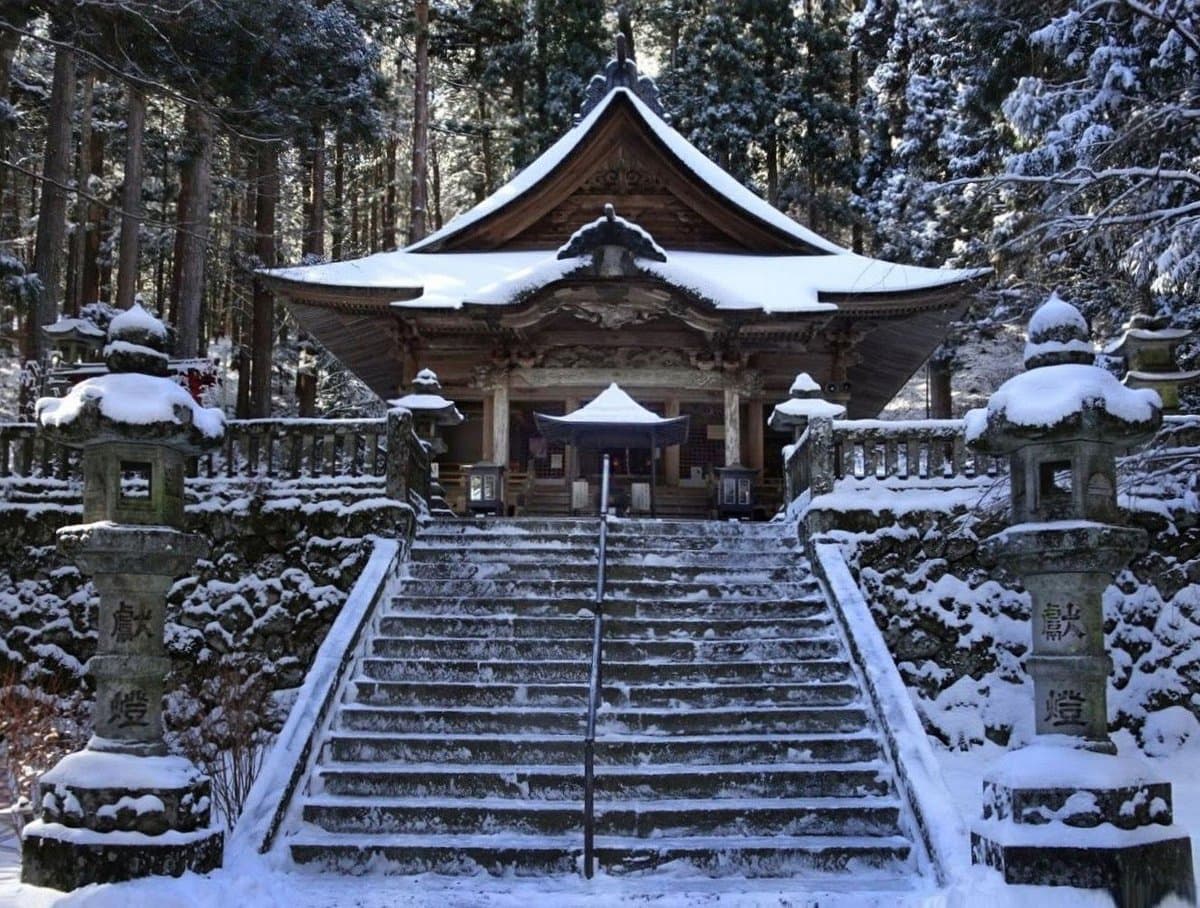
Kozenji Temple, founded in 860 by Honshō Shōnin, is a significant historic temple in Komagane, Nagano Prefecture. Dedicated to Fudō Myōō, it is renowned for its expansive grounds, ancient cedar trees, and a rich history that spans over a millennium. It serves as a spiritual retreat and a prime example of traditional Japanese temple architecture and landscaping.
Visitors consistently praise the temple's tranquil and spiritual atmosphere, often noting the feeling of being tiny amidst the mighty pine and cedar trees. Many are impressed by the well-maintained gardens, the historic main hall, and the three-story pagoda. The temple is particularly celebrated for its seasonal beauty: the weeping cherry blossoms in spring, which bloom in various stages due to multiple varieties, and the vibrant autumn foliage. Some visitors also seek out the luminous moss, which, while sometimes faint, can be a unique sight, especially when shining under specific conditions.
To make the most of your visit, consider spending 2-3 hours exploring the grounds. The best times to visit are during the cherry blossom season (typically spring) or the autumn foliage season for the most spectacular views. Arriving late in the day can offer a more solitary experience, as tour groups tend to leave by then. While the luminous moss can be a highlight, some visitors found it less impressive than expected, so manage expectations. Comfortable walking shoes are recommended due to the large grounds and approach paths.
Kozenji Temple is accessible from Komagane Station. Several visitors mention taking a taxi directly from the station, noting that taxis are usually available or can be found at a nearby taxi company. Alternatively, you can take a bus from Komagane Station to a stop near the temple, followed by approximately a 15-minute walk. For those driving, the temple is just a few minutes from the Komagane IC on the Chuo Expressway, and parking is available. The temple is considered "off the beaten path" by many, making it a less crowded alternative to more famous temples in Kyoto, yet equally beautiful.
A common point of feedback is regarding the luminous moss; some visitors found its glow to be subtle or less vibrant than anticipated. To mitigate this, it's advisable to visit during specific conditions (e.g., after rain or in the evening) or to focus on the temple's other numerous attractions, such as the architecture, gardens, and seasonal flora, which consistently receive high praise.