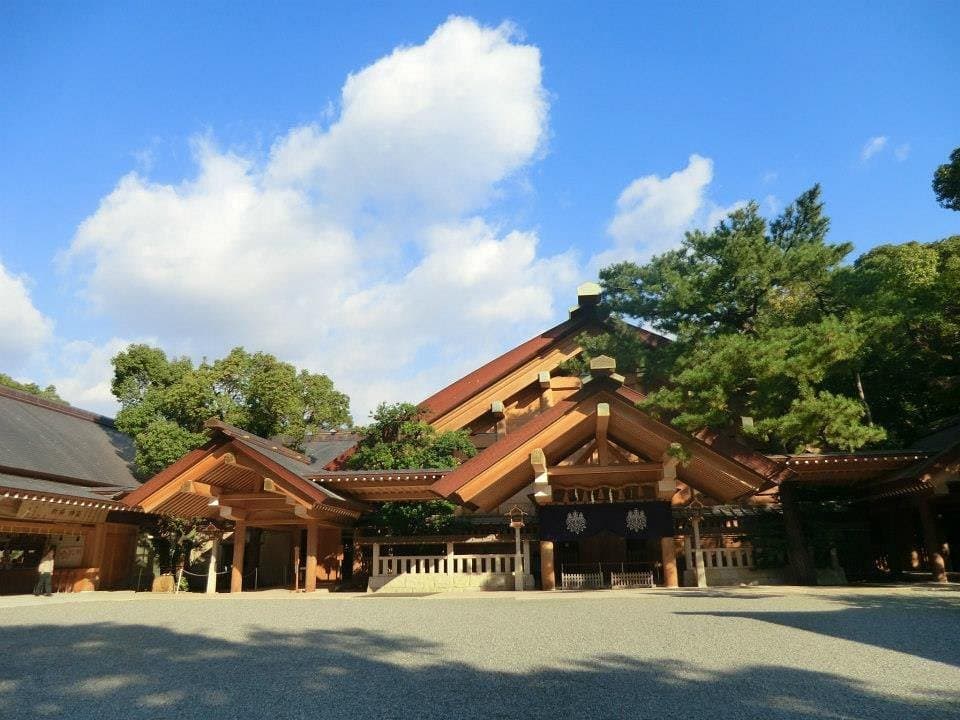
Atsuta Jingu Shrine is one of Japan's oldest and most prestigious Shinto shrines, holding immense historical and cultural significance. It is famously believed to house the Kusanagi-no-tsurugi, one of the Three Sacred Treasures of Japan, making it a revered site for both locals and visitors interested in imperial history and Shinto traditions.
Visitors consistently praise the shrine for its serene and expansive forested grounds, which offer a peaceful retreat from the urban bustle. Many reviewers highlight the impressive ancient camphor trees, some over a thousand years old, contributing to the tranquil atmosphere. The opportunity to witness traditional Japanese weddings or observe locals performing prayers adds to the authentic cultural experience. While the main hall is not accessible for close viewing of the sacred sword, the overall ambiance and architectural beauty are frequently commended. Some visitors also enjoy the popular Miyakishimen restaurant located within the shrine grounds, noting its delicious broth and long queues during peak hours.
To make the most of your visit, plan for approximately 1-2 hours to explore the grounds at a relaxed pace. Early mornings or evenings are often recommended for a quieter experience, as noted by visitors who found fewer crowds during these times. If visiting on New Year's Day, be prepared for extremely large crowds, as it is a popular time for locals to pray. While the shrine itself is free to enter and open 24/7, the Treasure Hall (Atsuta Jingu Museum) has specific operating hours and an entry fee, so check these in advance if you plan to visit. Consider bringing comfortable walking shoes, as the grounds are extensive.
Atsuta Jingu is easily accessible by public transport. From Nagoya Station, you can take the JR Chuo Line to Atsuta Station, which is about a ten-minute walk to the shrine's south gate. Alternatively, take the Nagoya Subway Meijo Line to Jingu-nishi Station, which is a convenient 5-10 minute walk to the shrine. Several reviewers confirm the ease of access from these subway stations, making it a straightforward destination for those relying on public transportation.
A common point noted by some visitors is that the main shrine buildings are not always open for close inspection, and the legendary Kusanagi sword is not publicly displayed. To mitigate any disappointment, understand that the primary appeal lies in the tranquil atmosphere, the historical significance of the grounds, and the opportunity to observe local customs rather than a detailed interior tour. If you are particularly interested in artifacts, allocate time for the Treasure Hall, but be aware that even there, the Kusanagi sword is not on view.