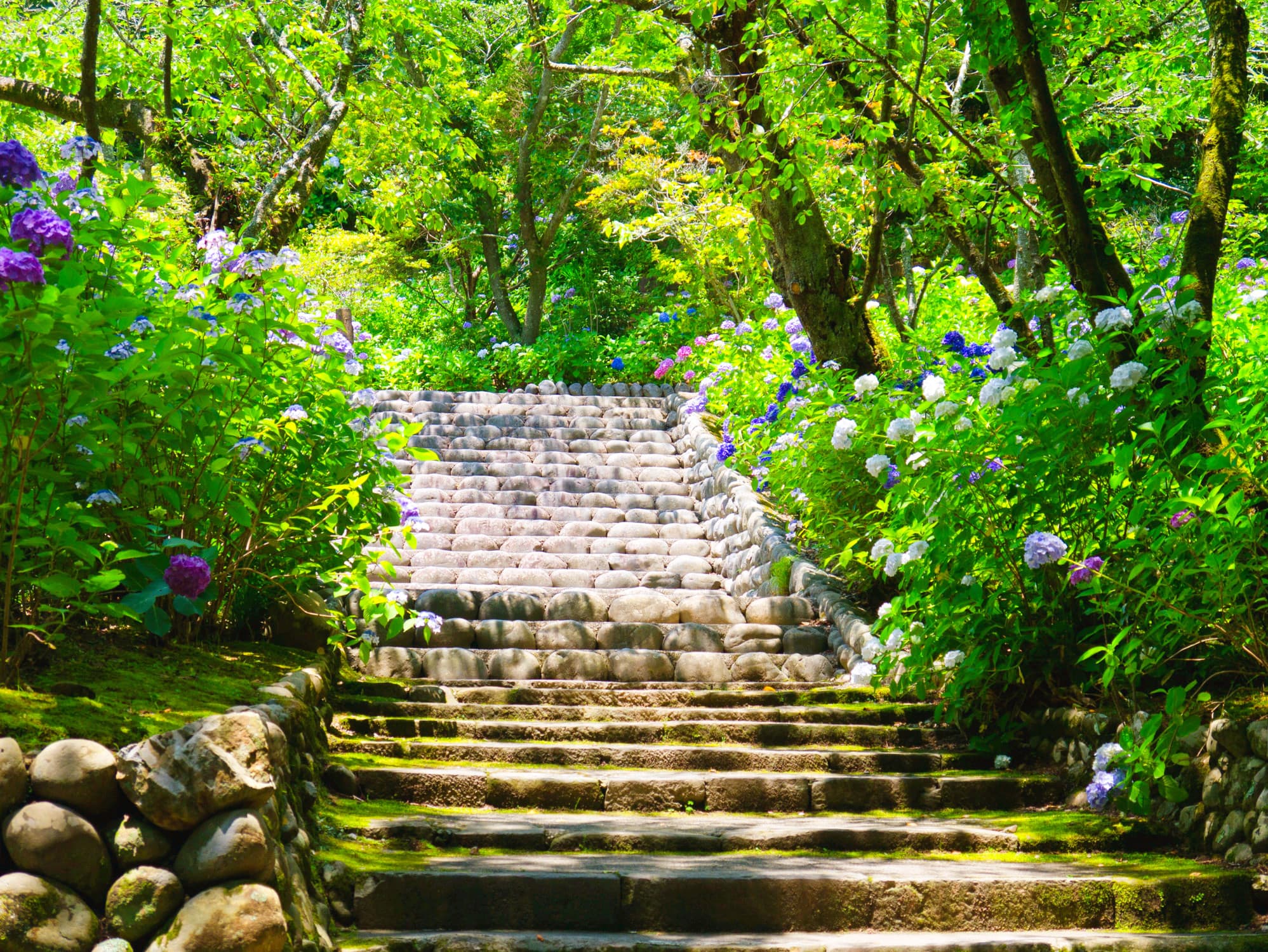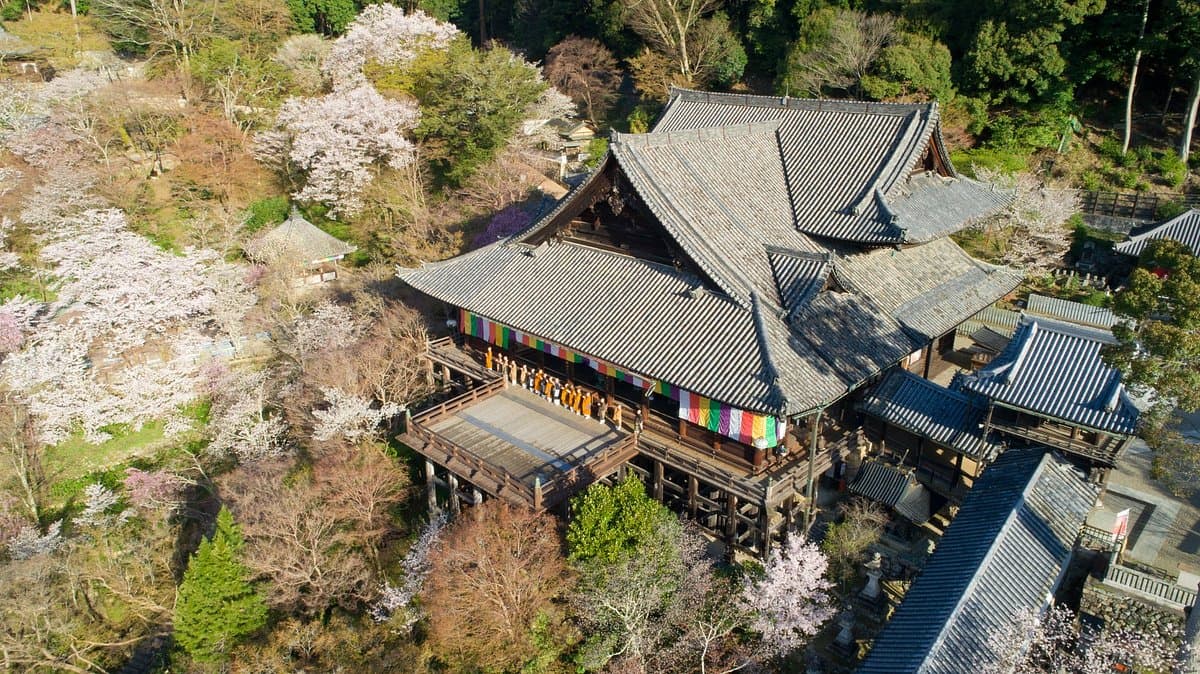
Hasedera Temple is the head temple of the Shingon sect of Buddhism and is renowned as one of Japan's most beautiful "flower temples." Its historical significance dates back to the 8th century, and it is a key stop on the 33 Kannon Pilgrimage of the Western Provinces. Perched on a hillside, the temple offers a unique architectural layout with a long, covered staircase leading to its main hall, which features a large wooden balcony providing spectacular views.
Visitors consistently praise the temple's tranquil atmosphere, noting it is significantly less crowded than many popular sites in Kyoto or Nara. The seasonal flowers are a major draw, with peonies in late April to early May, hydrangeas in June, and vibrant autumn foliage in November being particularly highlighted. Many reviewers describe the experience as peaceful and spiritual, especially when monks are chanting. The opportunity for a special visit to touch the feet of the Kannon statue, usually reserved for temple officials, is mentioned as an incredible and memorable experience by those who participated.
To make the most of your visit, plan to spend 2-3 hours exploring the grounds. Arriving early in the morning is recommended, especially during peak seasons like autumn or flower blooming periods, to enjoy the beauty with fewer crowds. Wear comfortable shoes, as there are many stairs and slopes. While the main covered corridor (noboriro) has low steps, making it less strenuous than it appears, the overall site involves considerable walking. Consider bringing water, especially on warmer days. Many visitors enjoy stopping at the shops along the approach from the station, which sell local specialties like kusa-mochi rice cakes.
Hasedera Temple is accessible via the Kintetsu Hasedera Station. From the station, it's approximately a 20-minute walk to the temple entrance. Reviewers note that the walk involves stairs immediately after the station, followed by a gentle slope and then more stairs within the temple precincts. Information signs and maps are available near the station. If traveling by train, be aware that Kintetsu express (kyuu-kou) trains do not stop at Hasedera Station; you should take a semi-express (junkyu) train. Coin lockers are available at the station for luggage storage. For those driving, some reviewers advise against blindly following car navigation into narrow paths and suggest checking alternative routes.
A common complaint, particularly during warmer months, is the physical exertion required due to the numerous stairs and slopes. Visitors with mobility issues should be aware of this. However, some reviewers mention that there are wheelchair-accessible paths in certain areas. To mitigate the heat, visit during cooler seasons or early in the morning. While the temple is famous for its flowers, some visitors in off-seasons (like February) note a lack of blooms, so manage expectations if visiting outside of peak flower times. Despite the walk, the consensus is that the reward of the temple's beauty and views is well worth the effort.