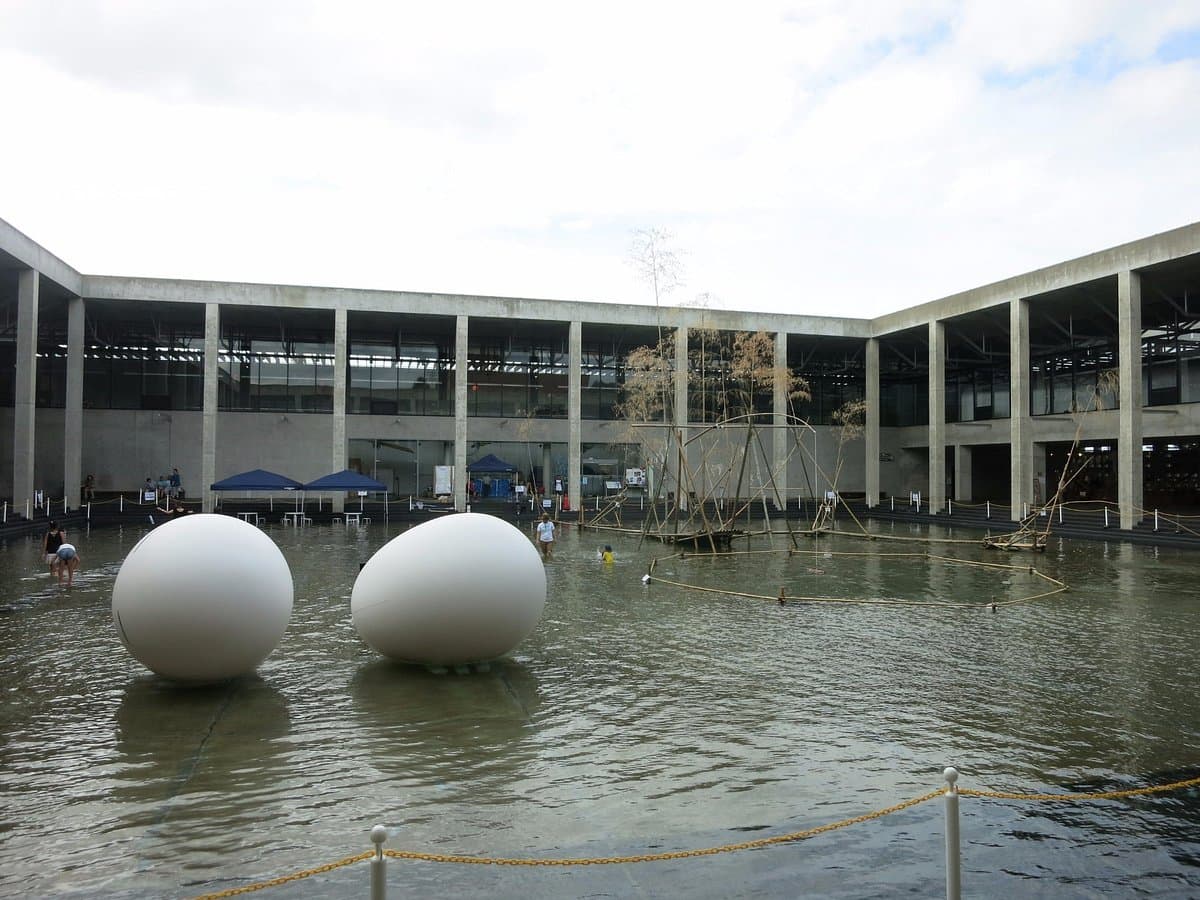
Echigo Tsumari Koryukan Kinare, also known as the Echigo Tsumari Satoyama Museum of Contemporary Art, Kinare, is a significant permanent exhibition space within the broader Echigo-Tsumari Art Field. It acts as a central point for understanding the region's extensive art initiatives, providing context and information for the numerous outdoor installations scattered across the area. Its architectural design, featuring a prominent central water pool, is often highlighted by visitors as a key attraction.
Visitors consistently praise the museum for its engaging and accessible approach to contemporary art, noting a refreshing lack of pretension compared to some Western galleries. The diverse range of works, from unique architectural forms to creative installations like a 'groundhog interview on-air with plants' and 'burned art pieces,' contributes to a surprising and enjoyable experience. Many find it an excellent starting point for exploring the wider art festival, as it offers valuable information about other pieces in the field.
For a comfortable visit, reviewers suggest wearing comfortable shoes, especially if you plan to explore the surrounding outdoor art installations. While some find the admission fee a bit steep, the experience is generally considered worthwhile. An estimated 1-2 hours is sufficient to explore the Kinare building itself, but allow more time if you intend to use it as a base for planning further exploration of the art field. The museum also houses a shop, a restaurant, and even sleeping rooms, making it a versatile stop. It is advisable to check the opening hours, as it is reportedly closed on Mondays.
The museum is located at 71-2 Rokunoitchome, Honcho, Tokamachi. While specific public transport details are not extensively mentioned in reviews, the broader Echigo-Tsumari Art Festival area is generally easier to navigate by car. Visitors recommend downloading the official app, which provides information about various exhibits and can assist with navigation. If driving, plan for parking availability at the site.
A common complaint among some visitors is the admission fee, which a few consider high given the collection. To mitigate this, consider the Kinare as part of a larger art exploration, utilizing its information to enhance your understanding and enjoyment of the free outdoor installations in the wider Echigo-Tsumari Art Field, thus maximizing the value of your ticket.
