What This Place Is
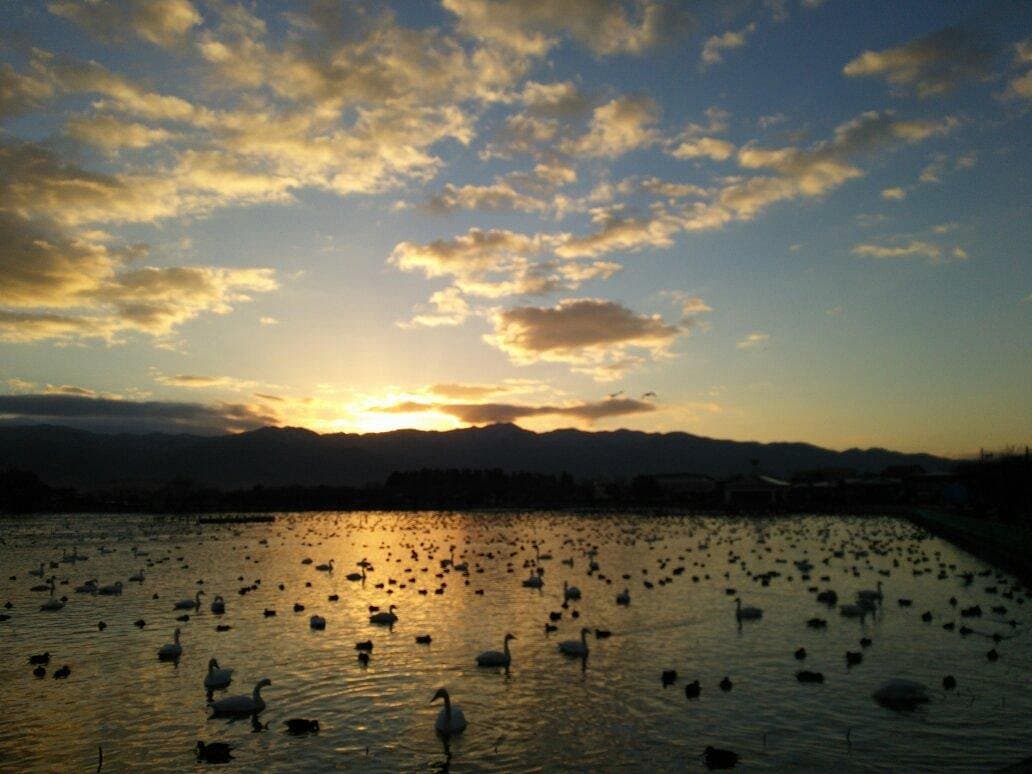
Hyokosuikin Park is a lakeside nature reserve centered on Lake Hyoko in Agano, Niigata Prefecture. The park's primary draw is the seasonal arrival of thousands of whooper swans migrating from Siberia to escape harsh winters. Peak swan population occurs between late November and early December, with numbers reaching approximately 6,000 birds. The lake is also home to hundreds of ducks year-round. The surrounding landscape features views of the snow-capped Five-Headed Mountain Range, creating a picturesque setting during winter months.
What Visitors Consistently Praise and Warn About
Visitors strongly emphasize that early morning is essential for swan viewing—swans are most active and visible at dawn, and many recommend joining organized early-morning tours offered by nearby onsen accommodations. The serene atmosphere and natural beauty receive consistent praise, particularly when snow-capped mountains are visible. However, several important caveats emerge: the park has virtually no appeal outside November-March when swans are absent. Visitors also note that the iris garden, which operates seasonally, may be closed for preparation during festival periods, limiting alternative activities. Public transport connectivity is poor; the town is quiet and rural, with limited dining options and no convenient restaurants nearby. One visitor reported difficulty finding lunch and ultimately took a taxi to a nearby onsen instead of waiting for public transport.
Practical Advice: Timing, Preparation, and What to Bring
Plan your visit between late November and early March, with peak season around late November to early December. Arrive very early in the morning—ideally before sunrise—as swans are most visible and active at dawn. Consider staying at a nearby onsen (hot spring resort) such as Deyu Onsen, which often offers organized early-morning swan-viewing tours; this eliminates transport hassles and provides expert guidance on optimal viewing times. Bring warm clothing, as temperatures are cold during winter months, and a camera with good zoom capability for wildlife photography. Allow 2-3 hours for the visit, including travel time. If visiting during iris festival preparation periods (typically spring), confirm in advance that the iris garden is open, as it may be closed to the public during setup.
Getting There and Transport
Hyokosuikin Park is located in rural Agano, Niigata Prefecture, and public transport is limited. The nearest major city is Niigata City. Visitors report that the town is quiet and rural with poor public transport connectivity. Driving is strongly recommended if you have access to a rental car, as it provides flexibility and avoids long waits for infrequent buses. If relying on public transport, plan to take a taxi from Agano Station or nearby onsen accommodations, as buses are infrequent. The park is approximately 313-1 Suibara, Agano. Staying at a nearby onsen resort is the most practical option for visitors without a car, as these accommodations typically arrange transport and offer early-morning tours. Allow extra time for travel if using public transport, as connections are unreliable.
Common Complaints and Mitigation
The primary complaint is the park's inaccessibility by public transport and lack of nearby dining options. To mitigate this, book accommodation at a nearby onsen resort in advance—these typically provide shuttle services, meals, and organized tours. Avoid visiting on Mondays or during quiet periods when local services may be closed. Do not visit outside November-March unless you have a specific interest in the iris garden or general nature walks, as the main attraction (swans) will be absent. If you arrive and find the iris garden closed for festival preparation, be prepared with an alternative plan, such as visiting a nearby onsen or returning to Niigata City.