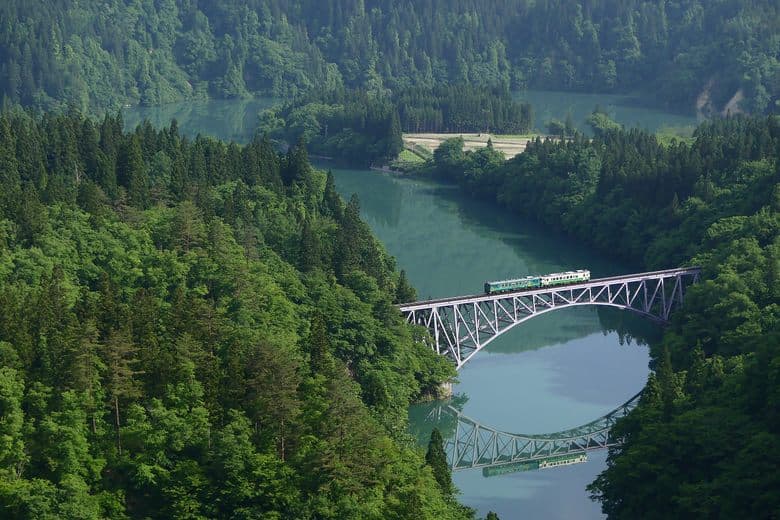
The Tadami Train Line, often hailed as one of the most romantic and scenic railway journeys in the world, stretches 135 kilometers from Aizuwakamatsu Station in Fukushima Prefecture to Koide Station in Niigata Prefecture. Operated by JR East Japan Railway Company since 1942, this charming route winds through lush forests, crosses the picturesque Tadami River, and offers breathtaking views of rural Japan, particularly stunning during the autumn foliage and snowy winter months.
Visitors consistently praise the unparalleled natural beauty experienced from the train windows. Many reviewers highlight the iconic views of the train crossing bridges over the Tadami River, especially the First Tadami River Bridge, as a major draw. The journey is described as incredibly relaxing and a perfect way to immerse oneself in Japan's serene countryside. However, some visitors note the limited number of daily trains, which requires careful planning to avoid long waits between connections.
To make the most of the trip, it is highly recommended to check the train schedule in advance, as there are only a few departures per day from stations like Koide. Bringing your own snacks and drinks is advisable, especially on longer stretches, as amenities on the train itself are limited, and some smaller stations may not have shops. For those traveling between Tadami and Aizu-Kawaguchi, be aware that a section of the line was damaged in 2011. JR East provides a substitute bus service for this segment, which departs shortly after the train's arrival. It's crucial to be prompt to catch the connecting bus. Many suggest eating at Aizu-Kawaguchi, as it's a relatively larger village with more dining options compared to smaller stops.
The Tadami Line can be accessed from either Aizuwakamatsu Station or Koide Station. Aizuwakamatsu is a larger city with better connections to major hubs like Fukushima. From Aizuwakamatsu, the Tadami Line runs towards Koide. From Koide Station, the line runs towards Aizuwakamatsu. Due to the limited schedule, it's wise to plan your entire day's itinerary around the train times, including connections and potential bus transfers. Parking is generally available at larger stations, but public transport is the recommended way to experience the line.
A common complaint revolves around the infrequent train schedule and the need for a bus transfer on part of the route. To mitigate this, thoroughly research the latest timetables and bus transfer information on the JR East website before your trip. Arriving early at stations and being prepared for potential delays due to weather (heavy snow, rain, or earthquakes can cause suspensions) will help ensure a smoother journey.
