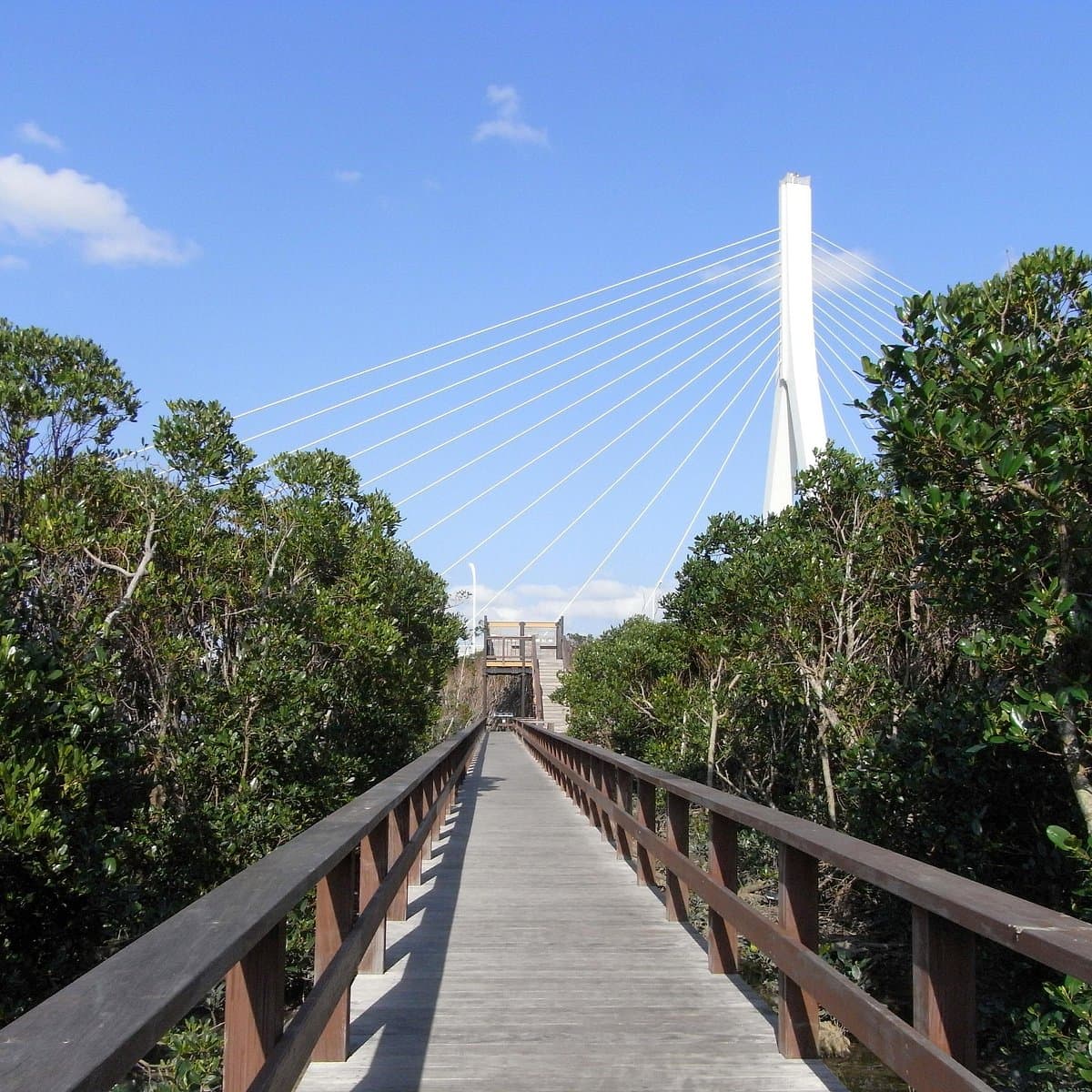
The Manko Waterbird and Wetland Center serves as an educational and observational hub for the Manko Marshlands, a significant protected estuary environment in Tomigusuku City. This area is crucial for migratory birds and local wetland species, featuring broad mudflats and mangrove swamps. The center provides valuable information about the marsh birds and the unique ecosystem, making it an important site for environmental education and conservation.
Visitors consistently praise the center for its peaceful atmosphere and the opportunity to observe a wide variety of wild birds and other wetland creatures. Many reviewers highlight the well-maintained promenades and boardwalks that allow for easy exploration through the marshland and mangrove forests. The chance to see crabs and fish from the mud, especially during warmer seasons, adds to the appeal for those interested in local wildlife. The facility is noted for being free to enter, which is appreciated by visitors.
For an optimal experience, visitors recommend bringing binoculars for birdwatching and wearing comfortable shoes suitable for walking on boardwalks. A visit of 1-2 hours is generally sufficient to explore the center and its immediate surroundings. The best time to visit for birdwatching is often during migratory seasons, though the center offers a peaceful experience year-round. Since the facility is free, it offers a budget-friendly activity.
The center is located in Tomigusuku, Okinawa Prefecture. Several reviewers mention the availability of a parking lot, suggesting that driving is a convenient option for reaching the facility. While specific public transport routes are not detailed in reviews, visitors can likely access Tomigusuku via local bus services from Naha, followed by a short taxi ride or walk to the center. It is advisable to check local bus schedules and routes beforehand.
Common complaints are not frequently mentioned, but some visitors find the exhibits to be somewhat limited if they are not specifically interested in birdwatching or wetland ecology. To mitigate this, approach the visit with an open mind, focusing on the tranquility and the unique natural environment rather than expecting extensive interactive displays.