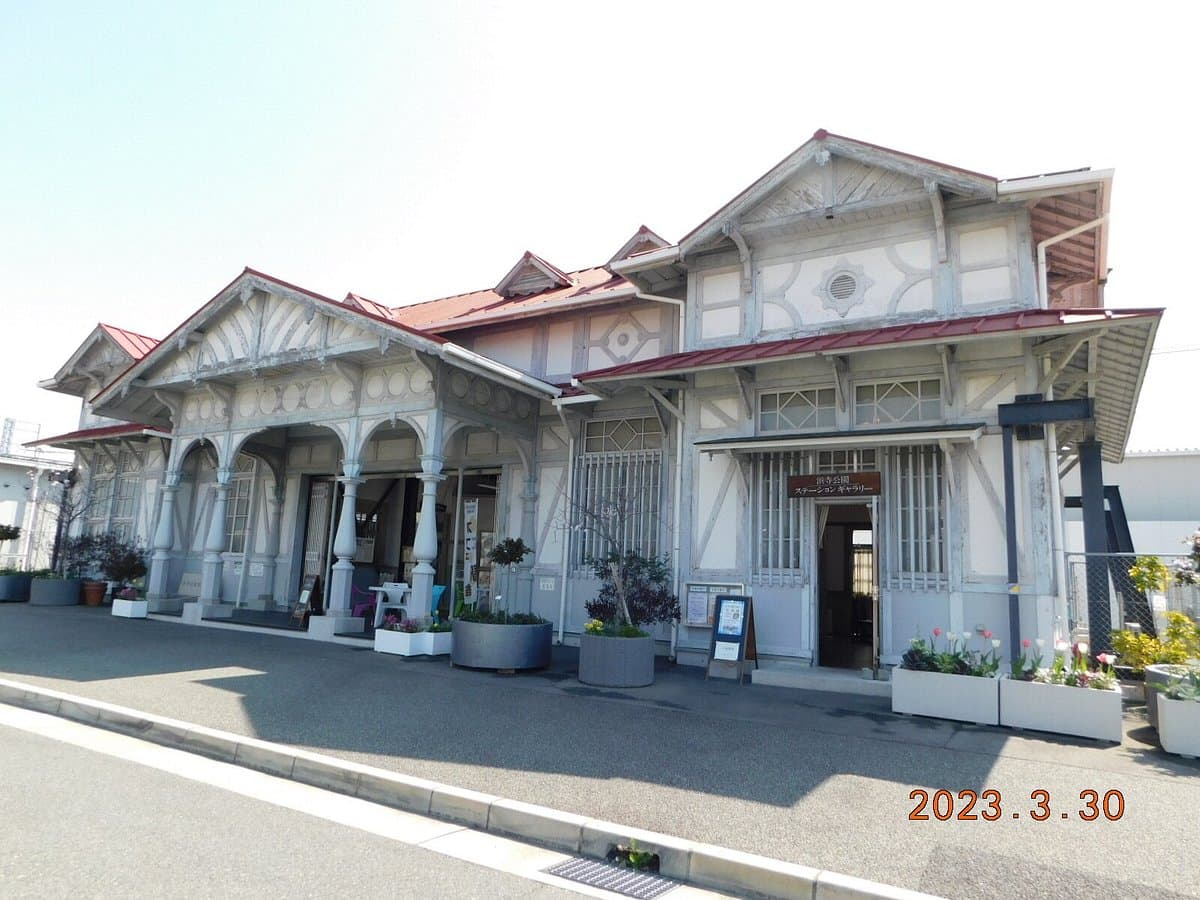
Hamadera Park Station is a historic railway station on the Nankai Main Line, renowned for its distinctive architectural style. While primarily a functional transportation hub, its charming, nostalgic building has garnered attention from visitors who appreciate its unique aesthetic. It serves as a convenient access point for Hamadera Park, one of Osaka's oldest public parks.
Visitors consistently praise the station's beautiful and nostalgic building, often describing it as a pleasant surprise. Many note the presence of a small gallery and a cafe run by local volunteers, offering a cozy spot for a break with reasonably priced items. The proximity to Hamadera Park, just a 3-minute walk away, is a significant draw, allowing for a combined visit. Reviewers also highlight the general efficiency and quality of train services in Japan, though the station itself is not as fast as the Shinkansen.
For those interested in architecture or seeking a quiet, pleasant spot, a brief visit of 15-30 minutes is sufficient. It's best experienced as part of a trip to Hamadera Park. There are no specific items to bring, but comfortable shoes are always advisable for exploring the park. The cafe offers a good opportunity for a quick, affordable refreshment. There are no entry fees for the station building itself.
The station is easily accessible via the Nankai Airport Line. It is located just 1 minute from Hamadera Station. Public transport is the most convenient way to reach it, and its integration into the Japanese rail network makes it straightforward to find. The address is 2-188 Hamaderakoencho, Nishi-ku, Osaka Prefecture.
A common point of discussion among locals is the station's future, particularly concerning station elevation construction. While some express concern about its original purpose, there are plans for the historic building to be repurposed as a cafe or similar establishment during construction and then potentially return to its role as a station entrance. This indicates a local appreciation for its architectural value, ensuring its preservation.