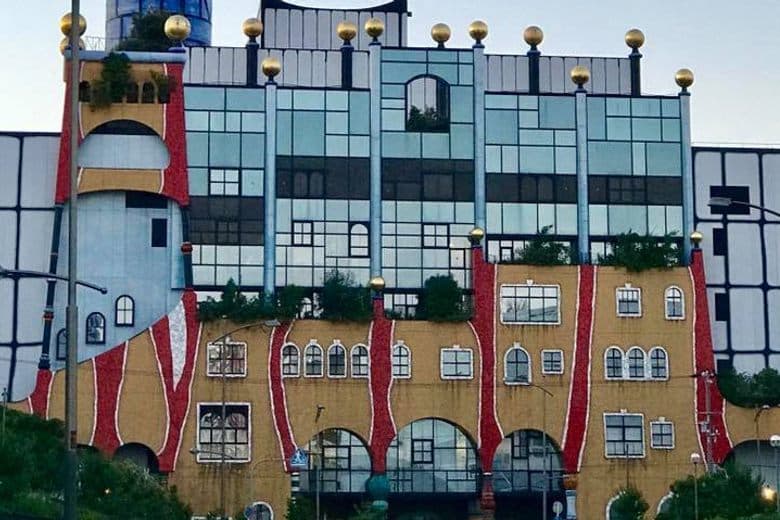
The Maishima Incineration Plant in Osaka is a remarkable example of industrial architecture transformed into a work of art. Designed by the renowned Austrian artist Friedensreich Hundertwasser, this facility, built in 2001, serves the dual purpose of waste disposal and promoting environmental consciousness. Its distinctive, brightly colored facade, organic shapes, and a towering golden chimney stand in stark contrast to typical industrial buildings, making it a unique landmark that challenges perceptions of utility and aesthetics.
Visitors consistently praise the plant's exterior design, often describing it as 'whimsical,' 'colorful,' and 'magical.' Many are drawn to its unusual appearance, with some even mistaking it for part of the nearby Universal Studios Japan. The architectural style, characterized by a rejection of straight lines and an embrace of vibrant hues, is a major highlight. However, reviewers also temper expectations regarding the interior; while tours are available, the experience inside is, as expected, that of a functional waste disposal plant, lacking the artistic flair of the exterior. The plant successfully sparks curiosity about waste management and environmental impact, aligning with Hundertwasser's vision.
For those planning a visit, it's important to manage expectations about the interior experience. The true appeal lies in appreciating the exterior architecture and its environmental message. Advance reservations are required for tours of the plant and office, which are offered free of charge. Consider spending about 1-2 hours here, primarily for viewing the exterior and, if interested, taking a guided tour. The best time to visit is during daylight hours to fully appreciate the vibrant colors. There are no specific items to bring beyond what you would normally carry for a sightseeing trip.
The easiest way to reach the Maishima Incineration Plant is by car or taxi, as public transport options are less direct. While some visitors might attempt to combine it with a trip to Universal Studios Japan due to its proximity, direct public transport links between the two might require transfers. If driving, parking is available on-site. For those relying on public transport, research local bus routes that serve the Maishima area, as direct train access is not available.
A common complaint is the discrepancy between the stunning exterior and the purely functional interior. To mitigate this, focus your visit on the architectural marvel from the outside. Understand that while the building is a work of art, it is still an active industrial facility. The tours, while informative, are not designed for entertainment but for educational purposes regarding waste management. Therefore, approach the visit with an appreciation for its unique blend of art and utility rather than expecting a theme park experience.