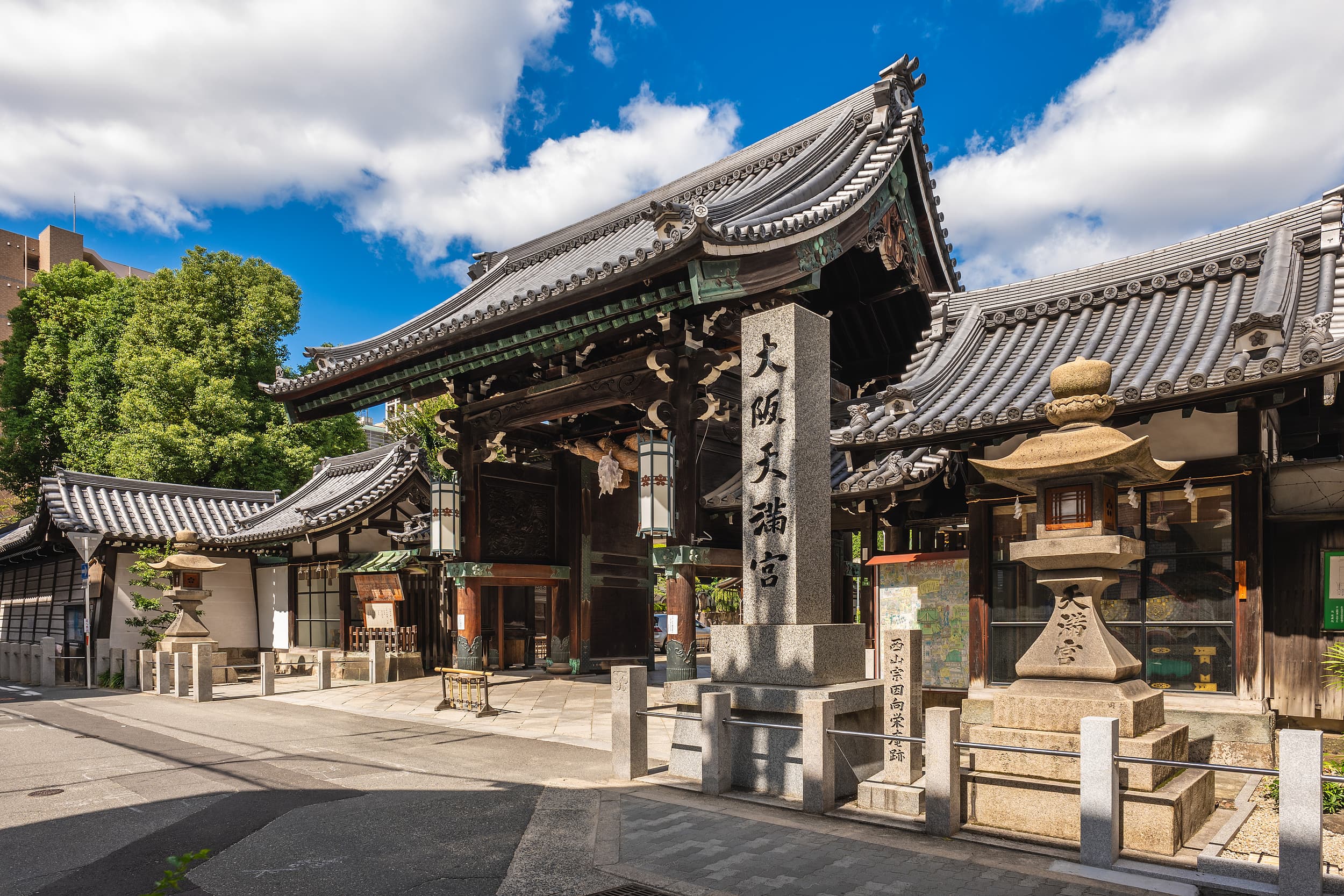
Osaka Tenmangu Shrine is one of Japan's most renowned shrines, dedicated to Sugawara no Michizane, a 10th-century scholar deified as the god of learning. This makes it a significant pilgrimage site for students and scholars, particularly before exams, as they come to pray for academic success and good fortune. The shrine also plays a central role in the annual Tenjin Matsuri Festival in July, one of Japan's three great traditional festivals, known for its vibrant boat parades and fireworks.
Visitors consistently praise the shrine's serene and traditional atmosphere, noting it offers a peaceful contrast to the bustling city. Many appreciate its exquisite architecture and the opportunity to observe local customs, such as the hanging of 'ema' (votive tablets) with academic wishes. While some reviewers find it smaller compared to other major shrines in Kyoto, they often highlight its charm and the authentic local experience it provides. The shrine is particularly popular with those seeking a deeper connection to Japanese culture beyond mainstream tourist spots.
For a more intimate experience, consider visiting in the early morning, around 7 AM, when there are fewer crowds, making it ideal for photography and quiet contemplation. Most visitors find that 1 to 2 hours are sufficient to explore the grounds, observe the rituals, and soak in the atmosphere. There is no entry fee, making it an accessible cultural experience. While the shrine is known for academic blessings, it's also a place where people pray for general luck and to ward off disasters.
The shrine is conveniently located and easily accessible by public transport. You can take the Tanimachi Subway Line to Minamimorimachi Station (K12) or the JR Osaka Loop Line to Tenma Station. From Minamimorimachi Station, it's approximately a 5-minute walk, and from Tenma Station, about a 10-minute walk. The shrine is situated east of Tenjinbashisuji, Osaka's longest shopping street, making it a good combination with a shopping excursion. Reviewers note that clear signs guide the way from the stations.
A common observation from visitors is that the shrine is relatively small, especially when compared to larger Tenmangu shrines in other cities like Kyoto. Some express that it might lack the grandeur of more famous attractions. To mitigate this, manage expectations regarding its size and focus on appreciating its historical significance, intricate details, and the local cultural interactions it offers. If you've already visited a larger Tenmangu shrine, this one might feel less impactful, but its unique urban setting and local charm still make it a worthwhile stop.