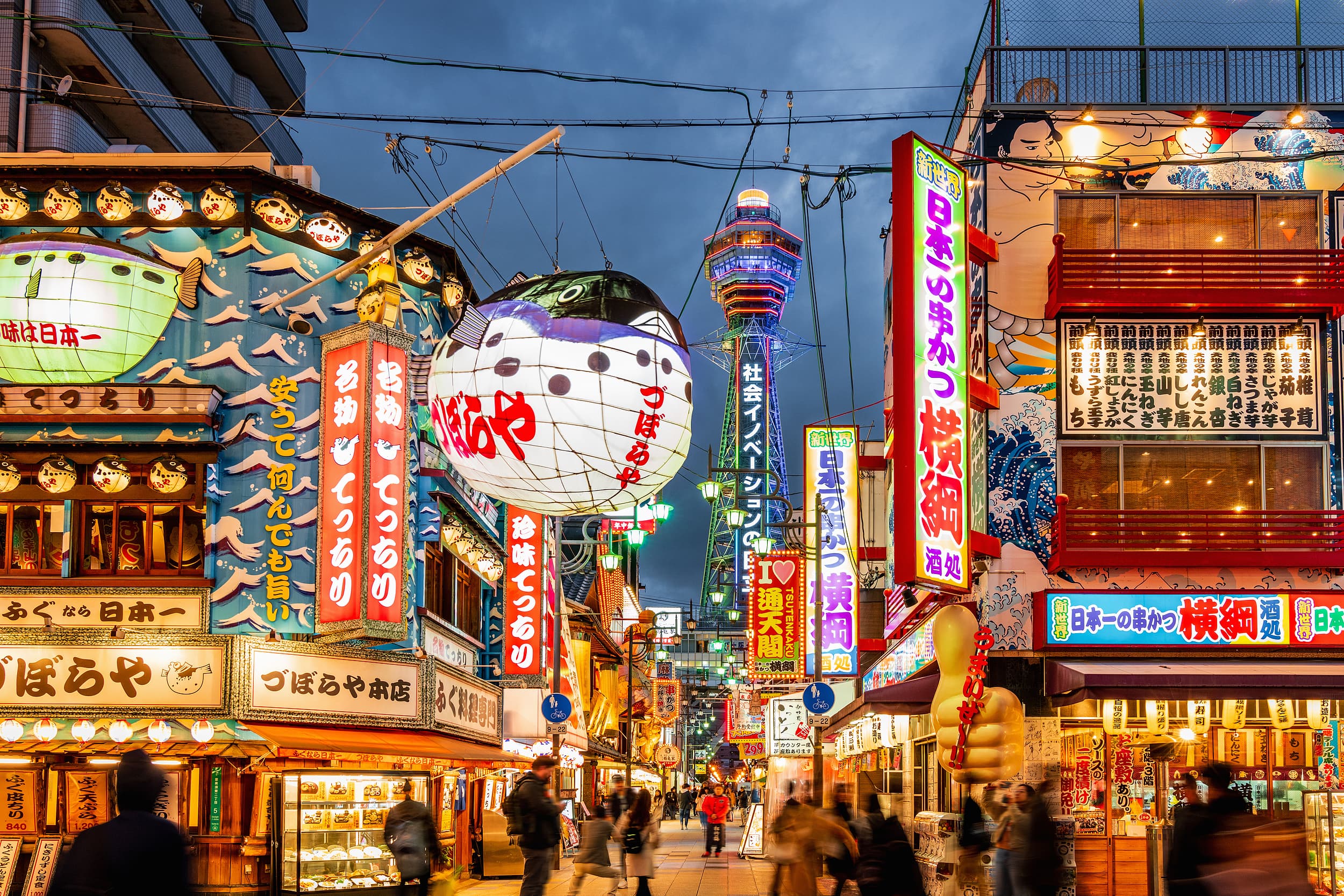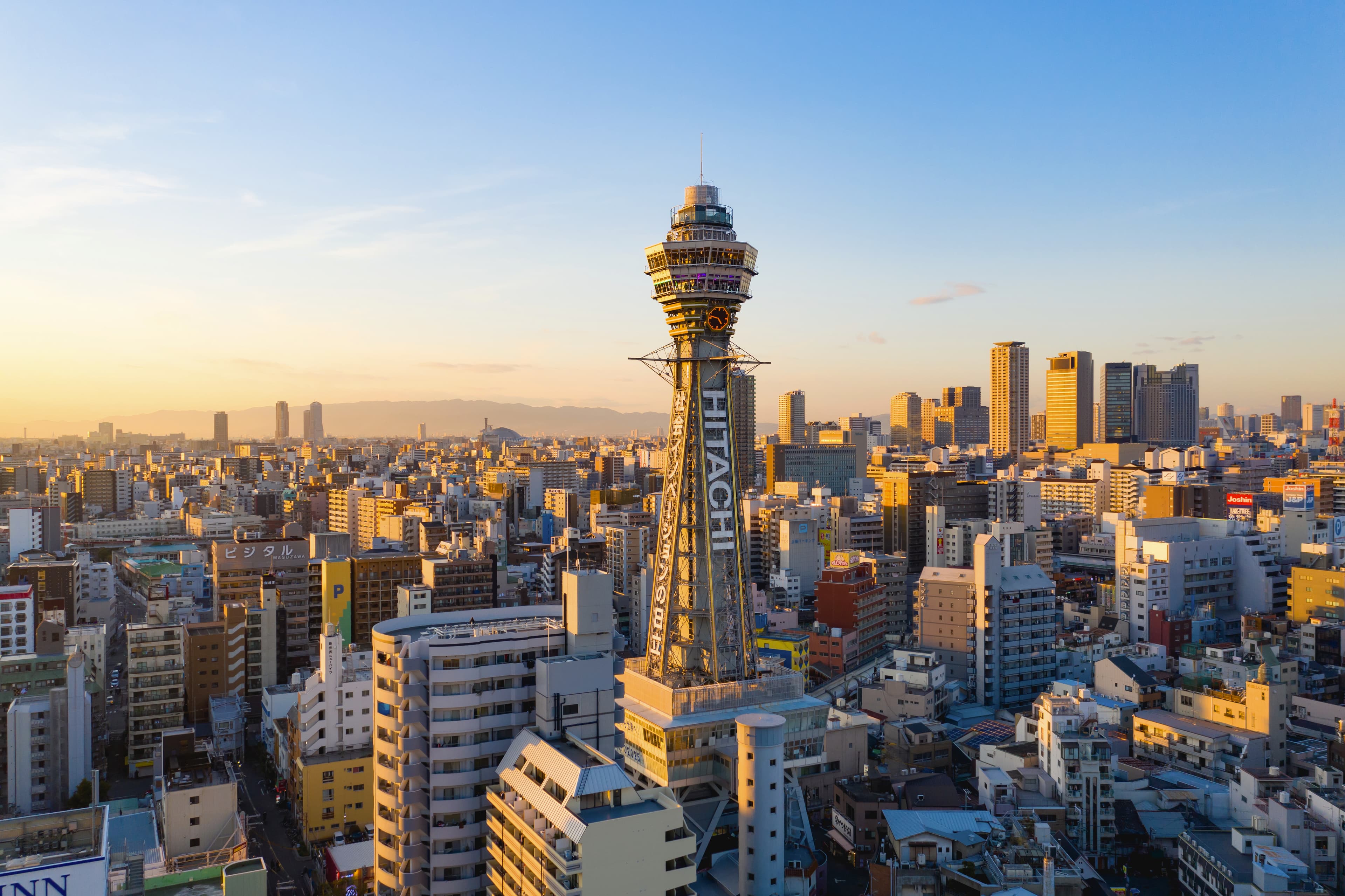
Tsutenkaku, meaning 'tower reaching to heaven,' is a historic landmark in Osaka's Shinsekai district. Originally built in 1912 and later rebuilt in 1956 after World War II, it was once the tallest structure in Asia. Modeled after the Eiffel Tower, it symbolizes Osaka's resilience and offers a nostalgic journey into the city's past, contrasting with its more modern counterparts.
Visitors consistently praise the vibrant atmosphere of the surrounding Shinsekai area, especially at night when the neon lights illuminate the streets. Many enjoy the local food scene, particularly the kushikatsu (deep-fried skewers) and other street snacks, often noting that prices are more reasonable here than in areas like Dotonbori. The tower itself offers decent panoramic views of Osaka, though some reviewers mention it's not as tall or modern as other observation decks. The presence of the Billiken statue, a god of luck whose feet visitors rub for good fortune, is a popular and unique photo opportunity. The Glico museum and various themed floors, including a Pocky museum, add a quirky touch that some find entertaining, especially for families.
To make the most of your visit, consider going in the late afternoon to experience both daylight views and the illuminated nightscape of Shinsekai. Many reviewers suggest that the area truly comes alive after dark. If you plan to ascend the tower, be prepared for potential queues, especially during peak times. Some visitors recommend arriving before 10 AM or during off-peak hours to minimize waiting. The Osaka Amazing Pass often grants free entry, which many find makes the experience more worthwhile. While the tower's interior can feel a bit dated, the overall experience is enhanced by embracing the retro charm. Don't forget to explore the numerous souvenir shops and arcade games in the vicinity.
Tsutenkaku is conveniently located in the Shinsekai district. The nearest subway station is Dobutsuen-mae (Midosuji Line or Sakaisuji Line), from which it's a short walk through the lively shopping streets. Alternatively, Shin-Imamiya Station (JR Loop Line) is also within walking distance. For those using the Midosuji Line, Umeda Station offers a direct connection. The tower is easily visible from a distance, guiding your way. Parking can be challenging in this bustling area, so public transport is highly recommended.
A common complaint among visitors is the extensive queuing, particularly for the elevators to the observation deck. Reviewers describe multiple queues, sometimes lasting over an hour, for a relatively short time at the top. To mitigate this, consider visiting on a weekday, early in the morning, or during less popular times. Some also note that the interior lighting on the observation deck can cause reflections, hindering clear night view photos. If photography is a priority, try to position yourself carefully or visit during the day. The tower's interior design, with its various themed floors and commercial focus, is sometimes perceived as disorganized or overly commercialized; managing expectations in this regard can improve the experience.