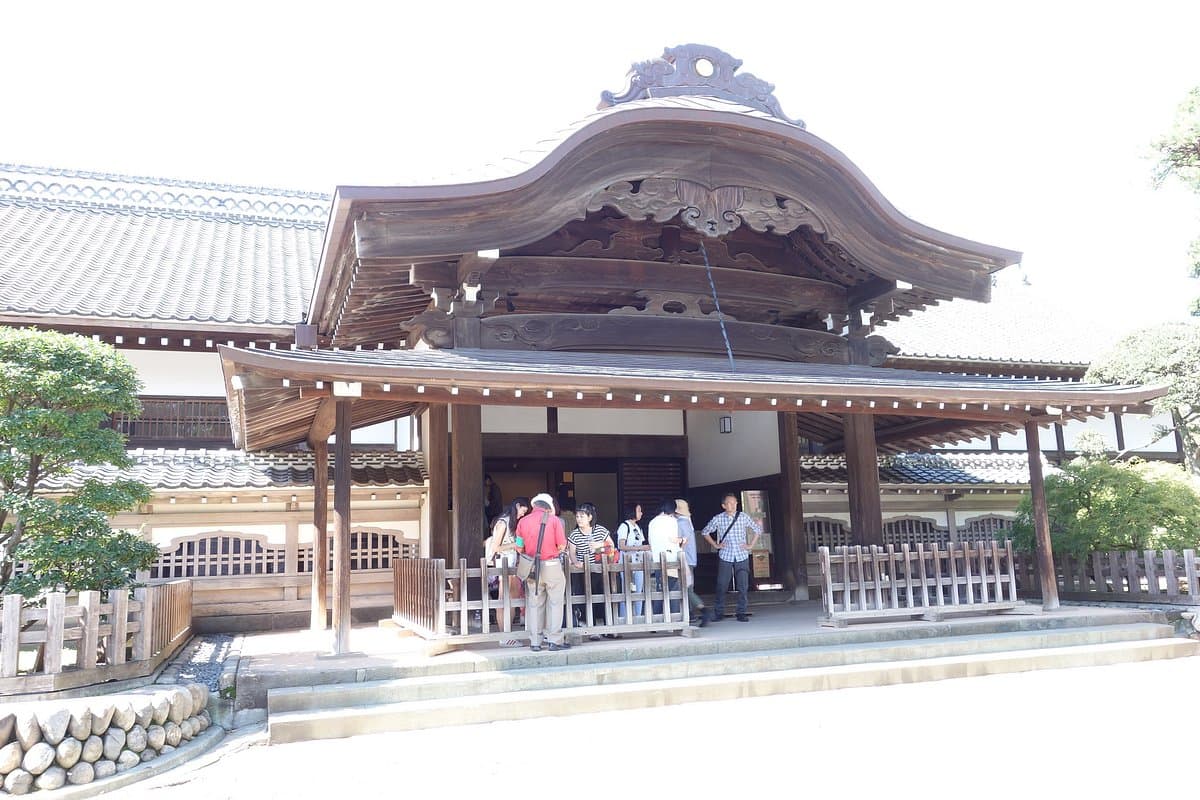
Kawagoejyo Honmaru Palace is a significant historical site, representing the last remaining original structure of Kawagoe Castle, which was once a crucial flatland castle in the Kanto region. Rebuilt in 1848, it served as the residence and offices for the feudal lord, offering a rare glimpse into the administrative and domestic life of the Edo period.
Visitors consistently praise the palace for its authentic atmosphere and the sense of stepping back in time. Many enjoy the spacious tatami-matted rooms, noting the pleasant smell of tatami, and the serene courtyards visible from the verandas. The realistic doll display in the Karo Station, depicting a samurai discussion, is frequently highlighted as a unique and engaging feature. Reviewers appreciate the opportunity to walk through the traditional Japanese architecture, imagining the lives of samurais and lords. The low admission fee is also a recurring positive point, making it an accessible historical experience.
To make the most of your visit, allocate about 1-2 hours. Many suggest arriving early, around 9 AM, to experience the palace with fewer crowds. Remember that you will need to remove your shoes upon entry; plastic bags are provided to carry them with you. While the palace is relatively compact, taking time to sit on the verandas and observe the gardens can enhance the experience. Some visitors recommend combining a visit here with the Kawagoe City Museum across the street, which offers a 1/500 scale model of the original Kawagoe Castle and castle town, providing valuable context.
The palace is located at 2-13-1 Kuruwamachi, Kawagoe. While some reviewers mention a walk of 20-30 minutes from popular areas like Penny Candy Lane or the Warehouse District, it is generally considered a pleasant stroll through Kawagoe's historic streets. Public transport options to Kawagoe are plentiful, and from the main stations, local buses or a taxi can shorten the walk. Driving is also an option, though parking availability might vary.
A common complaint among some visitors is the perceived lack of extensive exhibits or the relatively small size of the remaining structure, leading to a feeling that "there isn't much here." To mitigate this, manage your expectations by understanding that this is a preserved residence, not a grand, rebuilt castle keep. Those who are not deeply interested in Japanese history might find it less engaging. However, many find that appreciating the architectural details, the quiet ambiance, and the historical significance of the last remaining Honmaru Palace in Eastern Japan makes the visit worthwhile.