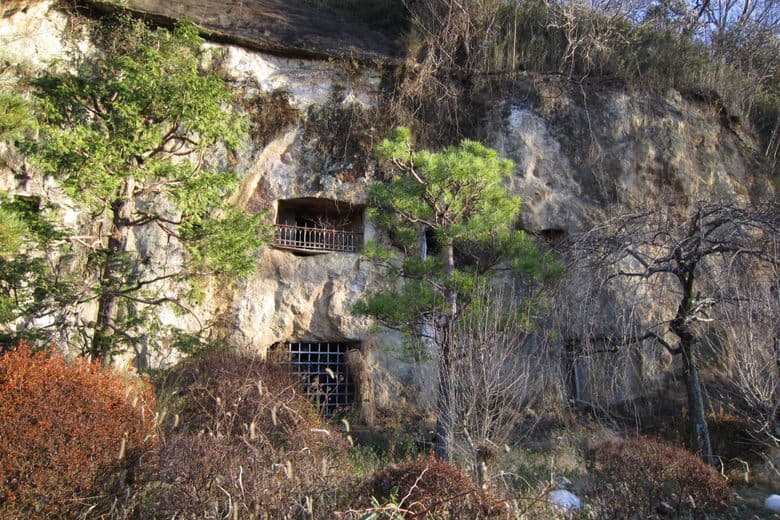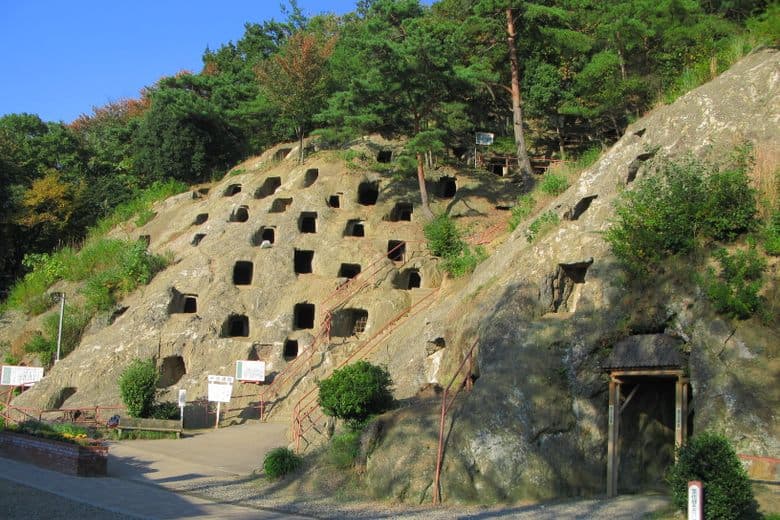
The Hundred Caves of Yoshimi (Yoshimi Hyakuana) is a nationally designated historic monument, a cluster of over 200 ancient burial caves from the late Kofun period (3rd to 6th centuries AD) carved into a soft sandstone hillside. While its name suggests a hundred, archaeological excavations have revealed 219 distinct tombs, making it the largest such grave cluster in Japan. Beyond its archaeological significance, the site also holds a unique piece of World War II history: a portion of the complex was repurposed to house a military aircraft engine factory, with a tunnel stretching nearly a mile towards the ruins of Matsuyama Castle.
Visitors consistently praise the unique combination of ancient history and wartime remnants. Many find the experience of walking through the Kofun-era caves and then transitioning into the WWII factory tunnel to be particularly striking. The presence of the rare bioluminescent Schistostega moss, also known as 'goblin gold' (hikarigoke), adds another layer of intrigue, with some visitors specifically seeking out its subtle glow in darker sections. The two small museums on site, one displaying artifacts from the tombs and the other a diorama of Matsuyama Castle, are appreciated for providing context and enhancing the understanding of the site's history.
To make the most of your visit, allocate approximately 1 to 2 hours. Wear comfortable shoes as you'll be walking through caves and potentially climbing a hillside to see the upper sections. While the site is generally safe, be mindful of your surroundings, especially when exploring higher areas, as wasps and snakes have been occasionally sighted. Bringing a small flashlight can enhance your experience, particularly for spotting the bioluminescent moss in darker cave sections. The entrance fee is 300 yen for adults, which is considered very reasonable by most visitors for the historical depth offered.
The Hundred Caves are conveniently located less than a 30-minute walk from Higashi-matsuyama Station. Alternatively, you can take a local bus and alight at the Hyakuana-iriguchi bus stop, which is even closer. If you choose to walk from the station, you'll pass by two other interesting, albeit less-visited, sites: Iwamuro Kannon, a 17th-century Buddhist temple with a cave full of stone statues, and the Gankutsu Hotel, a large structure carved into the sandstone cliff. These can be pleasant detours if you have extra time.
Some visitors note that the site can feel a bit small or less dramatic than expected if one is anticipating a vast underground city. However, understanding its historical context as a burial ground and wartime factory, rather than a dwelling, helps manage expectations. The uneven nature of some caves and the limited lighting in certain areas are part of the authentic experience, but those with mobility issues should be aware. The information provided at the site, while sufficient, is primarily in Japanese with some English translations, so a translation app might be helpful for deeper understanding.