 Tabelog rating
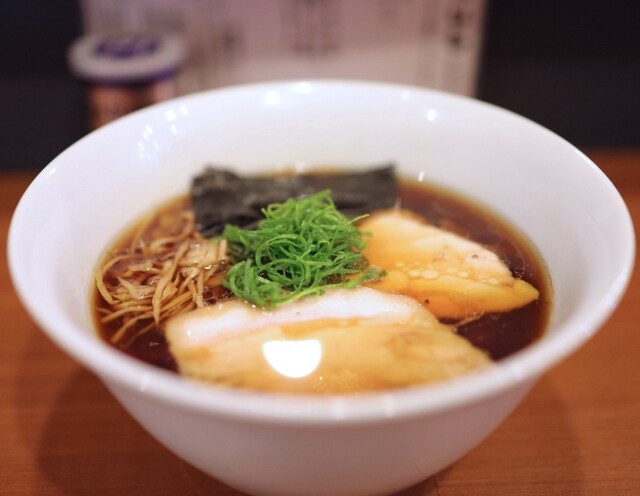
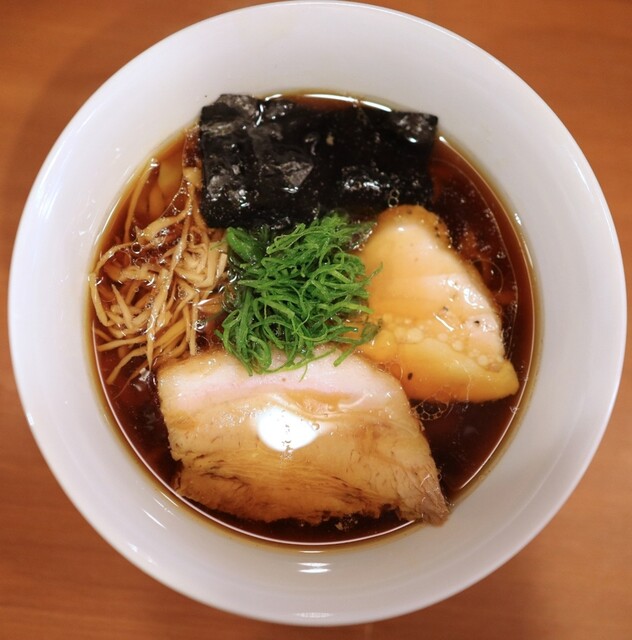
This ramen counter is built around its noodles. They are made in-house and massaged by hand just before boiling, and the technique changes with the dish. For ramen they are pressed and rolled into a pronounced wave; for mazesoba (brothless noodles) they are only massaged; for tsukemen (dipping noodles) they are only pressed. The result is a slippery, chewy, almost silky flat noodle that reviewers say they have not found elsewhere. It is served in a clear broth made from several heritage chicken breeds. The shop has been named in Tabelog's Ramen EAST "Tabelog 100" every year from 2019 to 2025.
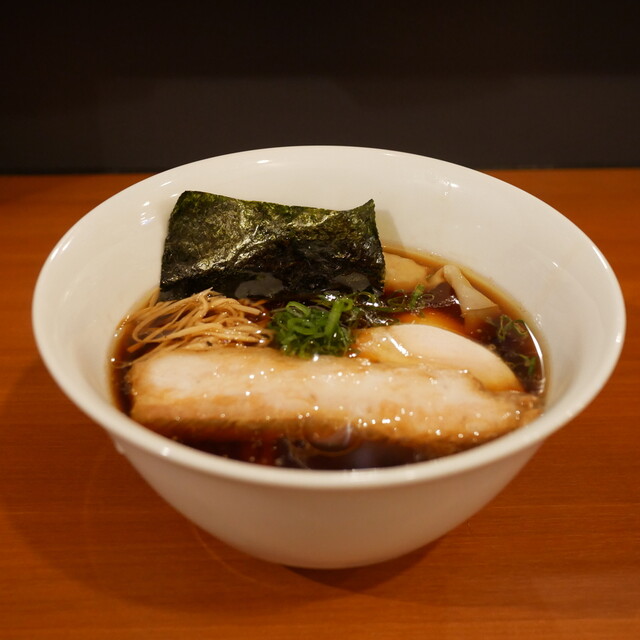
Almost every review praises the springy, wheat-fragrant noodles. The most mentioned bowl is the clear shoyu ramen, scented with chicken fat. The tokusei (deluxe) version adds three or four kinds of chashu (sliced pork and chicken), wonton and a rich Nagoya Cochin egg. The shio ramen is described as delicate. Tsukemen regulars eat the first noodles with seaweed salt and lemon, then finish with a dashi top-up. The seasonal limited bowls, capped at ten a day, have a devoted following. Staff are repeatedly called kind and attentive, and the room spotless.
Most of the criticism is about the wait. Several reviewers felt the food, good as it is, did not justify two to three hours in line. A minority found the shoyu broth or the tsukemen dip too salty. Isolated comments mention a lukewarm soup, a pork chashu with a noticeable smell, and a mazesoba that seemed ordinary with only pepper on the table.
Reviewers in 2024–2026 paid around ¥1,050 for shoyu or shio ramen (up from ¥950) and ¥1,500 for tokusei ramen. Mazesoba was about ¥1,100, plain tsukemen ¥1,150 and tokusei tsukemen ¥1,600. Two wontons cost ¥150 and the roast pork rice bowl ¥500. Seasonal specials ran ¥1,200–1,700. A large portion is free, and extra noodles cost about ¥1 per gram. A typical lunch comes to roughly ¥1,050–2,000. There is no dinner service.
Value is strong. Reviewers call the tokusei bowl cheap for what it contains and single out the free large size and the ¥150 wontons. The real cost is your time.
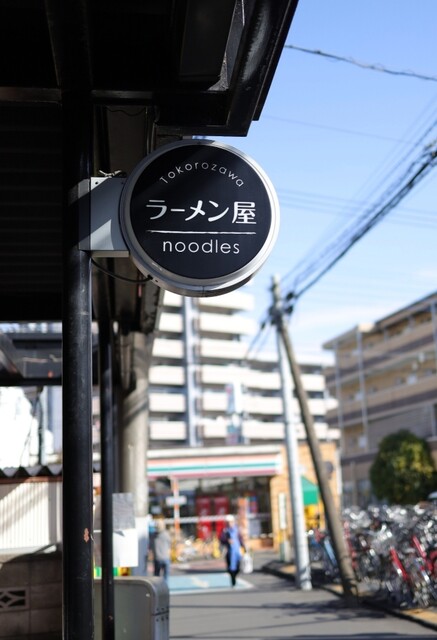
- Getting there: 1 minute's walk (124 m) from Sayamagaoka Station, West Exit, on the Seibu Ikebukuro Line.
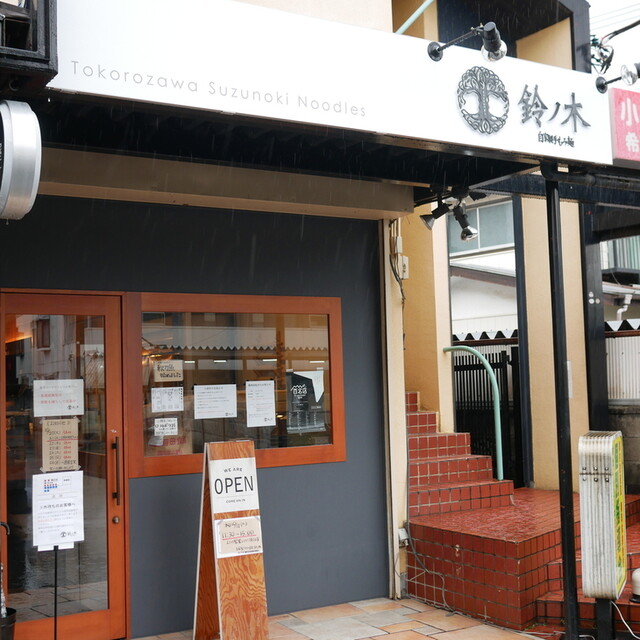
- Booking: reservations are not accepted, and entry is walk-in only via a sign-up sheet outside. The sheet is often set out from about 6–7am. Waits run from 30 minutes to 3 hours. Return at your estimated time and tell staff you are back, or you lose your place.
- Hours: Mon, Thu–Sun 11:30–15:00; closed Tue and Wed. The first group gathers at 10:55. The shop can close early when the noodles run out, and the limited bowls usually sell out early.
- Payment: cash only. No credit cards, electronic money or QR payments. You order at a ticket machine.
- Seats: 8, mainly at the counter. Reviewers also mention one table, and the listing notes a private room.
- Children: welcome. Solo dining is common.
- Smoking: non-smoking.
- Parking: none. Coin parking is available nearby.
