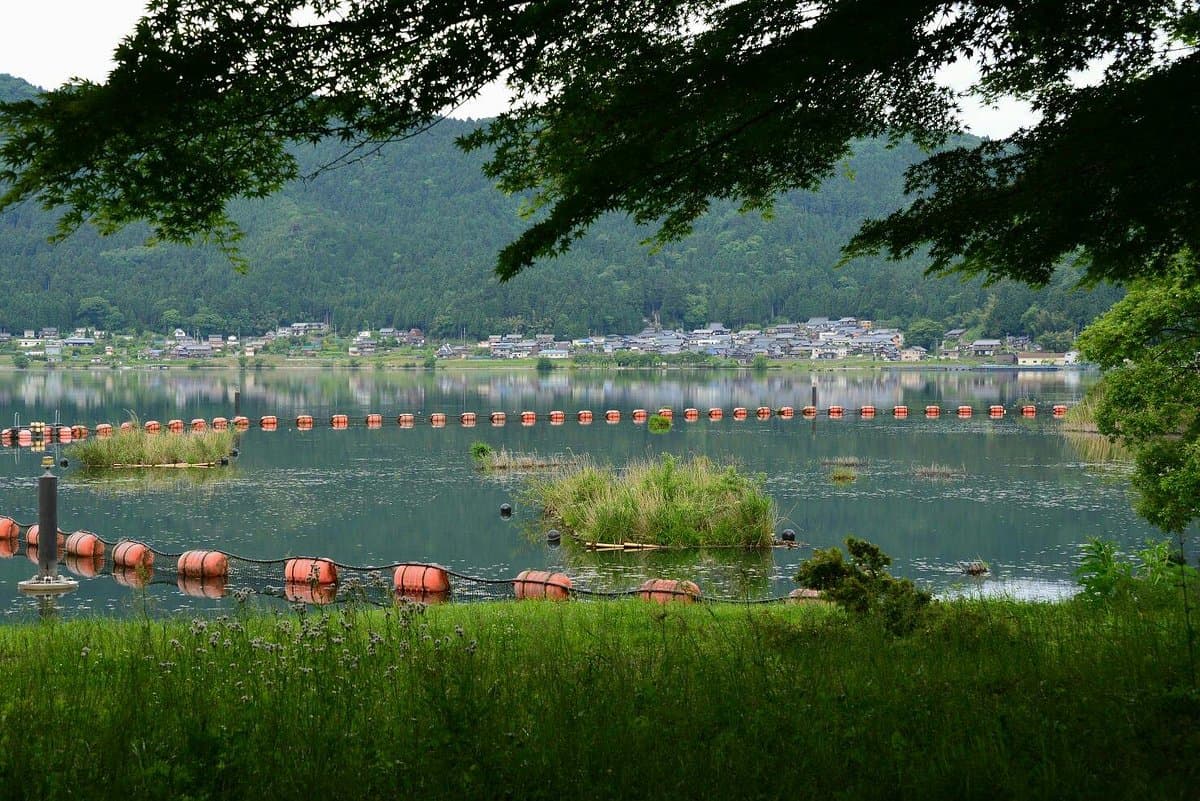
Lake Yogo is a small, picturesque lake in Shiga Prefecture, often referred to as the "Mirror Lake" due to its serene surface that perfectly reflects the surrounding mountains on calm days. Beyond its natural beauty, the lake holds historical significance as the setting for Tsutomu Minakami's novel "Koto of Lakes" and, more notably, as a strategic location during the pivotal Battle of Shizugatake in the Sengoku period, where Toyotomi Hideyoshi ultimately defeated Shibata Katsuie.
Visitors consistently praise the lake's tranquil atmosphere and its reflective qualities, especially on clear, calm days. Reviewers highlight the sense of peace and the opportunity for quiet contemplation. The historical context, particularly the Battle of Shizugatake, is a significant draw for those interested in Japanese history, with some visitors noting the presence of camp layouts or historical markers. However, some visitors feel the area is somewhat undeveloped, lacking extensive tourist infrastructure or detailed historical explanations on-site, which might leave those without prior knowledge feeling a bit underwhelmed.
To make the most of a visit, consider spending 1-2 hours, ideally in the early morning or late afternoon when the water is calmest for the best reflections. Bringing a good camera is recommended to capture the scenic views. For history enthusiasts, it's advisable to research the Battle of Shizugatake beforehand to fully appreciate the historical context, as on-site information might be limited. There are no specific entry fees, making it a budget-friendly option for a peaceful outing.
Lake Yogo is located in Yogocho Kawanami, Nagahama, Shiga Prefecture. Access to the area is primarily from its northern opening, as the lake is surrounded by steep hills. While specific public transport details are not widely reviewed, Nagahama Station is a major hub in the region. From Nagahama, local buses or a taxi would likely be required to reach the lake. Driving is also an option, and visitors staying at inns along the lake have noted the convenience of direct access.
A common complaint is the perceived lack of development or tourist amenities around the lake. Visitors expecting extensive facilities, detailed interpretive signs, or bustling activity might find it too quiet. To mitigate this, approach Lake Yogo as a destination for quiet reflection and natural beauty rather than a major tourist attraction. Pack any necessary refreshments, as options might be limited, and be prepared for a more rustic experience.