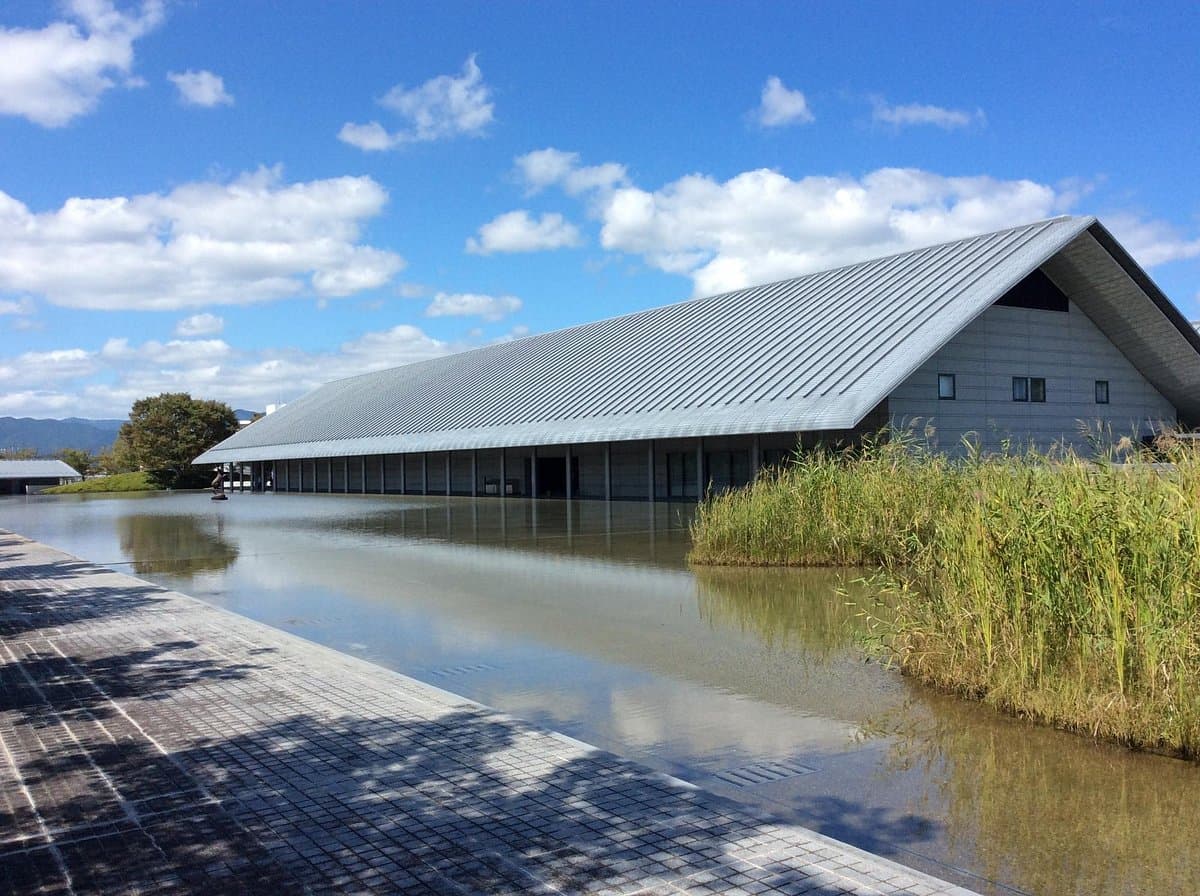
The Sagawa Art Museum, located near Lake Biwa, is a distinctive cultural institution celebrated as much for its architectural design as for its art collections. It houses works by Japanese painter Ikuo Hirayama, sculptor Churyo Sato, and features a dedicated exhibition space for Raku Kichizaemon's tea ceremony ceramics, including a unique underground tea house. The museum's design, with buildings seemingly floating on expansive water features, creates a tranquil and visually stunning environment that many visitors find deeply impressive.
Visitors consistently praise the museum's architecture, describing it as "spectacular," "gorgeous," and a "perfection of dreamy water." The interplay of light and water, especially on sunny days, is a highlight, with reflections dancing on ceilings and walls. The Raku Kichizaemon exhibition, particularly the underground tea house, is frequently cited as a must-see, offering a unique and contemplative experience. Many find the minimalist display of art enhances the viewing experience, allowing for personal interpretation. However, a common complaint is the limited English explanations for non-permanent exhibitions, which can be frustrating for international visitors.
To make the most of your visit, allocate 1-2 hours to explore the main exhibitions and architecture. If you plan to experience the Raku Kichizaemon tea house, note that it often requires advance reservations and an additional fee. Reviewers suggest visiting on a clear day to fully appreciate the architectural reflections on the water. While photography is generally restricted inside, some areas like the "Alice in the Science World" gallery may permit it. Consider checking the museum's website for current special exhibitions, as these often draw specific interest.
Getting to the Sagawa Art Museum can be challenging without a car. While it's accessible by JR train to Moriyama Station (Biwako line) or Katata Station, public bus connections from these stations are infrequent, especially on weekends. Several visitors recommend checking bus schedules in advance or considering a taxi from the station. Driving is often cited as the most convenient option, with ample parking available. The museum's somewhat remote location contributes to its peaceful atmosphere but requires planning for transportation.
The primary complaint among visitors is the lack of comprehensive English information, particularly for temporary exhibits. To mitigate this, consider researching current exhibitions online beforehand or using translation apps. Another minor point is the relatively small permanent collection, which some visitors find can be explored quickly. However, the architectural experience itself, combined with the Raku tea house, often compensates for this.