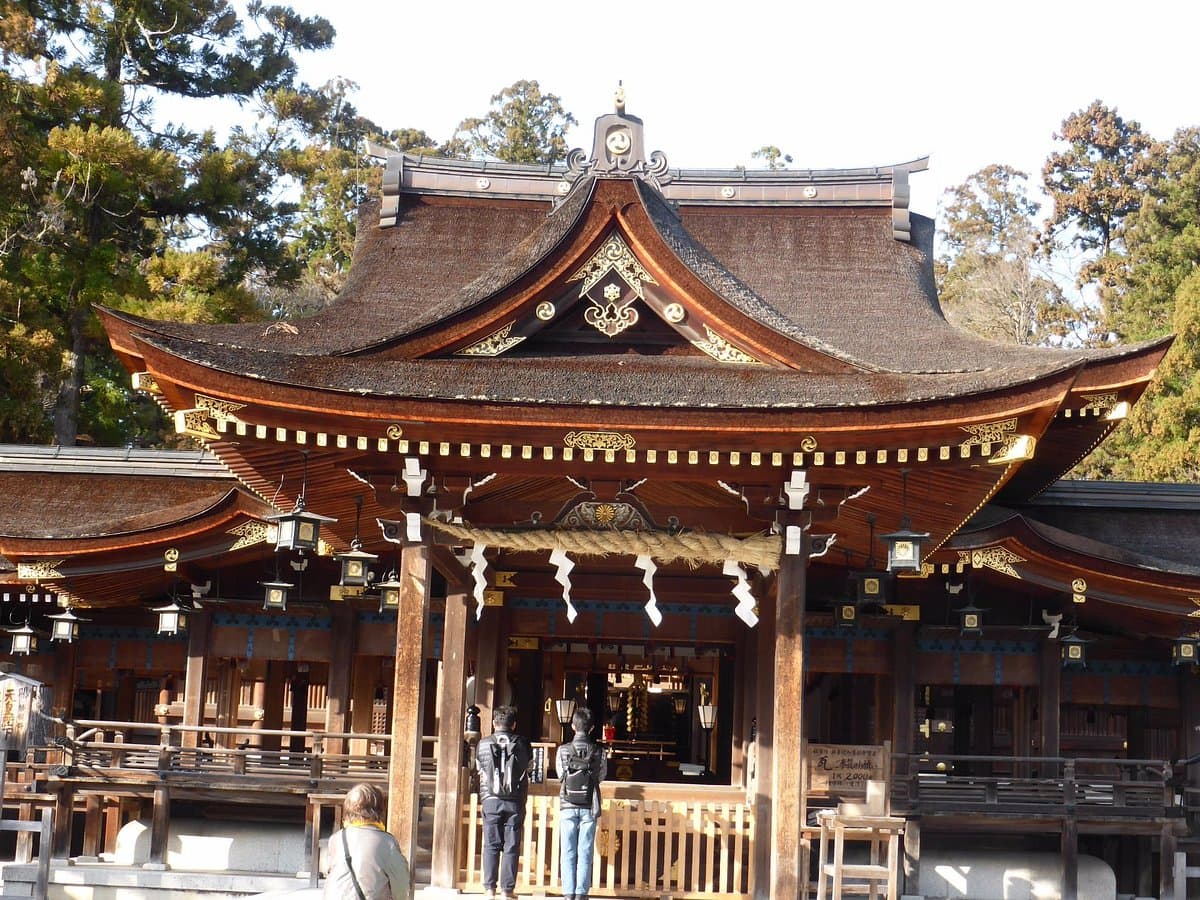
Taga Taisha is the largest and most historically significant Shinto shrine in Shiga Prefecture, revered as "Otagasan" since ancient times. It enshrines Izanagi no Okami and Izanami no Okami, the primordial deities credited with creating the Japanese islands and initiating marriage. Its profound connection to Japan's mythological origins makes it a site of deep cultural importance, even being mentioned in the Kojiki, Japan's oldest book.
Visitors consistently praise the shrine for its peaceful and majestic atmosphere, noting the clean air and opportunities for mental refreshment. Many appreciate the traditional architecture, which some compare to the subdued styles of Ise Grand Shrine or Izumo Taisha. The presence of priests performing rituals and the sound of taiko drums add to the authentic spiritual experience. Around the shrine, a charming area with local shops offers souvenirs and regional foods, enhancing the visit for many.
To make the most of a visit, plan to spend approximately 1-2 hours exploring the grounds, including the small row of red gates behind the main building and the surrounding shops. Reviewers suggest that the afternoon, when sunlight can make the golden tips of the shrine sparkle, offers a particularly beautiful view. While the shrine is generally quiet, it can be busier during the New Year period, though some visitors note it's less crowded than other major Kansai shrines during this time. Bringing comfortable shoes is advisable for walking around the extensive grounds.
Getting to Taga Taisha can be a bit challenging without a car, as several reviewers have noted. While public transport is available, it may require transfers. The nearest train station is Taga Taisha-mae Station on the Ohmi Railway Taga Line. From there, the shrine is within walking distance. For those driving, parking is generally available, and it offers more flexibility for exploring the wider Shiga region.
A common point raised by visitors is the relative difficulty of access compared to more central attractions. To mitigate this, consider combining your visit with other sights in Shiga Prefecture if you have a car, or plan your public transport route carefully in advance, allowing ample travel time. While the shrine is historically rich, some visitors accustomed to more vibrant or colorful shrines might find its subdued aesthetic less immediately striking, but its historical depth is its primary appeal.