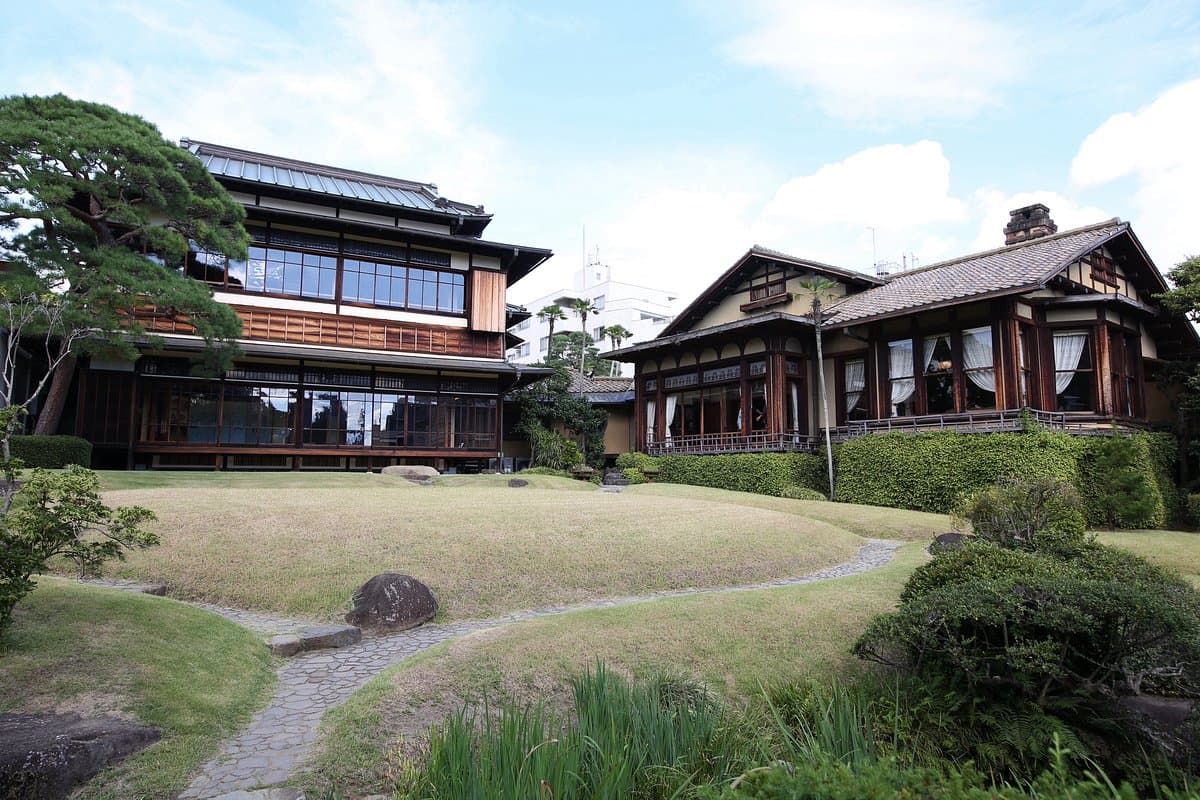
Kiunkaku, meaning 'Villa of Gathering Clouds,' is a significant cultural property in Atami, originally built in 1919 as a private residence for a wealthy businessman and later converted into a luxurious ryokan (traditional Japanese inn). It stands out as the only one of Atami's 'three major villas' open to the public, offering a rare opportunity to explore a grand Meiji/Taisho-era estate that beautifully blends Japanese, Western, and even Chinese architectural elements.
Visitors consistently praise the unique architectural fusion, noting the intriguing mix of traditional Japanese rooms, Western-style spaces, and distinctive features like stained-glass ceilings and an Art Deco-inspired dining room. The beautifully maintained Japanese garden, featuring a large 20-ton rock, is a highlight for many, providing a tranquil atmosphere for strolling and photography. Reviewers frequently mention the sense of stepping back in time and appreciating the opulent details and craftsmanship, including the special hand-made glass that is no longer reproducible. The connection to famous Japanese writers who stayed and worked here, such as Osamu Dazai, adds another layer of historical interest, though some visitors note a lack of English information regarding these literary figures.
To make the most of your visit, allocate about 1.5 to 2 hours to explore both the house and the garden thoroughly. Many recommend taking a break at the on-site cafe, which offers pleasant views of the garden. While the property is well-preserved, some visitors suggest bringing a translation app or guide if you wish to delve deeper into the historical significance of the authors who stayed there, as English explanations can be limited. The best time to visit is during daylight hours to fully appreciate the garden and the natural light filtering through the stained glass.
Kiunkaku is conveniently located in the center of Atami. It is approximately a 30-minute walk from Atami Station. Alternatively, local buses are available from the station, making it easily accessible. If driving, check for nearby parking options, though walking or public transport is often recommended for navigating Atami's streets.
A common complaint among English-speaking visitors is the limited English information, particularly concerning the famous writers who frequented the inn. To mitigate this, consider researching the history and notable guests beforehand or using a translation app to interpret Japanese signage and exhibits. Despite this, the visual splendor of the architecture and garden is largely self-explanatory and widely appreciated.