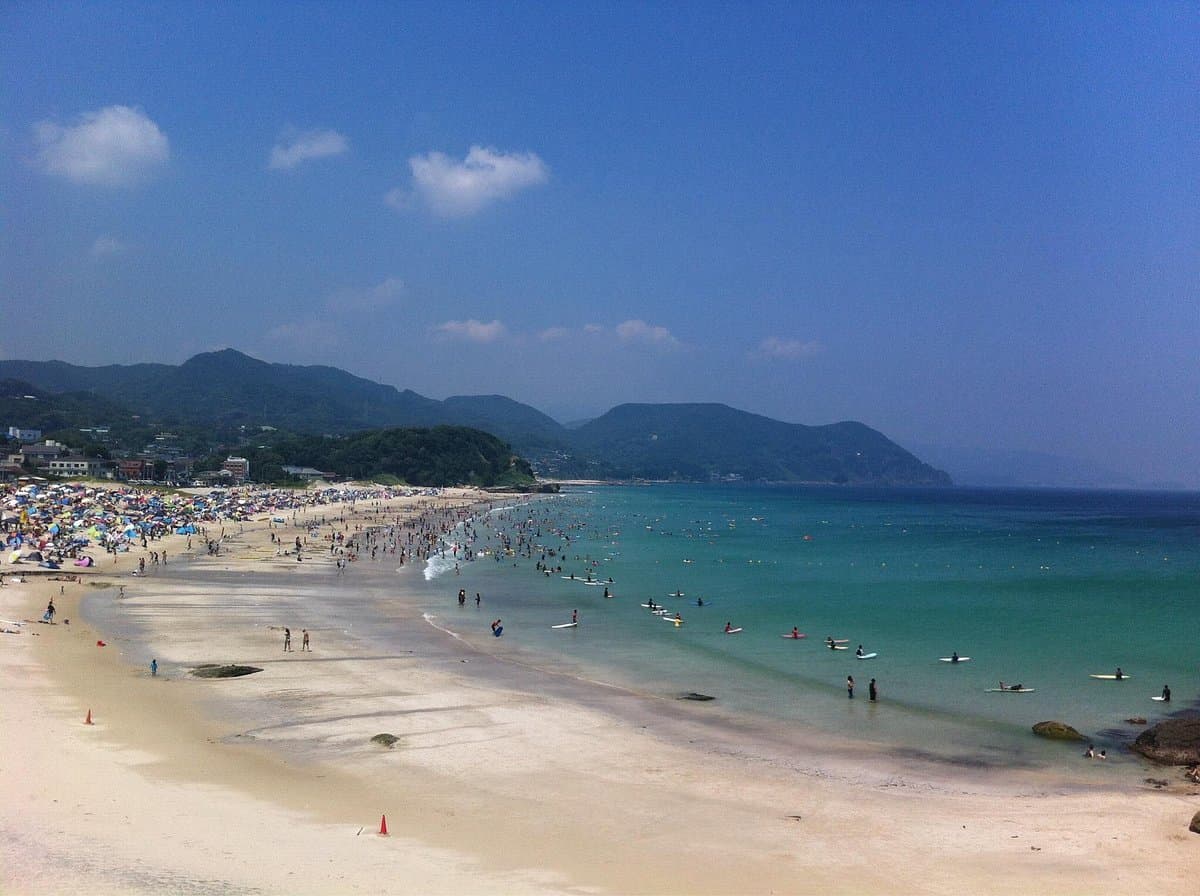
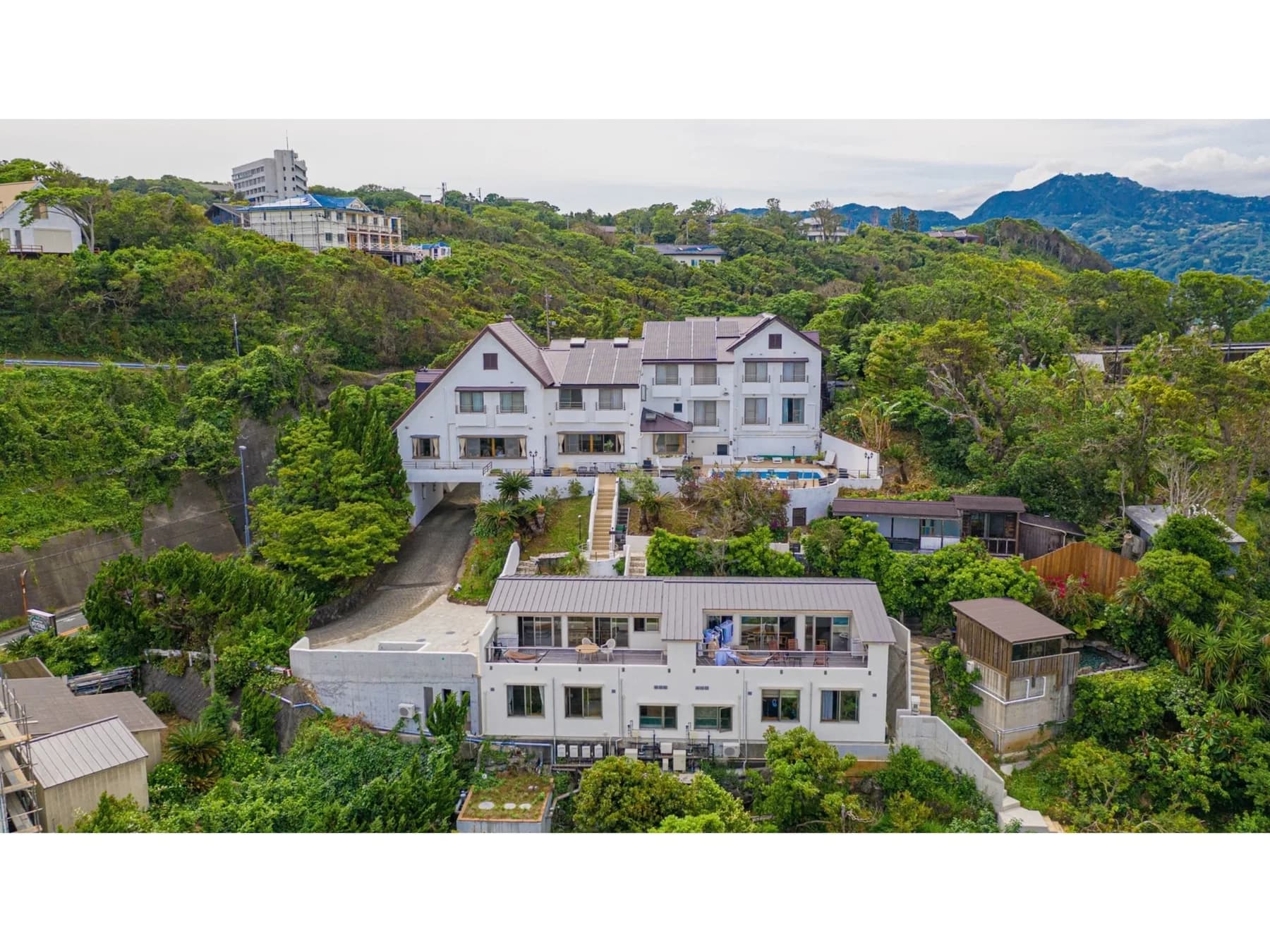
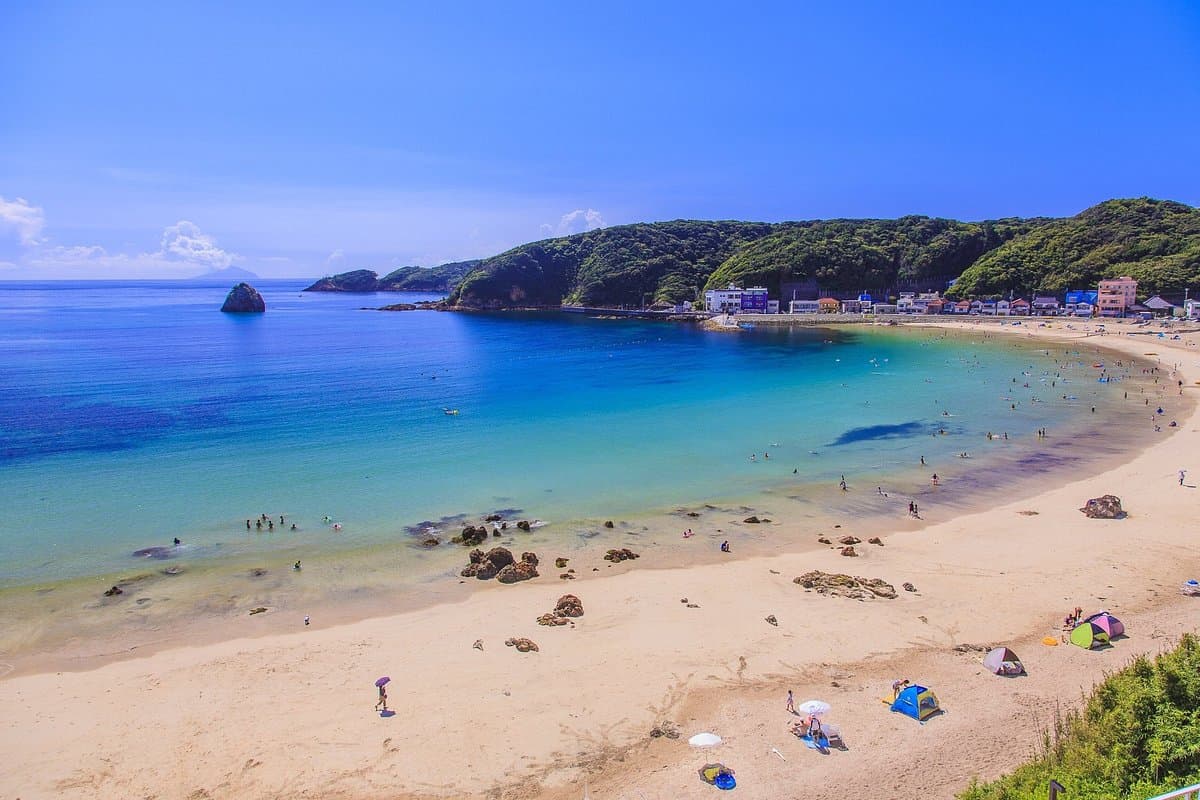
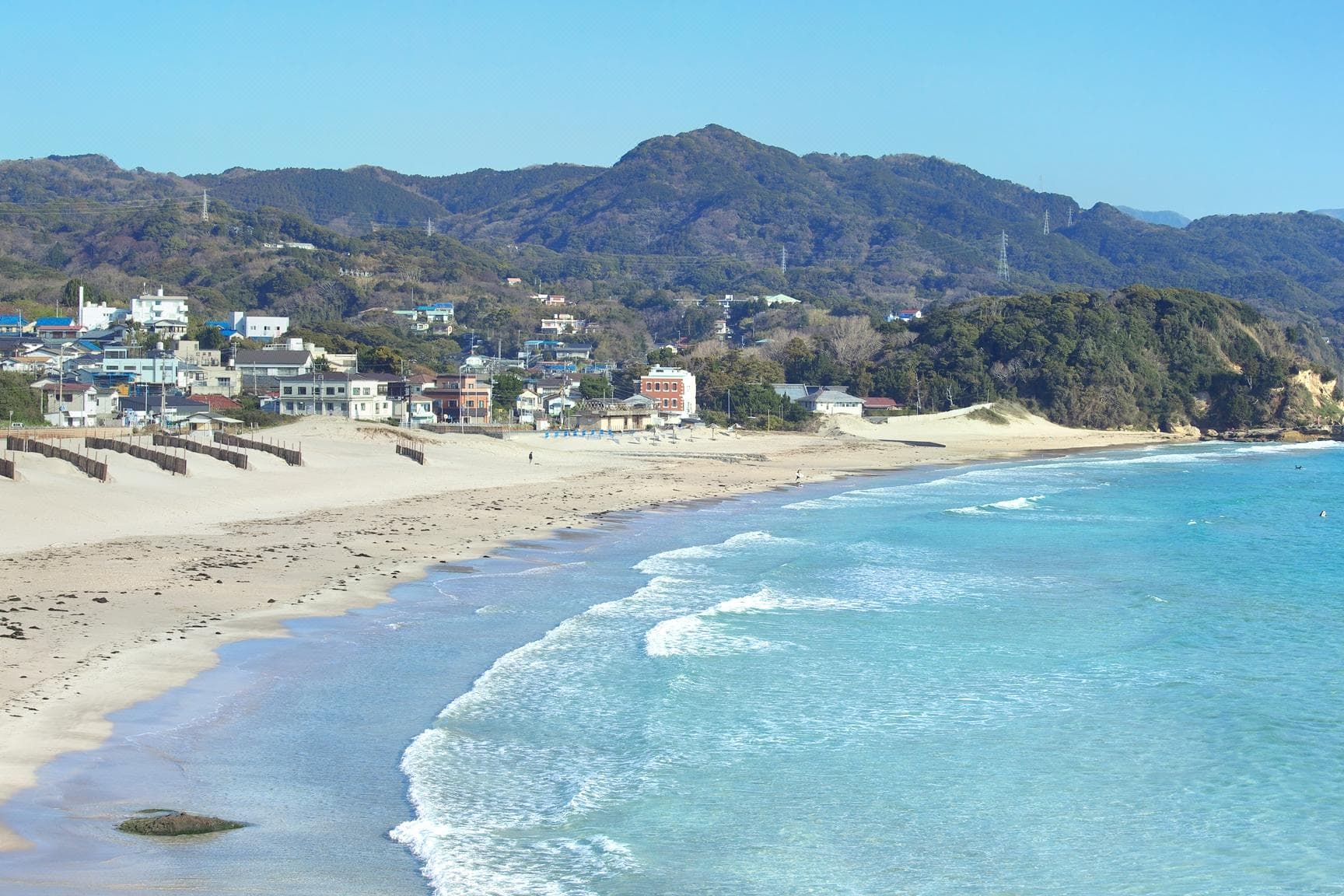
Shirahama Beach, located on the Izu Peninsula, is renowned for its striking white sands and exceptionally clear, blue waters. Its name, meaning "White Sands," accurately reflects its primary appeal, making it a distinctive natural attraction in a country where such beaches are less common outside of Okinawa. The beach's beauty is often enhanced by the surrounding mountainous landscape, offering a picturesque setting for various activities.
Visitors frequently highlight the beach's soft, fine sand and the high transparency of the sea, which many describe as clean and inviting for swimming. The waves are often noted as suitable for surfing and bodyboarding, attracting a diverse crowd from families to college students and surfers. Reviewers appreciate the relaxed atmosphere, with some mentioning that it's a place where one can enjoy loud music, have tattoos, and drink alcohol without judgment, unlike more restrictive areas. The presence of lifeguards during peak season is also a reassuring factor for many.
For a pleasant visit, consider going during the shoulder seasons (late spring or early autumn) to avoid the intense summer crowds, though the water might be cooler. Many suggest spending 2-3 hours to fully enjoy swimming, sunbathing, or walking along the shore. If visiting during summer, be prepared for crowds and potentially higher parking fees. Bringing your own parasol is advisable as rentals might not always be available or can be costly. While some parking lots offer showers, they typically lack amenities like body wash or shampoo, so bring your own. There are convenience stores (7-Eleven, Family Mart, Lawson) directly across from the beach for snacks, drinks, and beach essentials.
Shirahama Beach is easily accessible by bus from Shimoda Station, with a journey of approximately 10-20 minutes to the "Shirahama Kaigan" stop. For those driving, there are numerous parking lots available, though prices can range from 1000 to 2000 yen per day, with some closing by 5 PM. Reviewers recommend avoiding parking directly next to the beach for better rates. While Uber or Japanese ride-hailing apps might not always be reliable for return trips, walking to nearby hotels for taxi services is an option.
A common complaint, particularly during peak season or after storms, is the presence of rubbish on the beach or in the water, though many also praise its cleanliness. Some visitors also find the frequent megaphone announcements by lifeguards disruptive. To mitigate these issues, consider visiting during less crowded times and being aware that beach conditions can vary. One reviewer noted potential sewage canals, but this was an isolated observation and not a widespread concern.