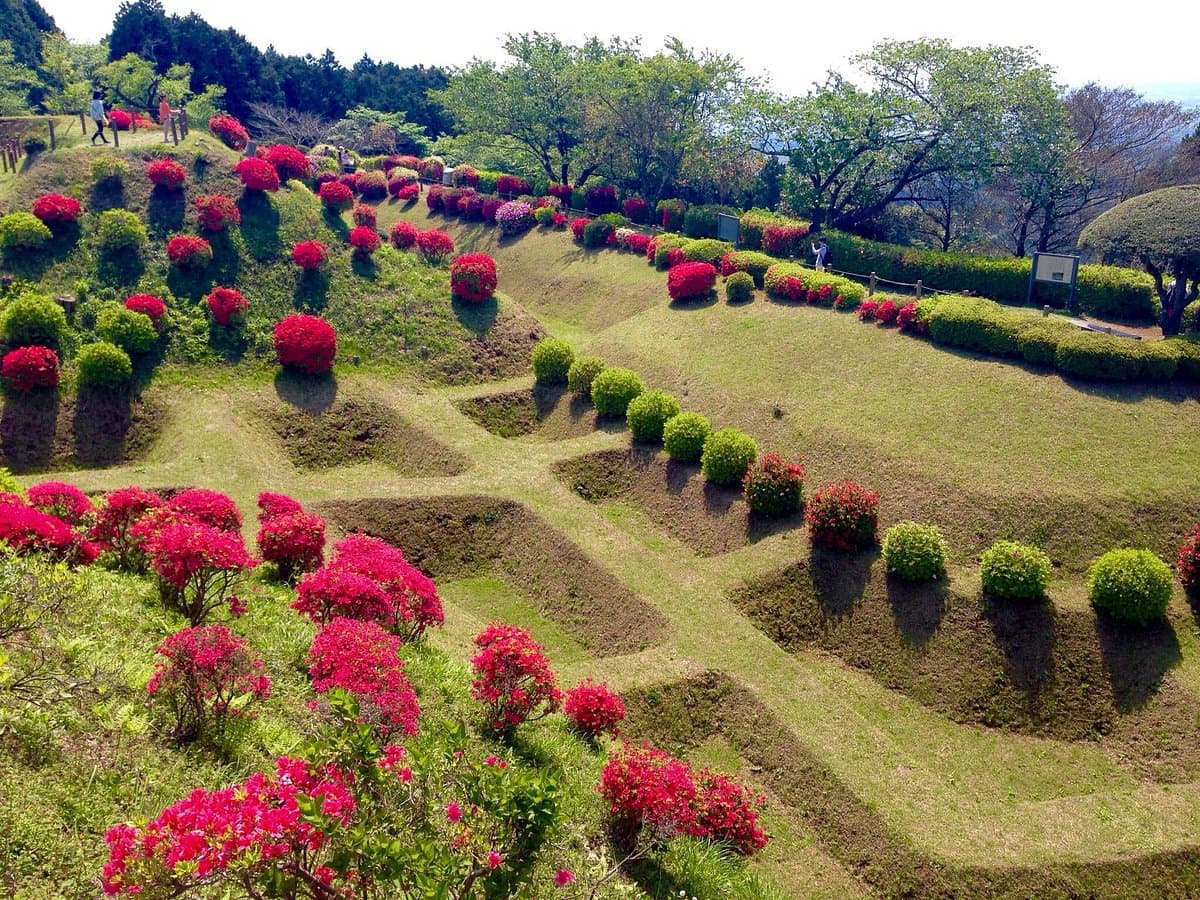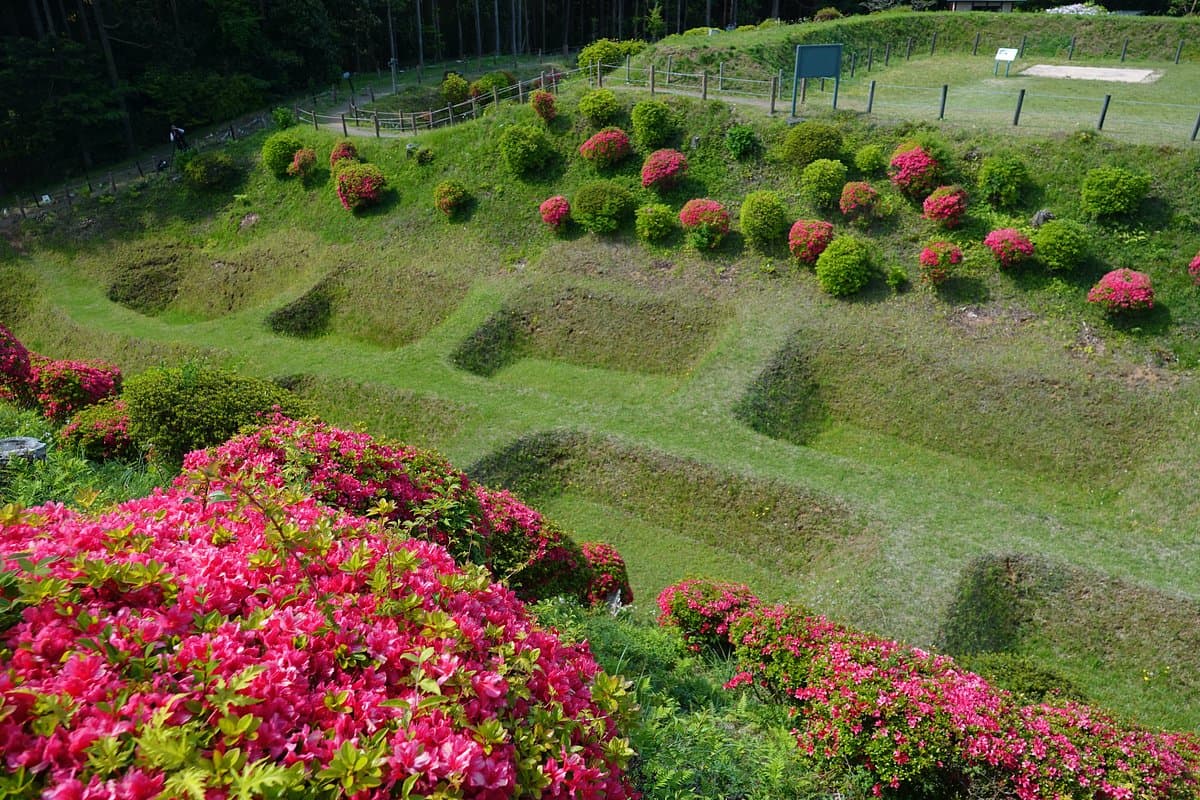
Yamanaka Castle Remains Park preserves the historical site of Yamanaka Castle, a strategically important fortress during the Sengoku period, particularly known for its role in the Battle of Odawara. Unlike many Japanese castles, Yamanaka Castle relied heavily on intricate earthworks, dry moats, and unique defensive structures like 'shoji-bori' (screen moats) rather than stone walls. It offers a tangible connection to feudal Japanese warfare and engineering, making it a significant site for history enthusiasts.
Visitors consistently praise the park for its peaceful atmosphere and well-maintained grounds. Many reviewers highlight the opportunity to walk through the historical earthworks and appreciate the ingenuity of the castle's defenses. The panoramic views from certain points, especially towards Mount Fuji on clear days, are frequently mentioned as a highlight. Some visitors appreciate the detailed information boards, which help in understanding the layout and history of the castle. The park is generally considered a pleasant place for a leisurely stroll, offering a blend of history and nature.
To make the most of your visit, allocate about 1.5 to 2 hours to explore the site thoroughly. Comfortable walking shoes are highly recommended as the paths involve some inclines and uneven terrain. Bringing water, especially during warmer months, is advisable as facilities within the park are limited. The best time to visit is during spring for cherry blossoms or autumn for vibrant foliage, though clear days offer the best chance to see Mount Fuji. There is no entry fee, making it an accessible historical experience.
The park is located at 410-4 Yamanaka Shinden, Mishima, Shizuoka Prefecture. While specific public transport details are not extensively mentioned in reviews, Mishima Station is a major hub. From Mishima Station, local buses or a taxi would be the most practical options to reach the park. Driving is also an option, and there is parking available on site, which many visitors find convenient.
A common complaint, or rather an observation, is the lack of substantial castle structures, as it was primarily an earthwork castle. Visitors expecting grand keeps or stone walls might be disappointed. To mitigate this, it's best to approach the park with an understanding of its unique historical context and focus on appreciating the defensive earthworks and the strategic layout rather than looking for a reconstructed castle building.