 Tabelog rating
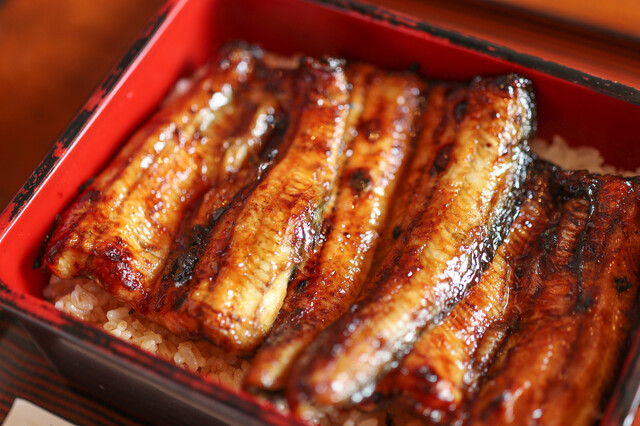
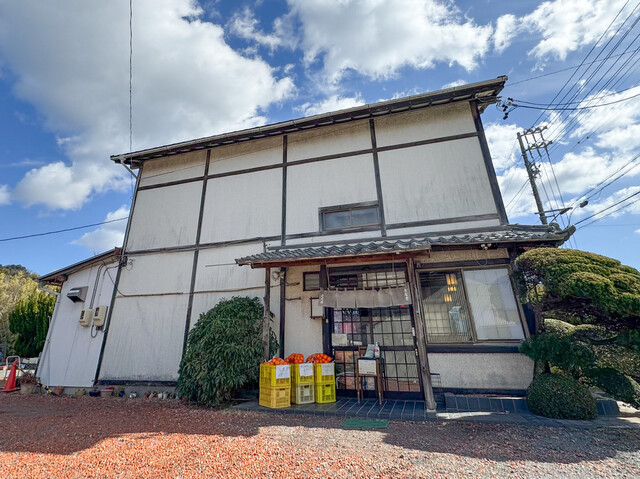
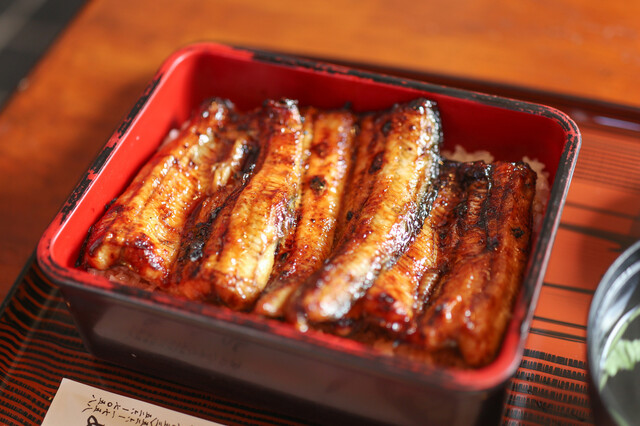
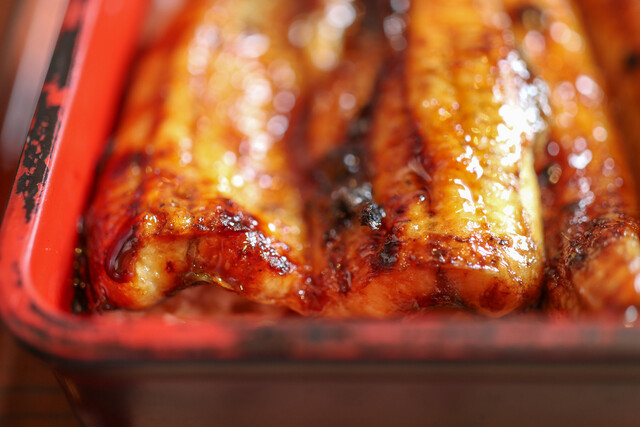
At Sakume the father splits live eel to order and the son skewers and grills it jiyaki-style, the Kansai-leaning method common in this region: the eel goes straight onto the heat with no steaming stage. The result is crisp, smoky skin over thick, plump flesh. From roughly spring to autumn the kitchen also serves wild eel from Lake Hamana, which lies across the road. Wild eel is rare and unusually cheap here. The restaurant has been selected for Tabelog's Unagi 100 list five times, most recently in 2026, and it is also a pilgrimage stop for fans of the anime Yuru Camp.
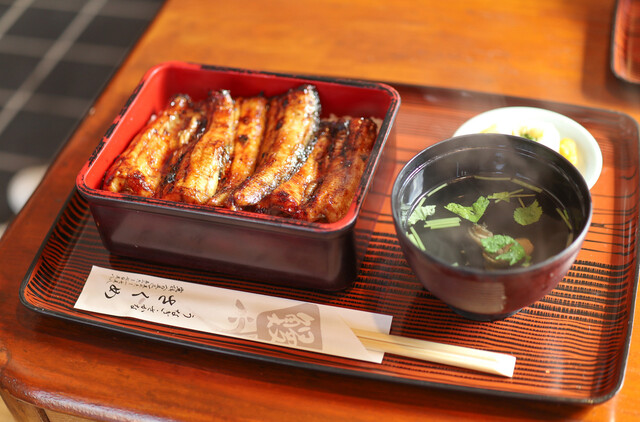
Most reviewers praise the contrast between crackling skin and soft flesh, a light sauce that is not too sweet, and a generously filled unajuu (eel over rice in a lacquer box). The kimosui (eel-liver soup) is singled out again and again. Counter seats, often given to solo diners, let you watch the butchering and grilling up close. Several diners who compared the two found wild eel firmer and more flavourful than farmed.
The main complaint is the wait, typically one to two hours and sometimes more than three on holidays. A minority found the unsteamed eel chewy or the sauce too thin. Others describe the pickles as ordinary and the room as old. One diner was charged for a larger size than ordered, and another arrived to an unannounced closure.
Lunch and dinner share one menu. In 2025–2026 reviewers paid around ¥1,900 for a small farmed unajuu (half an eel), ¥3,200 for a medium (one eel) and ¥4,400 for a large (one and a half eels), plus ¥100 for extra rice. Wild eel ran from about ¥2,200 for one thin eel to ¥5,400 for a thick one and ¥8,000 for the largest. A medium bottle of beer adds about ¥550. Typical spend is ¥3,000–3,999 at lunch and ¥4,000–4,999 at dinner. Value is excellent: Japanese reviewers call the large unajuu remarkably cheap for its size, and wild eel here costs barely more than farmed eel elsewhere.
- Getting there: 1 minute on foot from Hamanako-Sakume Station on the Tenryu Hamanako Railway. Alternatively, the JR Bus Kanto Superliner from Tokyo Station or Nagoya Station stops at Tomei Hamanako, a 15-minute walk away.
- Booking: reservations are not accepted. Write your name on the sheet outside, which appears from about 8:30am or earlier in summer, in hiragana if you can. Doors open at 11:00.
- Queues: expect a wait of one to two hours or more. Eel sells out, and the wild eel goes first. Evenings from about 16:00 are much quieter, but the evening service is often cancelled, so call ahead.
- Payment: credit cards and electronic money (transport IC cards such as Suica, iD, QUICPay) are accepted. QR-code payments are not. A service charge is added to the bill. Reviewer reports on cards vary, so carrying some cash is sensible.
- Seats: 17 in total. There are 5 at the counter, one table for 4, two raised tables seating 8, and a tatami room upstairs. No private rooms or private hire.
- Smoking: non-smoking.
- Parking: 7 spaces next to the restaurant and 7 more across the road beside the community centre.
- Season: wild eel is seasonal and not available every day.