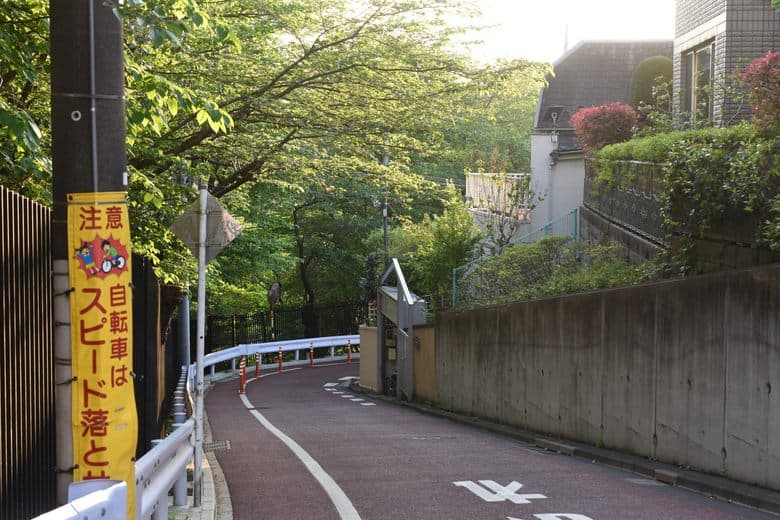
Dorikono Slope, or Dorikono-zaka, is a residential slope located in the Den'en-Chōfu neighborhood of Ota City, Tokyo. Its significance lies not in its physical appearance, but in its unusual name, which commemorates a pre-war Japanese energy drink called Durikono. Invented in 1927 by Dr. Kōtarō Takahashi, who lived in the area, Durikono was a popular beverage inspired by German physiological research, but its production ceased during World War II due to sugar shortages and was finally discontinued in 1970 after Takahashi's passing. The slope serves as a subtle, almost hidden, monument to this forgotten piece of local history.
Visitors consistently note that there is "not much to see on the slope itself." It is primarily a residential street, and those expecting a grand historical landmark or scenic views will likely be disappointed. The main draw is the story behind the name, which appeals to those with a specific interest in obscure historical facts or the evolution of Japanese consumer products. Reviewers suggest that the "something of a view towards the top" is modest and not a primary reason to visit.
For those who do choose to visit, it's recommended to approach it as a brief historical curiosity rather than a major attraction. There are no facilities, plaques, or dedicated interpretive signs. A quick walk up and down the slope, perhaps taking 10-15 minutes, is sufficient to appreciate its context. It's best visited as part of a longer exploration of the Den'en-Chōfu area, which is known for its upscale residential architecture and planned garden city layout, rather than as a standalone destination. There are no specific items to bring, as it is an outdoor public street.
Dorikono Slope is located in Den'en-Chōfu, Ota City. The nearest major public transport hub is Den-en-chōfu Station, served by the Tokyu Toyoko Line and Tokyu Meguro Line. From the station, the slope is within walking distance, typically a 10-15 minute stroll through the quiet residential streets. As it is a residential area, driving and parking might be inconvenient; public transport is the recommended method of access.
The most common complaint is the lack of visual interest or obvious historical markers. To mitigate this, visitors should manage their expectations and understand that the appeal is purely intellectual and historical, rather than aesthetic. It is not a place for sightseeing in the traditional sense, but for a moment of reflection on a unique local story.