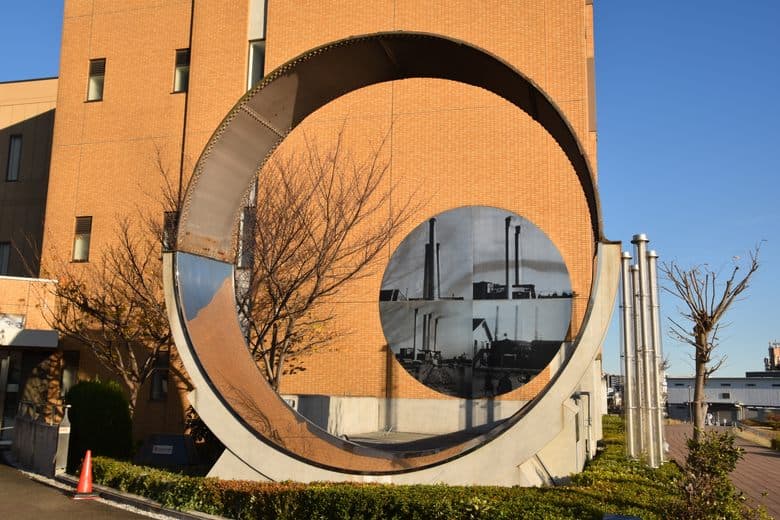
The Ghost Chimney Monument is a unique historical artifact, representing a portion of one of the four chimneys from the Senju Thermal Power Station. This power station, operational from 1926 to 1963, was a significant industrial landmark in Tokyo's downtown (shitamachi) area, famously known as the "Obake Entotsu" or "Ghost Chimneys." Its eerie nickname stemmed from its changing appearance depending on the viewing angle and its immense size, making it a recognizable feature in the Tokyo skyline and even appearing in classic Japanese films like Akira Kurosawa's 1953 masterpiece, Tokyo Story.
Visitors primarily appreciate the monument for its historical context and its connection to Tokyo's past. It serves as a tangible link to a bygone industrial era and a reminder of the city's resilience, having survived World War II bombings. While not a visually spectacular attraction, its significance lies in the story it tells about Tokyo's development and cultural memory. There are no specific visitor reviews highlighting consistent praise or warnings about the monument itself, as it is more of a historical marker than an interactive site.
For those interested in visiting, a brief stop of 15-30 minutes is sufficient to appreciate the monument and read any accompanying information. It is best visited during daylight hours for clear viewing. There are no entry fees or special requirements. Consider combining a visit with a stroll along the Sumida River or exploring the Kita-Senju neighborhood, which offers a more local Tokyo experience away from the main tourist hubs.
The monument is located approximately 25 minutes on foot from Kita-Senju Station, near Otake Bridge. Kita-Senju Station is a major transportation hub, accessible via several JR lines (Joban Line), Tokyo Metro lines (Chiyoda Line, Hibiya Line), and private railway lines (Tobu Skytree Line, Tsukuba Express). From the station, follow signs towards the Sumida River or use a navigation app to guide you to the monument's location in front of the Teikyo University of Science's Senju campus. Walking is the primary mode of access once in the area, and there are no specific parking facilities mentioned for visitors.
Common complaints are not typically associated with this monument, as it is a straightforward historical marker. However, visitors should manage expectations; it is a single, semicircular concrete structure, not a grand architectural marvel. Those expecting a large, interactive museum or a visually stunning landmark might find it underwhelming if they are not specifically interested in its historical narrative.