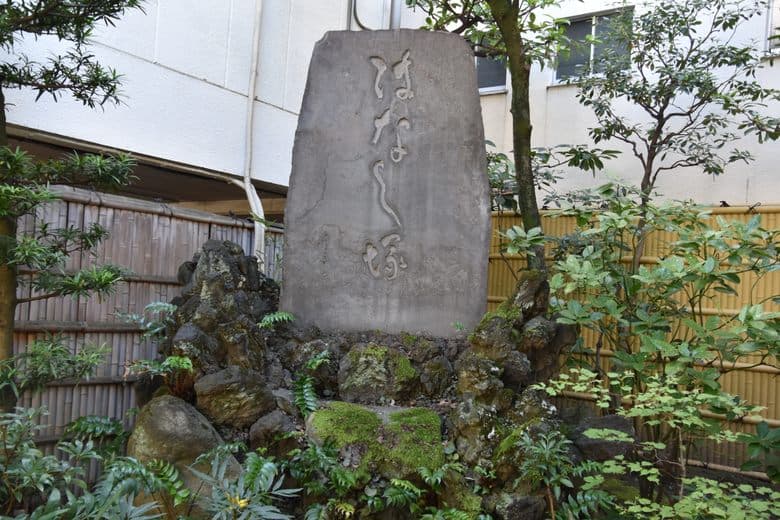
Hanashi Zuka, literally the "Grave of Censored Stories," is a poignant and historically significant monument located within the grounds of Honpō-ji Temple in Tokyo. It commemorates 53 traditional rakugo (Japanese comic storytelling) tales that were voluntarily "self-banned" by performers in 1941 to preempt government censorship during World War II. This act was a response to the Imperial government's tightening control over artistic expression, which deemed stories dealing with sexuality, alcohol misuse, or any criticism of the emperor or military as inappropriate. The memorial stands as a silent testament to a unique moment in Japanese cultural history, reflecting the delicate balance between artistic freedom and state control.
Visitors consistently describe Hanashi Zuka as a small, unassuming, yet deeply meaningful site. It is not a grand attraction but rather a place for quiet reflection. Reviewers often note its historical significance for understanding the challenges faced by artists during wartime. The memorial itself is a simple mound with a stone marker, and its power lies in the story it tells rather than its physical grandeur. There are no interactive exhibits or extensive displays, emphasizing its role as a solemn commemorative spot.
To fully appreciate Hanashi Zuka, it is recommended to research the history of rakugo and wartime censorship in Japan beforehand. A visit typically lasts no more than 15-30 minutes, as the site is small. It is best visited during daylight hours, and since it is located within a temple, respectful attire is appropriate. There are no specific items to bring, but a camera for discreet photos is common. This site is free to access, as it is part of the temple grounds.
Honpō-ji Temple is situated in the Kotobuki area of Taitō Ward, Tokyo. The nearest subway station is Tawaramachi Station on the Tokyo Metro Ginza Line, which is approximately a 5-7 minute walk. Alternatively, Asakusa Station (served by the Ginza Line, Asakusa Line, and Tobu Skytree Line) is about a 10-15 minute walk away, offering connections to other parts of Tokyo. Given its central location and proximity to public transport, driving is generally not recommended due to limited parking and heavy traffic. Walking from either station is straightforward and allows visitors to experience the local neighborhood.
A common observation from visitors is that without prior knowledge of its history, the monument might appear unremarkable. To mitigate this, it is crucial to read up on the background of rakugo and the specific context of the censorship before your visit. This preparation transforms a simple stone into a powerful historical artifact, enriching the experience significantly.