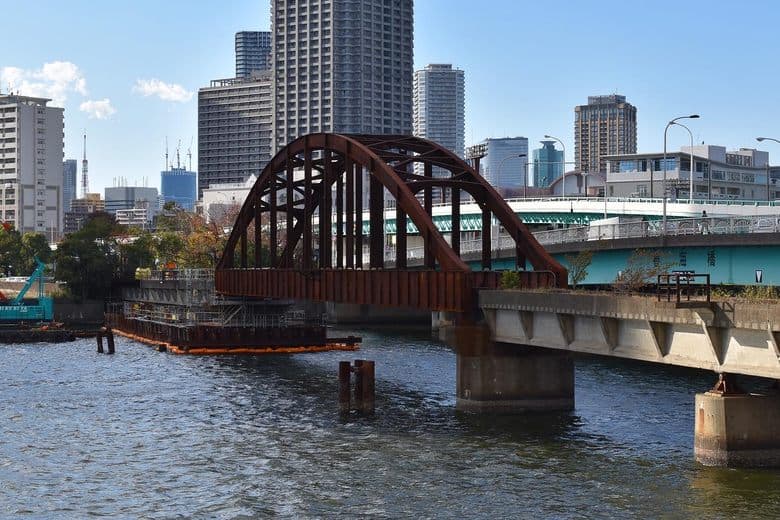
The Harumi Bridge is a historical railway bridge in Tokyo's waterfront district, originally constructed in 1957 to facilitate cargo transport for the Bureau of Port and Harbor's freight railway line. Its distinctive Lohse arch design and the maroon patina acquired over decades of disuse make it a unique landmark, reflecting Tokyo's post-war industrial growth and subsequent urban transformation. While it once served a vital role in connecting the docks of Toyosu to the Shibaura waterfront, the bridge has been defunct since 1989 due to the rise of highway systems.
Visitors interested in urban history or industrial architecture will find the bridge's current state, with its visible signs of age and ongoing renovation, particularly compelling. Reviewers often highlight the contrast between its historical significance and its future as a modern promenade. The bridge offers a quiet, reflective experience away from the city's more bustling attractions, appealing to those seeking a different perspective on Tokyo's development.
As of late 2021, the bridge is undergoing seismic retrofitting as part of a larger renovation project to transform it into a scenic promenade, which is expected to open to the public in the coming years. Currently, the best way to view the bridge is from Harumi Bridge Park or from the parallel bridge. There are no specific items to bring, but comfortable walking shoes are advisable for exploring the surrounding area. A visit to observe the bridge from a distance typically takes about 30-60 minutes, depending on your interest in photography or the surrounding waterfront.
The Harumi Bridge is conveniently located approximately 10 minutes on foot from either Tsukishima Station (Tokyo Metro Yurakucho Line, Toei Oedo Line) or Toyosu Station (Tokyo Metro Yurakucho Line, Yurikamome Line). These stations provide easy access from various parts of Tokyo. While driving is an option, public transport is generally recommended for navigating Tokyo's urban landscape. Parking availability near the viewing spots might be limited.
A common point to note is that the bridge itself is not yet accessible to the public as a promenade, which can be a source of disappointment for those expecting to walk across it. Visitors should manage their expectations and understand that the current experience is primarily about viewing the bridge from nearby vantage points. The ongoing construction also means that parts of the area might be less aesthetically pleasing due to works in progress.