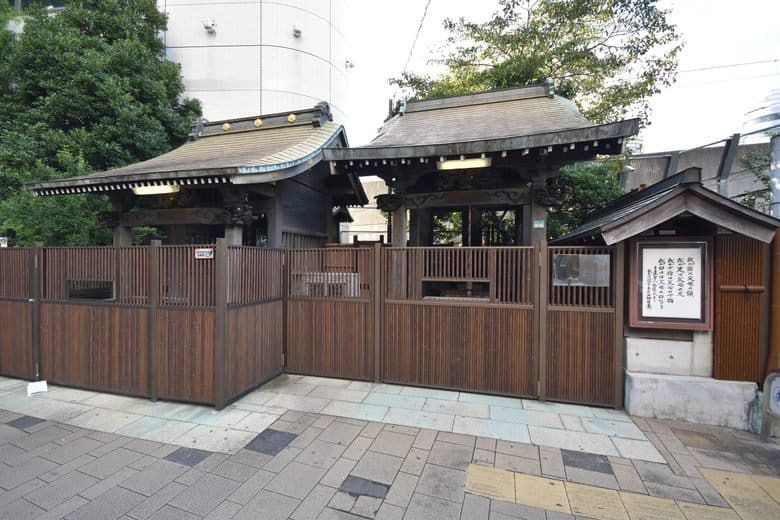
The Ikebukuro Shimento Pagoda is a small, four-faced memorial erected in 1721 to appease the spirits of victims of a notorious 'phantom slasher' and other violent deaths in the Ikebukuro area during the Kyōhō era. It serves as a poignant, if somewhat unsettling, reminder of the district's long and sometimes dark history, predating its modern reputation as a shopping and nightlife hub. For those interested in local folklore, urban legends, and the less-traveled historical paths of Tokyo, this pagoda offers a unique narrative.
Visitors consistently note the pagoda's unassuming appearance, often describing it as easily overlooked amidst the surrounding modern architecture and commercial bustle. Its significance lies entirely in its backstory, which is not immediately apparent without prior knowledge. Reviewers suggest that the experience is more about contemplation and understanding the local history than about visual grandeur. There are no facilities or interpretive signs on-site, so coming prepared with information about its history is crucial to appreciate its meaning.
To make the most of a visit, it's recommended to spend no more than 10-15 minutes at the site, primarily for reflection and perhaps taking a photograph. The best time to visit is during daylight hours when the area is busy, as the pagoda is located in a high-traffic commercial zone. There are no entry fees or specific opening hours, as it's an outdoor monument. Visitors should maintain a respectful demeanor, especially given its purpose as a memorial.
The Shimento Pagoda is conveniently located a short walk from Ikebukuro Station, a major transportation hub. From the station, it is situated near the Parco shopping mall and the Bic Camera store. Ikebukuro Station is served by multiple JR lines (Yamanote, Saikyō, Shōnan-Shinjuku) and Tokyo Metro lines (Marunouchi, Yurakucho, Fukutoshin), making it easily accessible from various parts of Tokyo. Walking directions from the station are generally straightforward, following signs towards the major department stores in the east exit area.
A common complaint among visitors is the lack of context provided at the site itself, which can lead to it feeling like just another stone monument without the compelling narrative. To mitigate this, it is highly advisable to research the pagoda's history and the legends surrounding it before arriving. Without this background, the visit might feel underwhelming, as its historical and cultural weight is not self-evident.