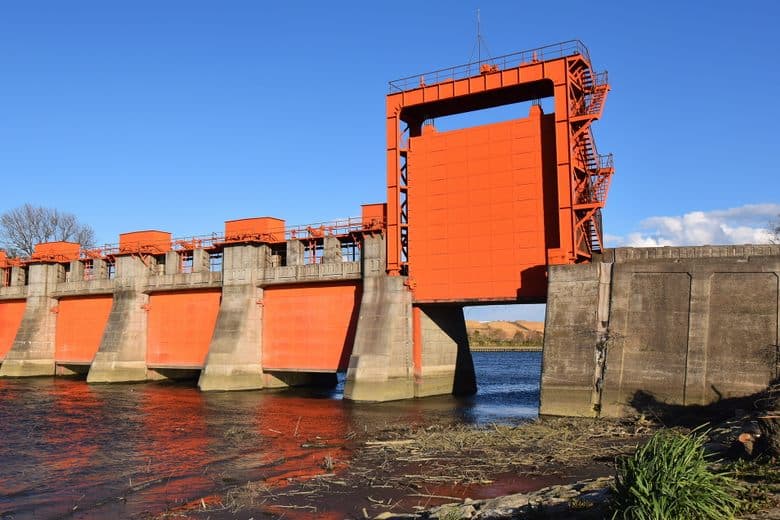
The Old Iwabuchi Watergate, or Kyū Iwabuchi Suimon, stands as a testament to Tokyo's efforts to control the powerful Arakawa River. Completed in 1924, this sluice gate played a crucial role in preventing devastating floods until a new gate was built in 1982. Its distinctive red structure, initially slated for demolition, was preserved due to local support and recognized for its historical significance, making it a unique piece of engineering heritage.
Visitors consistently praise the gate's aesthetic appeal, often referring to it as the 'Red Watergate' due to its striking color. It's a popular spot for leisurely activities such as walking, jogging, and fishing, offering a tranquil escape from the city's hustle. Reviewers often highlight the peaceful riverside environment and the opportunity for quiet contemplation. Some visitors are drawn by the local folklore, noting the gate's reputation as a haunted location, which adds an intriguing, albeit slightly spooky, dimension to the experience, especially after dark.
To make the most of a visit, plan to spend about 1-2 hours exploring the gate and the surrounding riverside area. It's best visited during daylight hours to fully appreciate its architecture and the river views. For those interested in the engineering aspect, the nearby Arakawa Museum of Aqua (AMOA) provides additional context and is open daily except Mondays from 9 a.m. to 5 p.m. There is no entry fee for the Watergate itself.
The Old Iwabuchi Watergate is accessible via public transport. It is approximately a 15-minute walk from either Shimo Station or Akabane-Iwabuchi Station. Both stations are well-connected within Tokyo's extensive railway network, making it a straightforward journey for most visitors. Given the pleasant walk along the river, public transport is the recommended way to reach the site.
A common point of interest, and sometimes a source of mild discomfort for some, is the unusual Jizo statue located outside the riverside area. This memorial, dedicated to those who lost their lives to the river, has a makeshift wooden head, which some find unsettling. Visitors sensitive to such imagery or those with children might want to be aware of this detail, though it is part of the site's unique character and local lore.