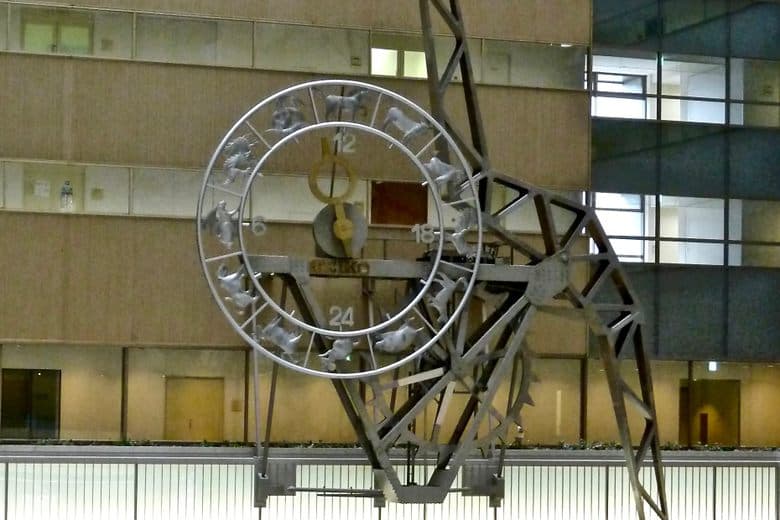
The Yukku-Rhythm Pendulum Clock, located inside the Shinjuku NS Building, is a remarkable feat of engineering. Once recognized as the world's largest pendulum clock, its impressive scale and unique 24-hour cycle, marked by Chinese zodiac signs, offer a glimpse into both traditional timekeeping and modern design. It stands as a testament to Seiko's craftsmanship and provides an unexpected point of interest within a commercial complex.
Visitors consistently praise the clock's immense size and the quiet, contemplative atmosphere it creates within the building's atrium. Many find it a pleasant surprise, a hidden gem offering a moment of calm away from the Shinjuku crowds. The intricate details of the clock face and the slow, deliberate swing of the pendulum are often highlighted as captivating features. While some acknowledge its obsolescence in terms of practical timekeeping, its artistic and historical value is frequently appreciated.
To make the most of your visit, allocate about 15-30 minutes to observe the clock. It's best viewed during off-peak hours to avoid the building's busy periods, as it is primarily an office complex. There's no specific best time of day, but a quieter moment allows for better appreciation. Consider combining your visit with exploring other attractions in Shinjuku, such as the Shinjuku Chuo Park or the Tokyo Metropolitan Government Building's observation decks, which are relatively close by.
The Shinjuku NS Building is conveniently located a 10-minute walk from the South or West exits of JR Shinjuku Station. Shinjuku Station is a major transportation hub, accessible via numerous JR lines (Yamanote, Chuo, Saikyo, Shonan-Shinjuku) and subway lines (Marunouchi, Shinjuku, Oedo). Follow the signs for the NS Building upon exiting the station. Access is free and unrestricted, making it an easy addition to a Shinjuku itinerary.
A common point to be aware of is that the building is primarily an office space, and while the clock is publicly accessible, visitors should be mindful of the working environment. It can get busy during peak business hours, which might detract slightly from the experience of observing the clock in peace. There are no specific complaints about the clock itself, but rather about the potential for crowds within the building.