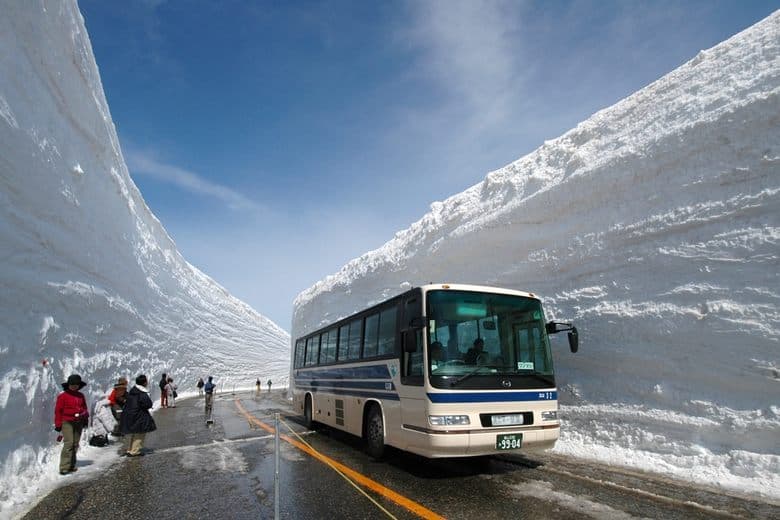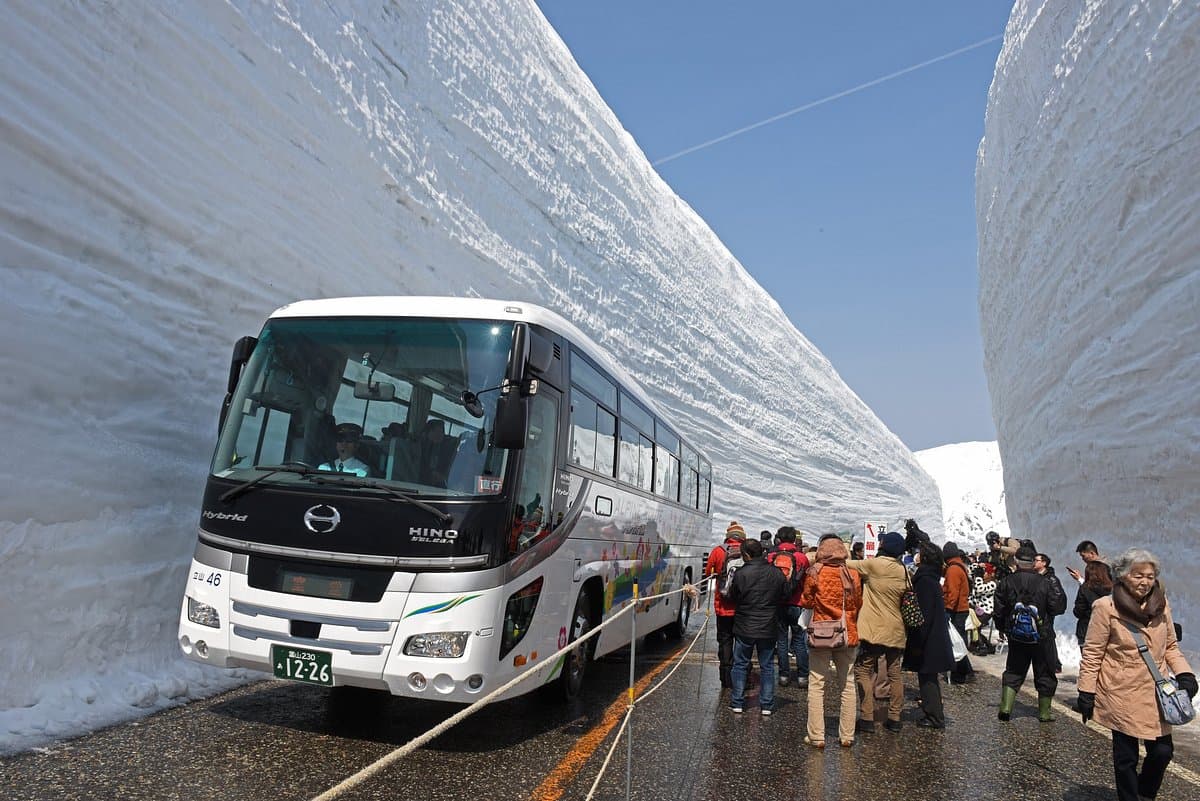
Yuki no Otani, often referred to as the Snow Wall, is a magnificent natural spectacle formed annually along the Tateyama Kurobe Alpine Route. This unique corridor is created by clearing massive snowdrifts that accumulate during winter, resulting in towering walls of snow that can reach heights of up to 20 meters. It's a testament to both nature's power and human engineering, drawing visitors from around the world to witness this ephemeral wonder.
Visitors consistently praise the sheer scale and beauty of the snow walls, describing the experience as "awesome," "spectacular," and "jaw-dropping." Many highlight the unique sensation of walking through a corridor of snow, especially for those from tropical climates. The opportunity to take photos with the towering walls and even write on the snow is a popular activity. Reviewers frequently note that the best time to visit for the highest walls is from mid-April to May, with heights gradually decreasing into June. The snow slide, though not always available, is mentioned as a fun activity for all ages when present.
To make the most of your visit, several practical tips emerge from visitor experiences. It is crucial to dress warmly, even in late spring, as temperatures can be around 5°C and it can be windy and rainy. Layers are recommended, along with waterproof outerwear. Many suggest arriving either early in the morning or after 3:00 PM to avoid the largest crowds and tour groups. The walk along the snow corridor itself is relatively short, typically taking 15-30 minutes, but visitors often spend 2 to 2.5 hours in the Murodo area, exploring the surrounding views and enjoying the atmosphere. Consider mailing your luggage ahead if you are traversing the entire Alpine Route, as mentioned by some reviewers, to travel light.
The Yuki no Otani Snow Wall is located near Murodo on the Tateyama Kurobe Alpine Route. Accessing it requires navigating the various modes of transport that make up the Alpine Route, including buses, cable cars, and ropeways. From Murodo Terminal, the snow wall is just a short walk away. The entire Alpine Route is well-signposted in English, making navigation straightforward. If you are coming from Nagano or Toyama, plan for a full day's journey to traverse the route and experience the snow wall. Public transport is the primary means of access, and the efficiency of the system is often praised by visitors.
A common complaint among visitors is the large number of tourists, especially during peak times in April and May, which can detract from the experience. This can lead to crowded trolleys, buses, and ropeways, consuming significant travel time. To mitigate this, as mentioned, aim for early morning or late afternoon visits. Another concern is the variable height of the snow wall, which can be lower in years with less snowfall or later in the season due to melting. While still impressive, managing expectations about the maximum height is advisable. Bad weather conditions, such as rain or heavy fog, can also lead to the closure of the snow corridor, so checking the weather forecast before your visit is highly recommended.