Yamadera, officially known as Risshaku-ji, is a historic Tendai Buddhist temple complex dramatically built along a steep mountainside northeast of Yamagata City. Founded in 860 during the Heian period, it has served for over a thousand years as both a religious training ground and a place of quiet retreat. The name “Yamadera” literally means “mountain temple”, and the complex lives up to that name: halls, gates and pagodas are scattered across rock outcrops and forested slopes, connected by a stone stairway with around 1,015 steps.
The lower area near the base of the mountain includes the main hall, Konponchudo, a venerable beech-wood structure said to contain a sacred flame that has been burning since the temple’s foundation. Here you will also find smaller halls, statues, stone lanterns and inscriptions, including a statue of the poet Matsuo Bashō and a rock engraved with his famous haiku composed at Yamadera, celebrating the stillness and silence of the mountains. This makes the temple not only a religious site, but also a key stop on Japan’s literary-pilgrimage map.
Experience & Atmosphere
From the Sanmon Gate, visitors begin the ascent along the stone path that winds through the forest. Reviews describe this climb as a highlight in itself: the steady rhythm of the steps, the sound of the wind in the trees, and the sight of moss-covered lanterns and Jizo statues create a deeply atmospheric, almost meditative experience. Many people note that while 1,000+ steps sound intimidating, the trail is well maintained, with plenty of places to pause for photos and to catch your breath.
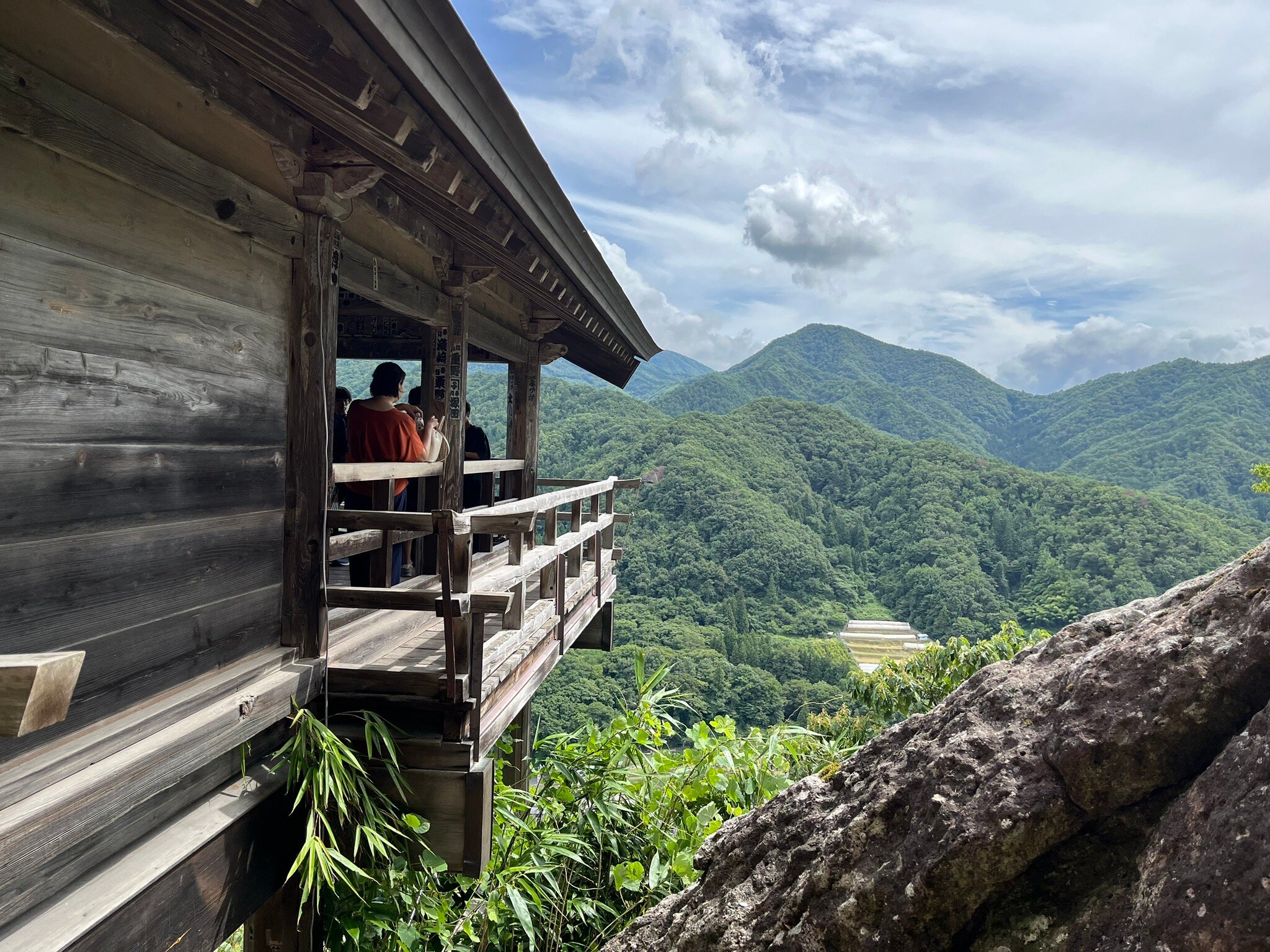
Higher up, the path passes distinctive landmarks such as the Mida Hora rock, said to resemble the form of Amida Buddha, and the 19th-century Niomon Gate, marking the entrance to the upper temple area. Around this level, the scenery opens up: small wooden halls cling to the rock face, and balconies look out onto the valley below. Two of the most photogenic buildings, Kaisando Hall (dedicated to the founder Jikaku Daishi) and the small red Nokyodo, are perched on a dramatic ledge and appear in many iconic images of Yamadera.
The ultimate reward for the climb is Godaido Hall, an open wooden observation deck that juts out over the cliff. Reviewers repeatedly describe the view from here as “breathtaking” and “unforgettable”: the town of Yamadera, the river and the valley fields spread out below, framed by rugged ridges and forested slopes. Many visitors comment that they forget the effort of the steps once they reach this point, and that the sense of achievement and calm makes the temple feel special compared to more easily accessible sites.
Seasons & Best Time to Visit
Yamadera is renowned for its seasonal beauty. In autumn, the mountainside explodes in red, orange and gold, and reviews highlight this as one of the best times to visit. In winter, the temple becomes a snow world: roofs, branches and stone lanterns are covered in white, and several visitors describe the scenery as “magical”, “like a winter fairy tale” and “worth every step in the cold”. Some reviewers who visited in late December mention that even with snow and frost, the climb was manageable with care.
In spring, fresh green foliage and mild temperatures make the hike especially pleasant, while summer brings lush greenery but also humidity and heat, which can make the 1,015 steps feel more strenuous. Many reviewers recommend visiting early in the morning to avoid crowds and to enjoy cooler weather. Weekdays outside of major holidays tend to be quiet, with almost no waiting time mentioned in reviews.
Practical Notes from Reviews
Reviews consistently emphasize that the climb is suitable for most reasonably fit visitors and typically takes 20–40 minutes one way, or about 1–2 hours round trip with breaks and photos. Several visitors estimate a total stay of 1.5–3 hours, especially if you like to explore slowly, take pictures or visit the Bashō Memorial Museum south of the station. The path itself is straightforward: it is essentially all stairs, with no scrambling or technical hiking.
However, winter conditions require caution. Multiple reviews warn that the steps can be icy or slippery, and strongly recommend proper footwear, crampons or special “shoe covers”, which are sold in shops near the entrance (though sometimes at higher prices). A few visitors note minor negatives such as cash-only payments and, in rare cases, brusque staff at the ticket booth, but overall ratings remain very high. For most travelers, Yamadera combines nature, history and a sense of quiet accomplishment into one of the most memorable experiences in the Tohoku region.