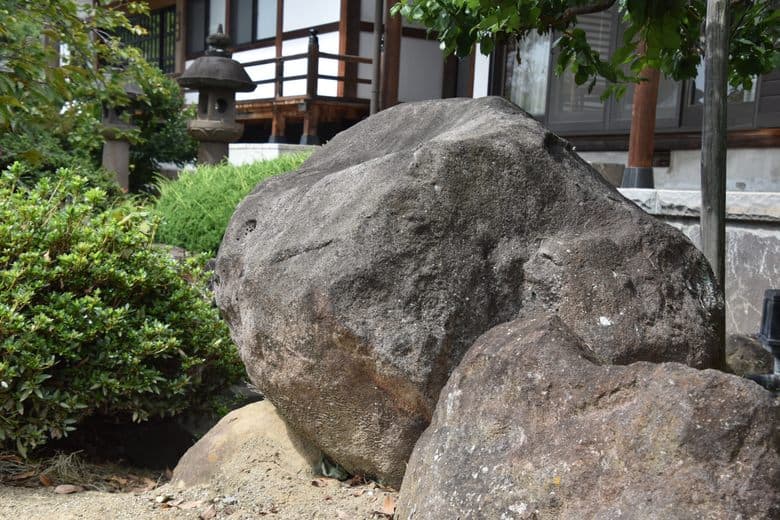
The Kanibōzu Claw Marks are a unique, albeit subtle, attraction located at Chōgen-ji Temple in Manriki, Yamanashi. They are believed to be the physical evidence of a legendary encounter between a monk and a giant, man-eating crab monster, known as Kanibōzu. This site is significant for those interested in Japanese folklore and the rich tradition of yokai (supernatural beings), as the legend has been popularized in various forms, including the famous manga series GeGeGe no Kitarō.
Visitors primarily come here for the intriguing story rather than a grand visual spectacle. The 'claw marks' themselves are described as a few visible clefts on an unassuming boulder, which might be easily overlooked without prior knowledge of the legend. Reviewers consistently note the lack of any descriptive plaque or official signage, meaning the experience relies heavily on the visitor's imagination and understanding of the tale. This makes it a destination for those who appreciate the historical and mythical context over a polished tourist experience.
To fully appreciate the site, it is highly recommended to research the Kanibōzu legend beforehand. Since there's no official information on-site, bringing a printout or having the story readily available on your phone will enhance the visit. Visitors should allocate a very short amount of time, perhaps 15-30 minutes, as the 'attraction' is essentially a single rock. There are no facilities or shops directly at the boulder, so plan accordingly. The best time to visit would be during daylight hours when the temple grounds are open, allowing for easy viewing of the rock.
Chōgen-ji Temple is located in Manriki, Yamanashi. Specific public transport options are not widely detailed in reviews, suggesting that reaching the temple might be easier by car or taxi, especially given its potentially rural setting. If using public transport, visitors would likely need to take a train to a nearby station in Yamanashi Prefecture and then arrange for local transport. Always check local bus schedules or taxi availability in advance if not driving.
The main complaint from visitors is the complete lack of information or signage at the site, which can lead to disappointment if one expects a clearly marked landmark. To mitigate this, come prepared with the full story of Kanibōzu. Manage expectations: this is a subtle historical curiosity, not a major tourist attraction with interpretive displays. Embrace the mystery and the quiet contemplation of a legend brought to life by a simple rock.

