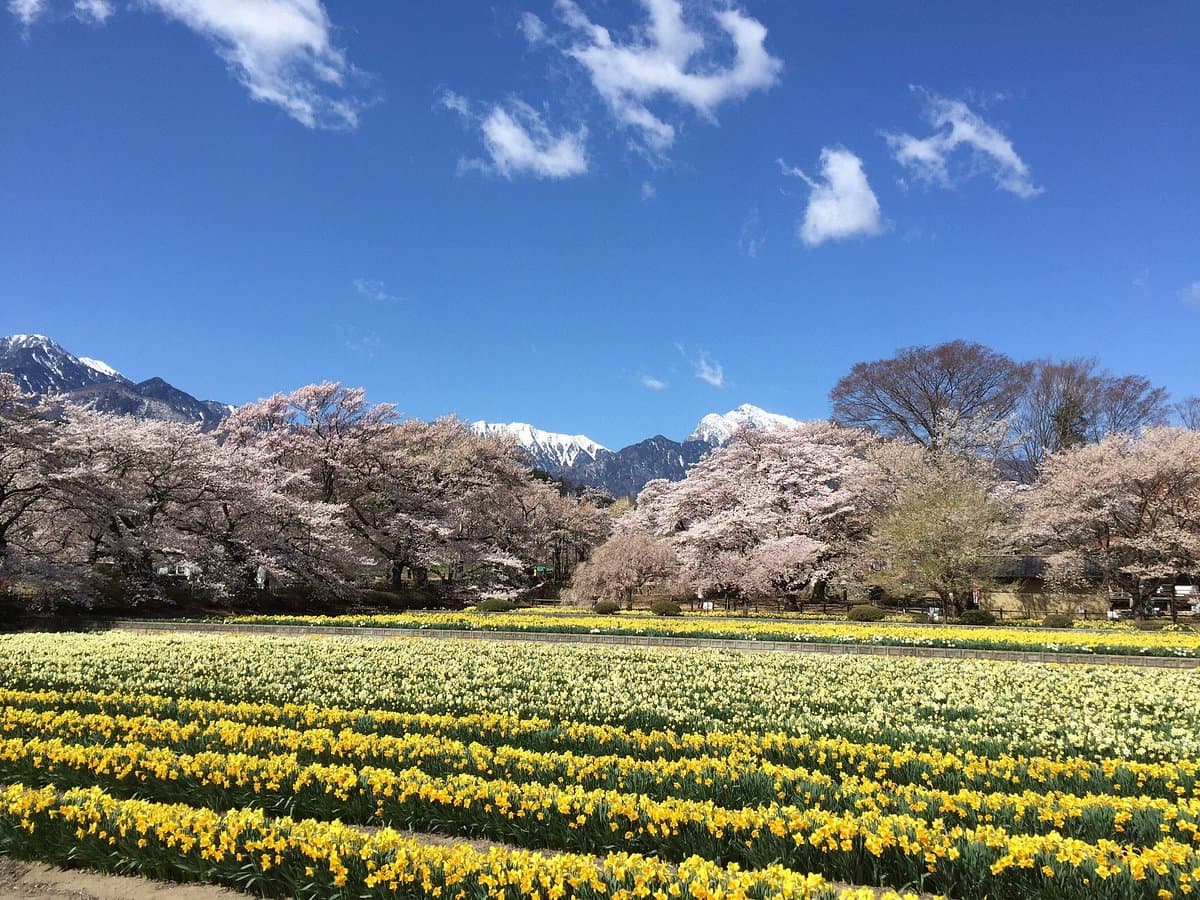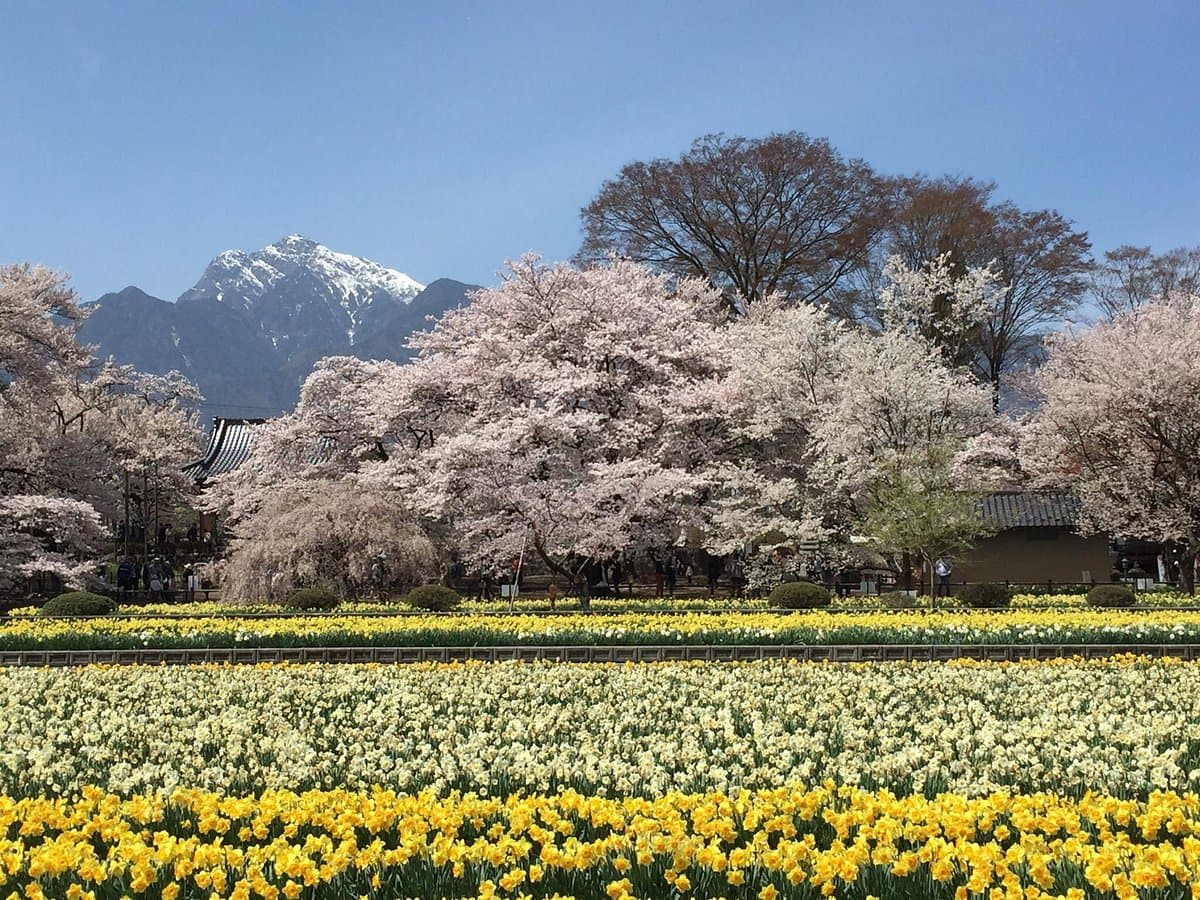
The Yamataka Jindai Zakura is one of Japan's most historically significant and botanically remarkable cherry trees. At 1,800 to 2,000 years old, it is possibly the oldest cherry tree in the entire country and holds the distinction of being Japan's first designated National Natural Monument (1922). The tree belongs to the Edo-higan species, known for exceptional longevity. According to Japanese folklore, it was planted by the legendary prince Yamato Takeru during his campaign to subdue Eastern Japan. The tree has survived centuries of challenges: in the 13th century, Buddhist priest Nichiren is said to have prayed for its recovery; in the 20th century, it nearly died when branches fell and soil depletion starved the roots of oxygen and nutrients. Modern restoration efforts have revived the tree, and it now stands as a living testament to Japan's natural heritage. Seeds from this tree were even sent to the International Space Station in 2008 to study growth in weightlessness.
Visitors consistently praise the tree's sheer age and presence, describing it as awe-inspiring and deeply moving. Many note that the site encompasses more than just the main Jindai Zakura—there are numerous other cherry blossoms in the surrounding gardens, making the visit more fulfilling than expected. Reviewers emphasize that the tree's gnarled trunk and massive canopy convey palpable antiquity. However, during peak cherry blossom season (late April), the site becomes extremely crowded; several visitors report long parking queues and difficulty finding quiet moments to appreciate the tree. One reviewer noted that despite crowds and bad weather, the tree remains worthy of a visit. The experience is markedly better on weekdays or outside peak bloom hours.
Plan to spend 1–2 hours at the site, allowing time to view the main tree from multiple angles, explore the surrounding gardens, and visit the nearby Otsuyama Jisso Temple. Arrive early in the morning (before 9 a.m.) or late afternoon (after 4 p.m.) to minimize crowds. Bring comfortable walking shoes, as the grounds involve some gentle walking. The best time to visit is late April during full bloom, when yellow trumpet daffodils bloom nearby, creating a striking color contrast. If you prefer a quieter experience, consider visiting on a weekday or in early May when crowds thin. There is no entry fee to view the tree. Bring water and sun protection, as the site offers limited shade. Photography is permitted, and many visitors recommend bringing a telephoto lens to capture details of the ancient bark and canopy.
The Yamataka Jindai Zakura is located in Hokuto, Yamanashi Prefecture, approximately 90 minutes from Tokyo by car or train. By public transport: take the JR Chuo Line from Tokyo toward Kofu; get off at Hokuto Station (approximately 90 minutes from Shinjuku). From Hokuto Station, the site is about 15 km away; local taxis or rental cars are recommended, as public bus service is limited. Driving: from Tokyo, take the Chuo Expressway toward Kofu; exit at Hokuto IC and follow local signs to Yamataka. Parking is available on-site, though it fills quickly during peak season—arriving before 8 a.m. is advisable. The address is 2763 Yamataka, Mukawa-cho, Hokuto, Yamanashi Prefecture. GPS coordinates: 35.780422, 138.36781. Walking from the parking area to the tree takes approximately 5–10 minutes.
Common complaints center on overcrowding during peak cherry blossom season and the challenge of finding parking. To mitigate this, visit on a weekday or outside the main bloom window (late April). If you must visit during peak season, arrive by 7–8 a.m. to secure parking and enjoy the site before crowds build. Weather can also be unpredictable in spring; check forecasts and be prepared for rain. Some visitors note that the temporary protective structures around the tree, while necessary for preservation, can obstruct views from certain angles—position yourself on the eastern or western side of the tree for the clearest sightlines. The site is accessible year-round, and while the tree is most visually striking during bloom, its ancient form and historical significance make it worth visiting any season.