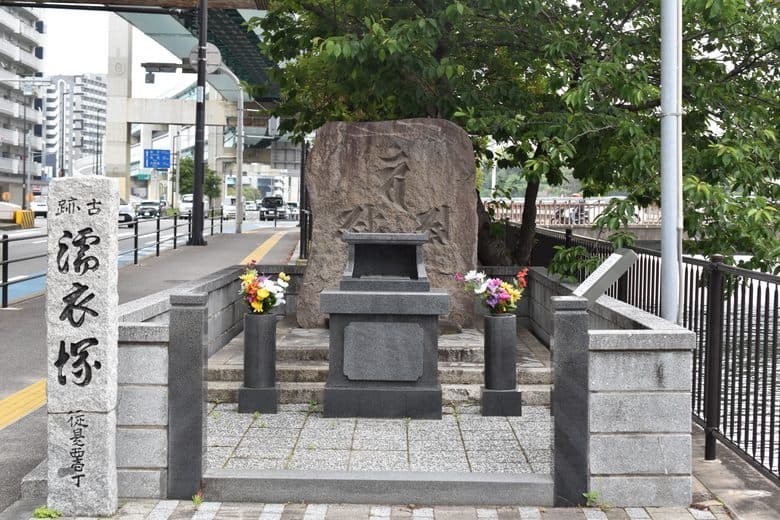
The Tomb of the Wet Kimono, or Nureginu-zuka, is a site steeped in Japanese folklore, marking the legendary origin of the idiom "nureginu," which translates to "wet clothes" but signifies a "false accusation" or "frame-up." This location is significant for those interested in the cultural and linguistic history of Japan, offering a tangible link to a tale that has influenced the language for centuries.
Visitors often appreciate the quiet, contemplative atmosphere of the site, which stands in contrast to more bustling attractions. The basalt stele itself, inscribed with Sanskrit letters and a date from 1344, provides a historical anchor to the legend. Reviewers suggest that while the tomb itself is modest, the nearby relief on Ishido Bridge, which visually narrates the story, enhances the experience and helps visitors connect with the ancient tale. It's a place that rewards those who take the time to understand its deeper cultural context.
To fully appreciate the Tomb of the Wet Kimono, it's recommended to spend about 15-30 minutes. This allows enough time to observe the stele and then locate and examine the relief on Ishido Bridge. There is no entry fee, making it an accessible cultural stop. It's best visited during daylight hours, and comfortable walking shoes are advisable as you might walk a short distance from public transport stops.
The Tomb of the Wet Kimono is located in Fukuoka. While specific public transport lines are not detailed in reviews, its proximity to Shōfuku-ji Temple suggests it is accessible via local bus routes or a walk from a nearby train or subway station. Visitors should consult local transit maps for the most direct route to the Shōfuku-ji Temple area, from which the tomb is easily reachable on foot. Parking information is not readily available, indicating public transport or walking is the preferred method of access.
A common complaint, or rather an observation, is that the site itself is quite small and might be underwhelming for those expecting a grand monument. To mitigate this, visitors should approach the site with an understanding of its historical and linguistic significance rather than its physical grandeur. Reading about the legend beforehand, perhaps even bringing a translation of the story, can greatly enhance the visit.